
The Wassenaar Arrangement has long been seen as a symbol of China’s isolation from the global community.
This major international regime controls the export of weapons and advanced technologies, and its 42 member states include nearly all developed Western countries, nations closely tied to China like Russia, and developing countries such as India.
Together, they have worked to block non-members’ access to cutting-edge defence technologies and equipment. In China, the arrangement is viewed as hostile and humiliating and has served as a driving force for Beijing’s push towards self-reliance in defence technology.
This year marks the 30th anniversary of the Wassenaar Arrangement. Ironically, China’s military technology has now caught up with – and in some areas even surpassed – that of Western nations.
China has already put into service hypersonic missiles with air-breathing engines and high-power laser weapons.
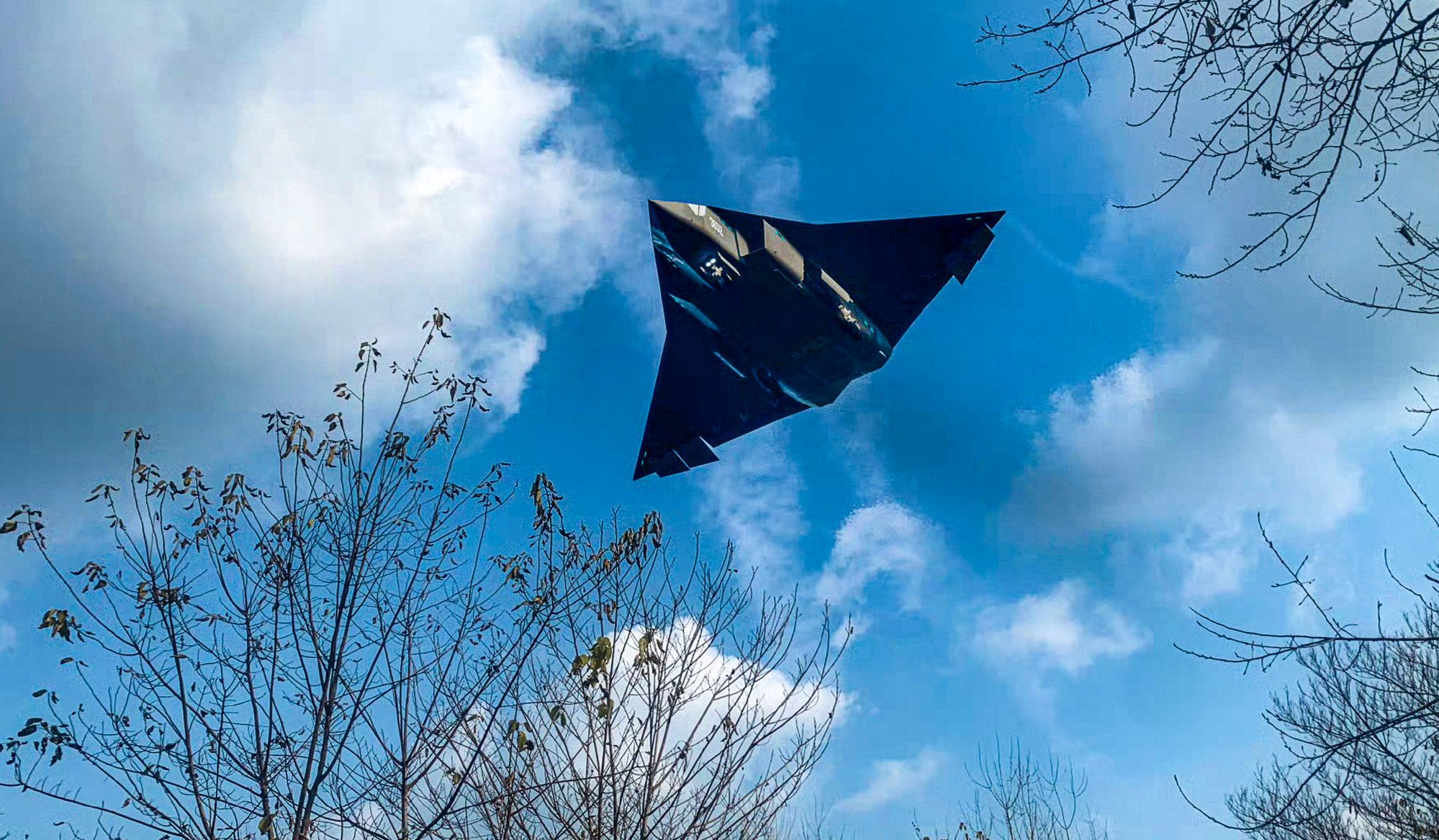
Its huge drone carrier equipped with electromagnetic catapults is undergoing sea trials, sixth-generation stealth fighter jets are in intensive test flights, and its humanoid robots and robotic dogs are leading the world in both technology and production capacity.
China is now also a key producer of semiconductors and quantum computing components that could be used in weapons and cyber warfare.
According to several reliable sources, China’s rapid progress has placed the prestigious international group in a difficult dilemma.
On one hand, China’s advanced technologies risk making the group’s export control list increasingly irrelevant. On the other hand, if China were to be admitted as a member, it would be seen as a major political victory for Beijing – a move that key member countries like the United States and Japan may oppose strongly.
However, according to a diplomatic source in Vienna, China has “never actually applied for membership in the Wassenaar Arrangement”.
Though the arrangement is open to applications for membership, the source said that member states may have different opinions about Beijing’s inclusion. Admittance to the export control regime would require a consensus.
The Wassenaar Arrangement was established in 1996 in Vienna as the first global multilateral regime for export controls concerning conventional arms and sensitive dual-use goods.
In the early 2000s, China held five rounds of in-depth dialogue with the Wassenaar Arrangement about control principles and best practices, with the last occurring in 2008, according to the Chinese Ministry of Foreign Affairs.
China has been kept informed of developments in the Wassenaar Arrangement through its participation in regular briefings, and the arrangement has kept up conversations with Chinese officials, the diplomatic source said.
If China did apply, its application would be treated the same as any other country, according to the source.
But one of the requirements for admission to the regime, besides being a producer and exporter of relevant technologies and having effective national controls, is receiving a consensus among all 42 current member states.
While the Wassenaar Arrangement is open to new member states joining, the diplomatic source said that “there could be different views” among member states like Russia, the US, South Korea and Japan on an application from China.
The Wassenaar Arrangement evolved from the former Coordinating Committee for Multilateral Export Controls (COCOM), which was established in 1949 by Western nations largely to stop the export of strategic technologies to the former Soviet Union and its allies.
The Wassenaar Arrangement set its sights instead on the international security landscape, intending to prevent “destabilising accumulations” of conventional arms and dual-use goods and technologies, according to the regime’s website.
“Participating states seek, through their national policies, to ensure that transfers of these items do not contribute to the development or enhancement of military capabilities which undermine these goals, and are not diverted to support such capabilities. The aim is also to prevent the acquisition of these items by terrorists,” the arrangement states.
Items that fall under the voluntary, non-binding regime – and are subject to updates – appear on two lists. The first is the munitions list, which covers conventional arms such as missiles, tanks and aircraft.
The second is the dual-use goods and technologies list, which covers civilian items with potential military applications categorised into nine areas: special materials and related equipment, materials processing, electronics, computers, telecommunications and information security, sensors and lasers, navigation and avionics, marine and aerospace, and propulsion.
Among the current list are certain types of semiconductors, biological agents, metal alloys, devices with superconducting components, advanced computers, information security systems, underwater equipment, sensors, and equipment used to produce items of concern, such as lithography machines.
Countries that are not party to the Wassenaar Arrangement are subject to export controls by member states, which can restrict their access to advanced goods and technologies that have been labelled as dual-use.
Participating states are required to report their arms transfers and the transfer or denial of dual-use goods and technologies to countries outside the arrangement.
Among the 33 founding members of the regime were the United States, Russia, Ukraine, the United Kingdom, Japan, France, Canada, South Korea and Australia.
The arrangement has since expanded to include 42 member states, with India being the latest to join at the end of 2017.
China, the world’s largest exporter of goods, remains absent from the agreement, which includes most of the major production and export nations of the world.
During a US Senate hearing to discuss the Wassenaar Arrangement held in April 2000, then Republican senator from Tennessee Fred Thompson said that the US and its allies “all agree that there are a certain group of countries that ought to be of concern, but we certainly do not agree with our allies with regard to what to do about that”.
“And we disagree not only about what to do about the so-called rogue nations, but with regard to China,” Thompson added.
At the same hearing, William Reinsch, then undersecretary of commerce for export administration under the Bill Clinton government, stated that some Wassenaar members did not see China as a target of the regime and wished for it to join the arrangement.
“For the most advanced industrial economies in Wassenaar, China is an important market, not a threat. And they have told us that it is a market that they will service,” he said.
Reinsch said that to participate within multilateral regimes like Wassenaar, China would need to “make progress in adhering to the international norms for non-proliferation and arms sales”, adding that “there is no question that they are not there yet”.
In 2018, Dutch semiconductor company ASML received an order for an extreme ultraviolet lithography machine – which is used to produce cutting-edge chips – from China’s Semiconductor Manufacturing International Corporation.
In response, the US government reportedly campaigned to stop the Netherlands from granting an export licence for the equipment, which is included within the Wassenaar control list, reportedly citing security issues associated with the sale, according to a report by Reuters in 2020.
Adherence to the Wassenaar Arrangement is voluntary, and member states cannot block others from granting export licences, as the final decision rests on the government considering the licence.
In a release in 2022, China’s foreign ministry said that “certain countries” had “repeatedly clamoured for technology decoupling from China”.
They said that they had adopted means such as formulating sanctions and control lists and revising export control lists to cut off the channels by which China obtained technologies like semiconductors.
The Wassenaar Arrangement “emphasises that the arrangement will not be directed against any state or group of states and will not impede bona fide civil transactions”, according to China’s foreign ministry.
However, the ministry said that the “inadequacy in inclusiveness and transparency has not been fully resolved” for the arrangement and other export control regimes.
“Certain countries are trying to remodel existing regimes into a new COCOM, which aggravates the existing problems of these regimes, and will likely lead these regimes in a wrong direction,” it added.
One of the regimes listed by the foreign ministry is the Missile Technology Control Regime (MTCR), an informal regime to curb the proliferation of missiles and missile technology, which China is not a party to but has formally applied for in the past.
In 2004, Beijing applied to be part of the MTCR – which has 35 member states, including Russia and the US – but it was not admitted.
There has been a sense among “Chinese policy elites” that until China is admitted to the MTCR, the prospects of it applying to the Wassenaar Arrangement were “slim”, according to a 2015 report published by the non-governmental organisation SAFERWORLD.
The dynamics of the Wassenaar Arrangement have been complicated in the aftermath of Russia’s invasion of Ukraine.
Member states that want to sanction Moscow must rely on other mechanisms to justify restricting the sale of dual-use goods, according to a report by the Carnegie Endowment for International Peace in 2024.
Although China has yet to apply for membership to the Wassenaar Arrangement, it has drawn upon its best practices and control lists, as well as those of other export control regimes, according to China’s foreign ministry.
Some dual-use items controlled by China, including unmanned aerial vehicles, “come from the Wassenaar Arrangement list”, according to a statement from China’s Ministry of Justice in 2024.
In another statement in 2024, the foreign ministry said it had encouraged mechanisms like the MTCR and Wassenaar Arrangement to “fulfil their commitments of not interfering with peaceful use and international trade in relevant fields, and play a constructive role in promoting common security and universal development”.
The Wassenaar Arrangement is interested in the strong application of export controls by non-members, including China, to create a “level playing field”, the diplomatic source said.
They added that this was why the arrangement’s export control lists were available online as a reference and that many countries had even adopted the same list of items.
China’s growing influence over key technologies may now also influence Wassenaar control lists, as items are evaluated on criteria including foreign availability outside participating states and the ability to effectively control the item, according to the arrangement’s website.
Items can be removed from the dual-use list or their scope of control decreased when they become widely available, such as software that enters the public domain. -- SOUTH CHINA MORNING POST