VIENTIANE: The government has set a bold course to create a self-reliant economy and achieve average annual growth of six per cent under the draft 10th National Socio-Economic Development Plan for 2026-2030.
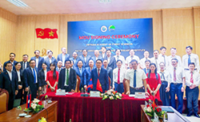
Politburo member and Prime Minister Sonexay Siphandone outlined the strategy at a meeting that was the first step in implementing the resolutions adopted by the 12th National Congress of the Lao People’s Revolutionary Party, chaired by the Secretary General of the Lao People’s Revolutionary Party and President of Laos, Thongloun Sisoulith.
Prime Minister Sonexay described the development plan as a decisive step in reducing reliance on external factors.
At the heart of this blueprint is a major macroeconomic restructuring, beginning with an ambitious GDP growth target of an average six per cent per year, a significant increase compared to the average of 4.24 per cent achieved over the past five years.
To achieve this, the government has charted a clear course towards national self-reliance, with a target of raising average per capita income to US$3,104 by 2030.The government aims to reshape the macroeconomy, strengthen national capacity, and ensure more stable development.
Agriculture and energy will serve as the main engines of growth. The government is aiming for four million tonnes of paddy rice to be grown each year to ensure adequate food supply. At the same time, it plans to generate more than 327,317 million kilowatt-hours of electricity, earning an estimated US$16,421 million from exports.
To support this growth, the government will tighten fiscal policy. Domestic revenue is expected to reach nearly 20 per cent of gross domestic product, while public debt will remain below 70 per cent.
In 2025, public debt stood at 88 percent of GDP, down from 112 per cent in 2022, according to a report by the Prime Minister.
Human resource development forms the second pillar of the strategy. The government views skilled workers as the country’s most valuable asset and plans to push the Human Assets Index above 66, a key threshold for graduation from Least Developed Country status.
The plan also aims to build a pool of 650,000 skilled workers and raise average life expectancy to 74 through improved education and public health services.
Improved living standards are also a top priority. The government intends to cut the poverty rate to less than 10 per cent and narrow the urban-rural divide.
Electricity access will expand to 98 per cent of households, while efforts to clear unexploded ordnance will continue to make land safe for farming and development. Women’s participation in decision-making bodies is set to reach at least 30 per cent.
Environmental protection underpins all development goals. Laos has pledged to achieve Net Zero emissions by 2050.
Over the next five years, forest cover will be maintained at 70 per cent and greenhouse gas emissions reduced by 60 per cent. The government also plans to utilise carbon credit trading as a new source of revenue.
The strategy also seeks to strengthen regional links. Laos aims to transform itself into a logistics hub by building expressways and rail links to seaports.
Special Economic Zones are expected to host 700 companies, while import and export procedures will be cut by 50 per cent to boost trade. The value of exports is projected to grow by 10 percent each year.
To ensure the plan achieves the intended results, the government will reform state administration. Ministries and equivalent bodies will be streamlined to 15 units. The number of civil servants will be capped at two per cent of the population, and 50 per cent of services will shift to electronic government systems.
The new five-year plan sets out an ambitious roadmap, linking economic reform, human development and environmental protection as Laos moves towards 2030. - Vientiane Times/ANN