




With the unveiling of the long-range hypersonic CJ-1000 missiles, China has surpassed the United States in the critical race to field practical scramjet propulsion systems, according to a mainland military magazine.
Alongside the ship-launched YJ-19, the CJ-1000 road-mobile cruise missile was one of two hypersonic missiles powered by advanced air-breathing scramjet engines on show during the Victory Day military parade in Beijing in September last year.
They are the world’s only two operational scramjet-driven hypersonic missiles besides Russia’s ship-based 3M22 “Zircon”. The CJ-1000 is therefore the first and to date only land-based variant of its kind.
According to an analysis in the February issue of Shipborne Weapons magazine, scramjet engines represent a technologically superior – yet more difficult – development path for hypersonic missiles compared with glider vehicles such as China’s DF-17 and Russia’s Avangard.
“The emergence of the CJ-1000 missile marks China’s transition from closely following to taking a leading position in the most advanced aerospace domains,” the article said.
The scramjet missiles’ cruise altitude of 20km to 30km (12.4 miles to 18.6 miles) is much lower than that of glider vehicles, which is about 60km to 80km. And for enemy air defence radar, the lower the missile flies, the more difficult it is to detect and respond.
Moreover, with the scramjet engine working throughout the cruise and terminal phases, it offers greater manoeuvrability and precision against targets than unpowered glider vehicles relying on inertia during their final approach.
The US was the first country in the world to demonstrate scramjet-powered flight in real flight, as early as 1998, and the first to achieve sustained 240-second operation of a hydrocarbon-fuelled scramjet engine in flight in 2013.
But America’s Hypersonic Attack Cruise Missile project was now lagging, the article noted.
“[The US] has fallen behind China in the weaponisation and operational deployment of scramjet-powered hypersonic systems,” it said.
It attributed the delay to “poorly structured project planning, disorganised management and a lack of firm conviction among senior leadership regarding the technology’s potential”.
“Meanwhile, China’s massive investment in scramjet development, more scientifically sound testing methodologies, strong integration of industry-academic-research collaboration and resolute national-level support have all been critical factors enabling its eventual leap ahead,” it added.
Among the active hypersonic missiles with scramjet engines, the CJ-1000 is believed to have the longest range and most destructive warheads.
Owing to its land-based nature, it faces fewer constraints in size and weight and can thus carry more fuel and explosives compared with the YJ-19 or the Zircon, both of which have limited dimensions in their ship-based launch systems.
Mounted on a highly mobile 10-wheel diesel-electric hybrid transporter-erector-launcher, the CJ-1000 is estimated to have a range of at least 2,500km.
During the parade in September, it was officially described as a weapon for “long-distance strikes”. For reference, the CJ-10, classified as a “medium- to long-distance” cruise missile, has a range of 1,500km to 2,500km, according to the article.
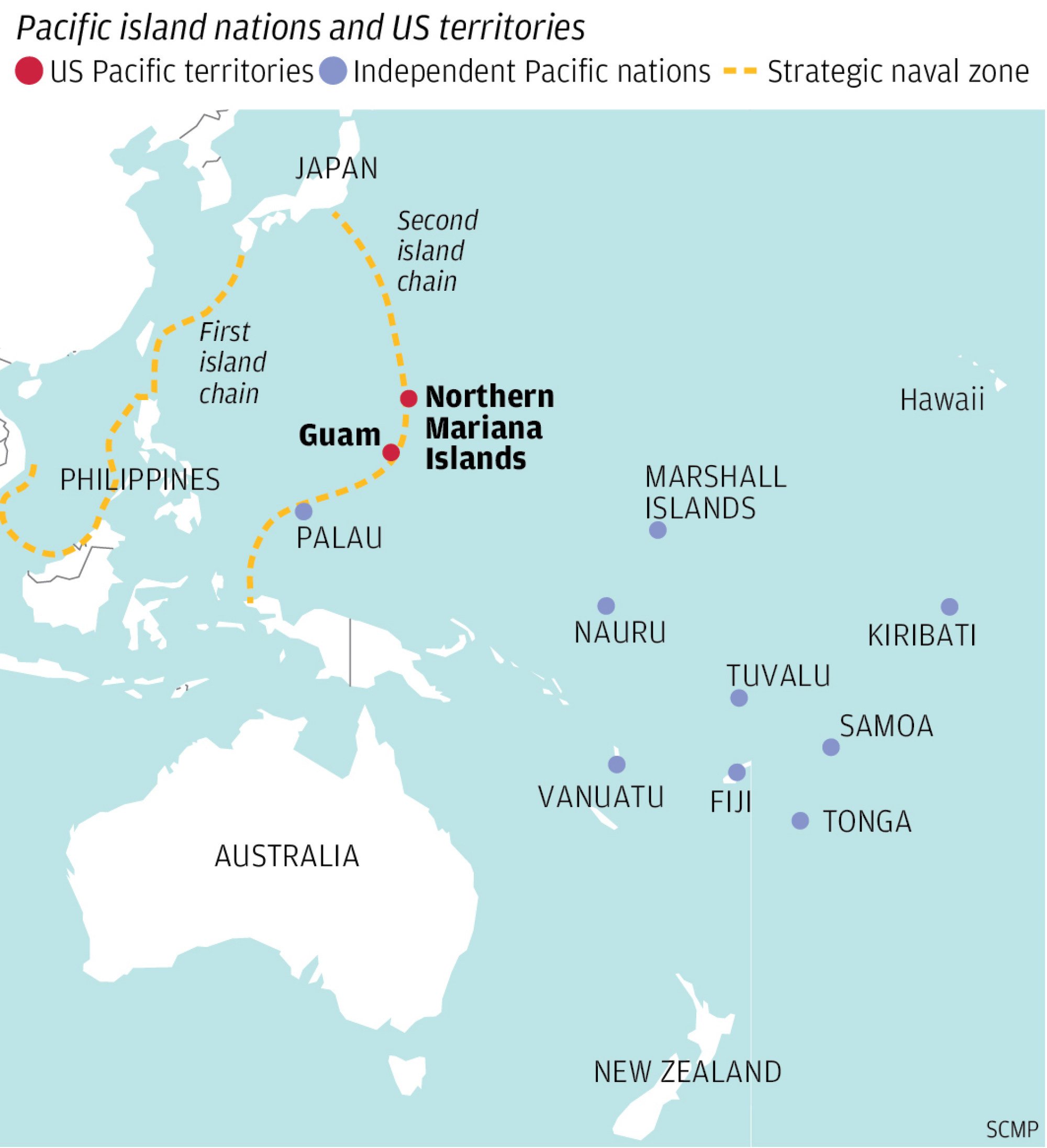
This could cover most critical ground targets in Japan and the Philippines, as well as the vast waters of the Pacific Ocean between the first and second island chains.
The first island chain runs along East Asia’s coastline, from the Kuril Islands through Japan, Taiwan and the Philippines down to Borneo. The second island chain is further east and includes the US territory Guam, home to American military installations.
In a vertical “cold launch”, a solid rocket booster accelerates the missile to Mach 4 at 20km altitude; after stage separation, the scramjet ignites and propels it to Mach 6 at 28km for sustained cruise, it said.
With its hypersonic speed plus the advantages provided by scramjets, the CJ-1000 could render any conventional air defence systems “powerless”, according to the article, which added that the Terminal High Altitude Area Defence was likely to be the only anti-ballistic missile defence system in the existing US arsenal with even a limited ability to intercept scramjet-powered hypersonic missiles.
America might improve its detection ability for scramjet hypersonic missiles through space-based sensors under the “Golden Dome” project, the article said, noting the US was developing the advanced Glide Phase Interceptor – a missile defence programme with Japan – against the cruising phase scramjets. But these could take years.
“By the time potential adversaries field countermeasures several years from now, China’s air-breathing hypersonic missiles may have already evolved to a new level, and its defensive capabilities could be significantly more robust as well,” the article said.
Success in hypersonic weapons would also effectively help the development of defensive systems, it added. -- SOUTH CHINA MORNING POST



