
BANGKOK: Residents in Nong Khai have turned a crisis into an opportunity as the Mekong River’s water level drops, reviving a traditional craft of panning for gold to earn extra income —reflecting a riverside way of life and local wisdom passed down for more than a century.
Low water levels have affected villagers who fish in the Mekong, reducing catches. In Ban Muang Subdistrict, Sangkhom District, locals have brought back an ancestral occupation known in Isan as "len kham" (gold) or gold panning in the Mekong to create opportunities and support their families.
The Mekong flows through gold-bearing mineral lines, with sediments settling at various points along the river—especially in Ban Muang Subdistrict, Sangkhom District.
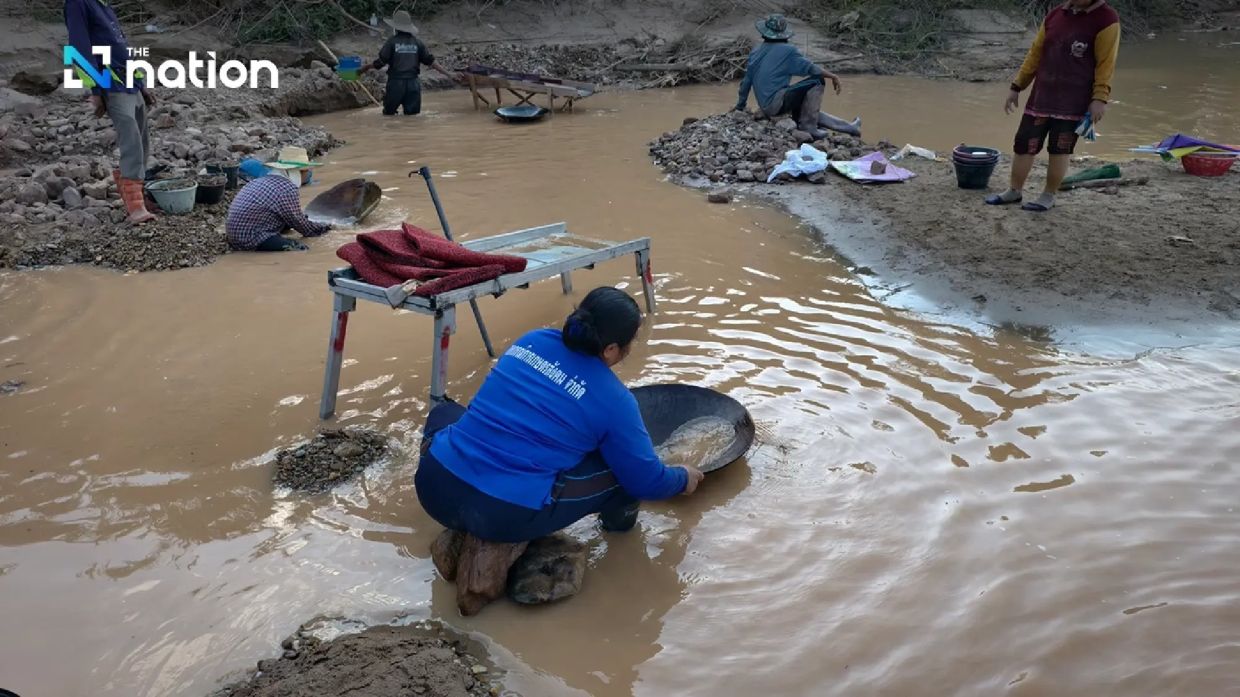
A rocky stretch known locally as “Pan God San Krai" extends for more than six kilometres, creating eddies in many spots. Gold mineral sediments mix into these deposits, and past generations in Ban Muang would pan for gold as a side job during free time from their main work.
Gold panning along the Mekong has been practised for more than 100 years. Key tools include a small hoe, a bucket or basket for collecting sand and gravel to be panned, and a bang—a cone-shaped wooden pan with a pointed base, made from a single piece of hard wood.
Villagers place sand and gravel into the bang and pan it in the Mekong until gold—described locally as the heaviest metal—settles at the bottom. They splash Mekong water through the sand to reveal gold mixed within; those who are lucky may spot larger grains. The gold is then gathered, before mercury is used to draw out gold mixed in the sediment—another piece of local know-how that has been shared and handed down over time.
In the past, Isan communities called gold panning "len kham" (gold). It was not a main occupation, but something done when people had time away from their primary work, which was largely farming.
Gold panning is typically done during the dry season when Mekong levels fall. The “best spot” may change year to year: if villagers pan elsewhere and find an area with more gold, they will move to the new location—depending on where the Mekong has deposited gold-bearing sediments.
This year, villagers have been panning at multiple points, particularly within Ban Muang Subdistrict, Sangkhom District, where more people turn up than at other sites—no fewer than 10 people a day, and sometimes more than 20.
That followed early groups discovering significant amounts of gold in sandy sediment and along the riverbank ground. The site is seen as rich because the Mekong hits rocks and forms eddies, leading to dense sediment deposits.
The gold collected is sold to gold shops, providing income of around 800–2,000 baht (US$25-65) a day or more for those who come to pan.
One Ban Muang resident said they choose the Moo 2 Ban Muang area because it has plenty of gold, and panning there provides income. Typically, they start from October, when the Mekong begins to recede. The skill, they said, was learned from parents, grandparents and elders. Spending around two to three days, they can pan about one gram of gold.
As for choosing soil to pan, they said it must come from rock crevices where water flows through. They added that Sangkhom’s “gold line” connects to Loei Province and Laos, and that the gold found is about 99–100% pure. Gold shops reportedly like it because it is highly pure and has a bright yellow-gold colour.
For those interested in learning, villagers say they are ready to train anyone. Gold panning typically starts from 7am and continues until evening. - The Nation/ANN