
Some raw oysters linked to a series of food poisoning cases in Hong Kong in recent weeks were sourced from France, the South China Morning Post has learned.
Seven people who recently fell ill after dining at a branch of bistro chain O Delice! in Tsim Sha Tsui ate raw oysters. The company told the SCMP on Friday its oysters came from Brittany, France.
Authorities said on Thursday night that the seafood was supplied by Jeton International Food and 88 Investment Holdings Limited, both based in Hong Kong.
Oysters supplied by the two companies were linked to another 11 cases of suspected food poisoning in recent weeks, according to the Centre for Food Safety.
The two companies have the same sole director, who is also the majority shareholder in both firms, the SCMP has learned. They are registered at the same address, an industrial building in Tsuen Wan.
Individuals involved in another 10 cases had consumed oysters supplied by Seojun Mulsan Co Ltd of South Korea.
The centre said that it had instructed both the Hong Kong-based firms to suspend the sale and supply of raw oysters on February 6, and asked the industry to stop the import and sale of the seafood by the South Korean firm on February 5.
The restaurant chain said on Friday: “As a precautionary measure, we suspended serving raw oysters across all branches from February 5, prior to the [Centre for Food Safety’s] instruction to suppliers. This was done to ensure guest safety while the authorities continue their examination.
“We understand the authorities are still investigating the supply chain, and we will follow any further updates they provide.”
The O Delice! cases, in two clusters, involved a man and six women, aged between 24 and 45, who fell ill after eating raw oysters at its outlet in The One shopping centre on January 31 and February 1. Three sought medical advice, but none required hospitalisation.
From January 18 to February 12, the Centre for Health Protection (CHP) recorded 45 food poisoning cases. Nearly 87 per cent or 39 cases were associated with norovirus, affecting 113 people.
The cases prompted Dr Albert Au Ka-wing, head of the CHP’s communicable disease branch, to again warn on Friday that norovirus, commonly found in raw oysters, was highly contagious.
He urged people to avoid raw oysters and other uncooked foods such as sushi and sashimi in the days leading up to Lunar New Year, advising them to eat only thoroughly cooked meals and dine at reputable restaurants during the festive period.
Au also reminded residents to thoroughly reheat their poon choi, a hearty layered stew featuring ingredients such as mushrooms and abalone. The casserole-style dish, usually sold pre-cooked and reheated before serving, has often been linked to food poisoning during the holidays.
“Most of the time, only the exterior is reheated, while the inside fails to reach a temperature above 70 degrees Celsius [158 Fahrenheit],” Au said. “If the ingredients have been left for a long time, the conditions may allow viruses to grow.”
He warned that winter was the active season for norovirus, with January to March being its peak period. He noted that the virus was highly contagious and even a small amount could cause acute gastroenteritis or food poisoning.
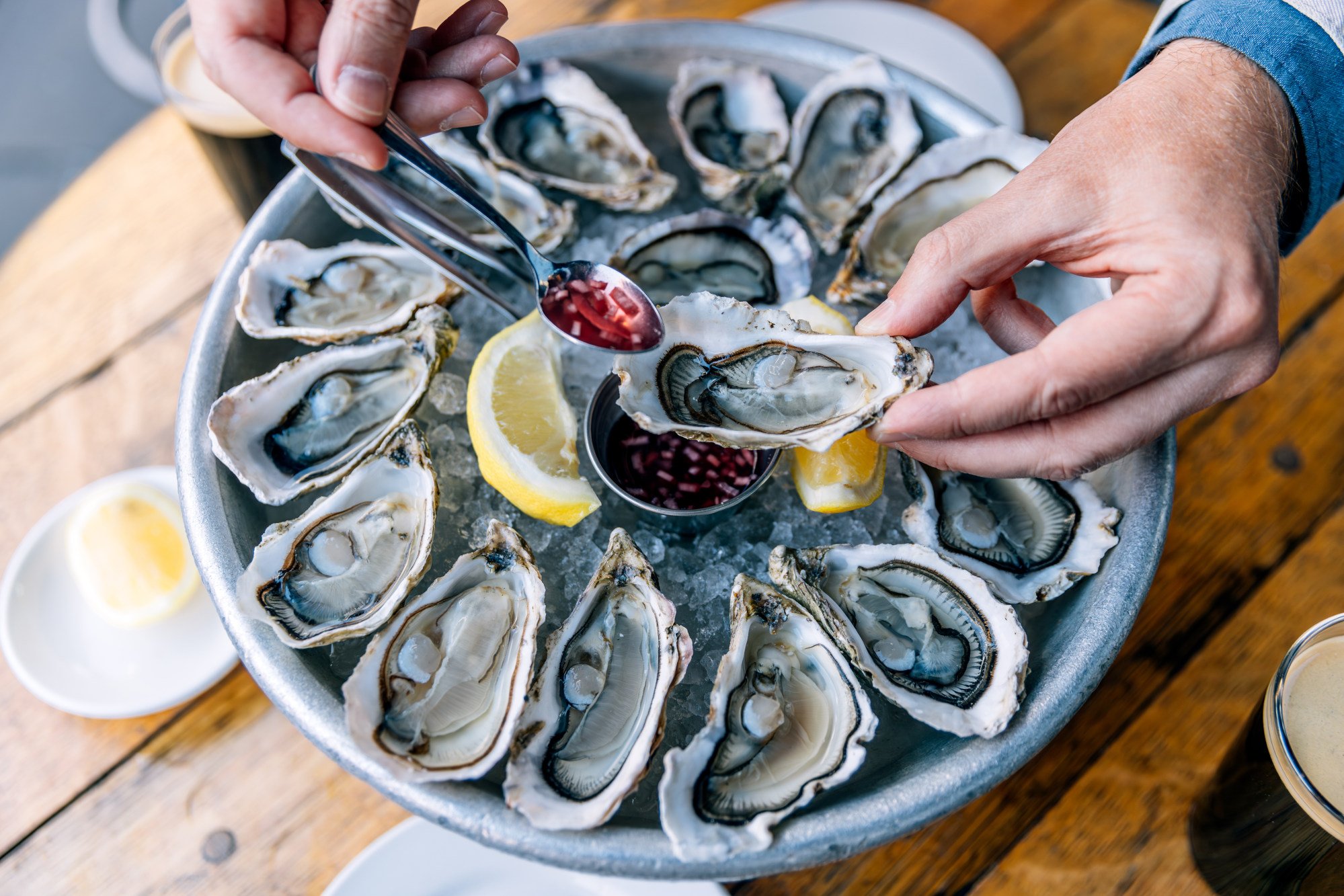
The restaurant chain’s outlet at the New Town Plaza shopping centre in Sha Tin was also involved in similar incidents recently, when four diners fell ill after eating raw oysters on January 31 and February 1.
One person was hospitalised, with stool samples confirming norovirus infection.
On Thursday, top microbiologist Yuen Kwok‑yung from the University of Hong Kong said that norovirus, which has been linked to most of the city’s food poisoning cases, was “almost unkillable”.
“Norovirus cannot be killed by alcohol,” Yuen said. “It’s incorrect to claim that washing hands with sanitiser or plain water can eliminate it; neither is effective against the virus.”
Yuen said oysters could accumulate viruses in their bodies, at concentrations up to 99 times higher than those found in contaminated seawater.
He stressed that oysters were safe to eat if thoroughly cooked and cross-contamination was properly controlled, adding that imports should not be banned.
CHP controller Edwin Tsui Lok-kin said norovirus could not be killed by alcoholic drinks, lemon juice or wasabi. He added that when cooking oysters in a hotpot or on a grill, they must be thoroughly cooked to reduce the risk of infection.
“As oysters feed by filtering a large volume of seawater, pathogens can accumulate in them if they are grown in or harvested from contaminated water. Raw or undercooked oysters are considered a high-risk food,” Tsui said.
-- SOUTH CHINA MORNING POST