The country, together with Thailand and Myanmar, have reaffirmed their commitment to jointly tackle transboundary air pollution, endorsing a 2026-2027 Joint Action Plan aimed at addressing the root causes of the seasonal haze that smothers the Mekong sub-region.
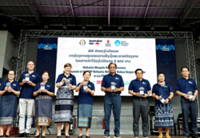
The agreement was approved at a high-level meeting in the capital Vientiane, where a Thai delegation led by the Deputy Director General of the Pollution Control Department, Thananchai Wannasuk, met with counterparts from Laos and Myanmar to advance technical and policy coordination, according to a report in The Nation Online on Jan 24.
Central to the plan is the use of satellite technology and real-time data sharing to monitor wildfire hotspots and air quality across shared borders – an approach officials described as a new phase of “satellite diplomacy”.
The initiative moves beyond emergency response, focussing instead on early detection, prevention and long-term mitigation.
Key measures include the development of joint fire-risk mapping, a unified air quality reporting system and the promotion of sustainable agricultural practices to reduce slash-and-burn farming, a major contributor to air pollution.
The three countries also agreed to set up a Technical Working Group to ensure that policy decisions are guided by scientific evidence and verified data rather than political considerations.
“The haze is a shared wound for our region,” the delegation said in a joint statement.
“This is not about one country’s survival, but a collective effort to ensure that clean air becomes a permanent right rather than a seasonal luxury.”
A cornerstone of the 2026-2027 strategy is a high-profile public awareness campaign aimed at changing behaviour on the ground.
By engaging local communities, farmers and the private agricultural sector, the three countries are hoping to curb transboundary pollution through education and the promotion of sustainable alternatives to open-air burning.
Public awareness campaigns targeting local communities and the agriculture sector will form a key pillar of the strategy, alongside incentives to encourage alternatives to open-air burning.
At the close of the meeting, delegates of the three countries reaffirmed their commitment to the new Terms of Reference, underscoring a shared resolve to strengthen regional cooperation and create a more resilient and healthier environment. — Vientiane Times/ANN