
About 75 per cent of paper waste and 40 per cent of plastic items sent to landfills are unclassified, according to official statistics, with environmentalists warning that such unclear records will undermine Hong Kong’s green efforts.
However, the Environmental Protection Department (EPD) said it was “unnecessary” to change its waste-tracking system, arguing that the government already “has an idea” of what fell under the “others” category and had taken steps to address it.
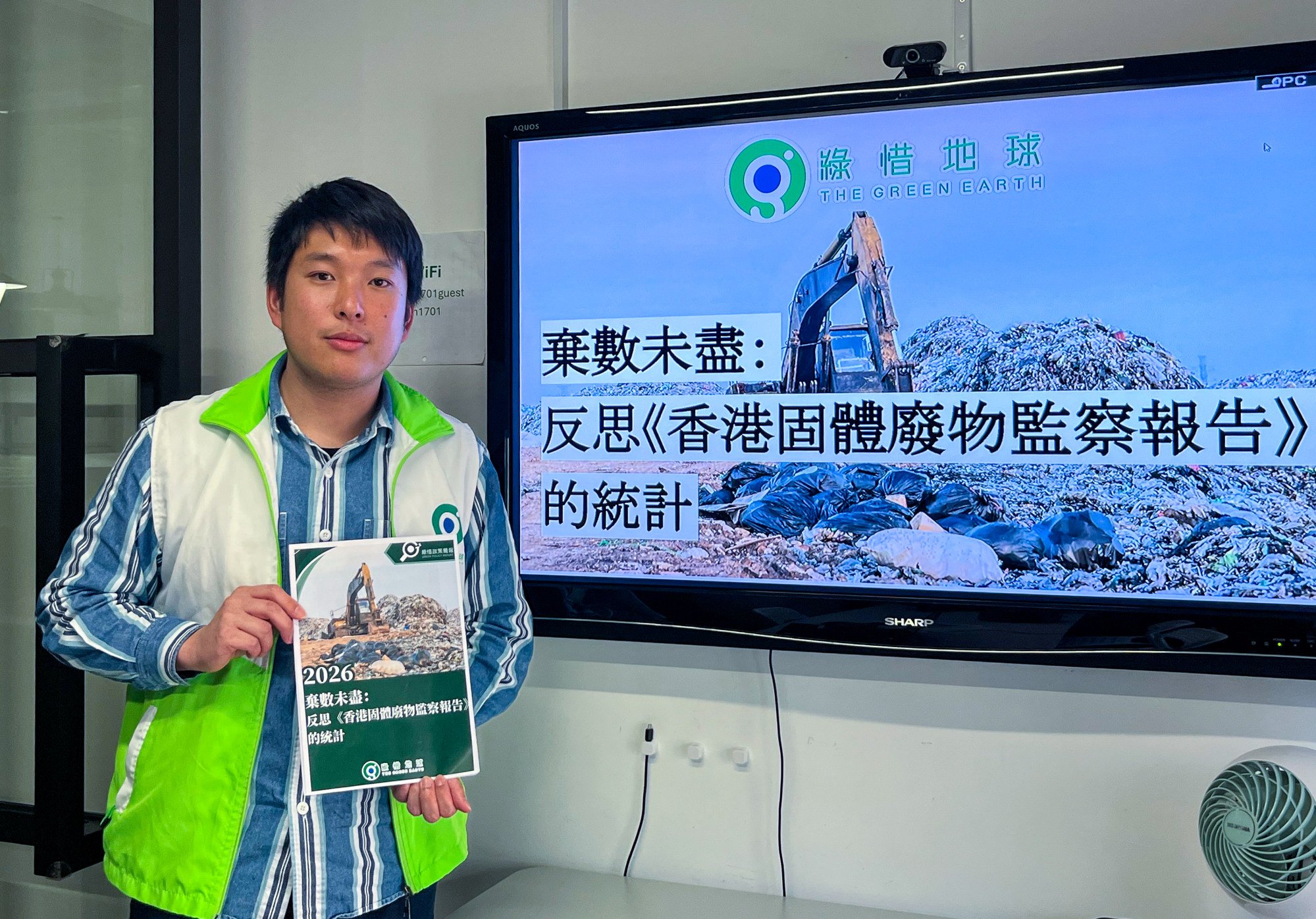
The lack of detail was among several blind spots identified by advocacy group The Green Earth.
“Comprehensive and accurate waste data is essential for designing effective waste reduction policies. We hope the government can increase information disclosure to allow the public to take part in the policy discussion,” said Steven Chan Wing-kit, assistant environmental affairs manager of the NGO.
“Informing the public about which kinds of waste are being disposed of in large quantities without being recycled could also help the circular economy because it means opportunities for the recycling business.”
In its 2023 report, the NGO found that nearly 75 per cent of all paper waste and 40 per cent of all plastic waste were classified as “others”. The share declined only slightly in 2024.
Although a brief footnote explained that these included tissue paper, paper bags, thermal paper, food packaging, paper cutlery, toys, buckets and stretch film for packaging, among others, no breakdown of volumes was provided.
“Cardboard, newsprint, office paper and Tetra Pak were singled out for tracking because they used to be the majority ... but if they have become the minority, the reporting method should be updated to enable effective waste reduction,” Chan said.
The breakdown provided for plastic waste only covered bags, bottles and dinnerware.
The NGO also pointed out missing recycling data for items soon to be covered under the producer responsibility scheme, such as drink cartons and lead-acid batteries.
Even existing schemes for glass bottles and plastic bags lacked such figures.
Chan warned that without a baseline, it was impossible to tell whether any decline in waste results from policy effectiveness or simply reduced consumption and imports.
The producer responsibility scheme requires stakeholders to share the burden of collecting, recycling, treating and disposing of end-of-life products.
In response, a department spokesman said it was “unnecessary” to produce more granular waste and recycling figures, insisting that the current statistical framework was sufficient.
He said the government generally took into account policy needs, data collection feasibility, administrative costs and data reliability and accuracy, among other factors.
He added that conducting a more detailed landfill survey would require greater manpower and time, and the results would only be more accurate if the sample size were much larger.
“It’s more important that we have a breakdown of the waste that can be recycled, as for those that cannot, it’s not necessary to know in detail what they are,” he said.
For instance, the government has no plan to reveal the disposal volume of paper cutlery, which became popular after the ban on plastic ones two years ago, because such items cannot be recycled at all.
He said the government would refer to photos of rubbish to gauge what unclassified waste consists of and to develop relevant policies, such as promotion campaigns to cut packaging waste.
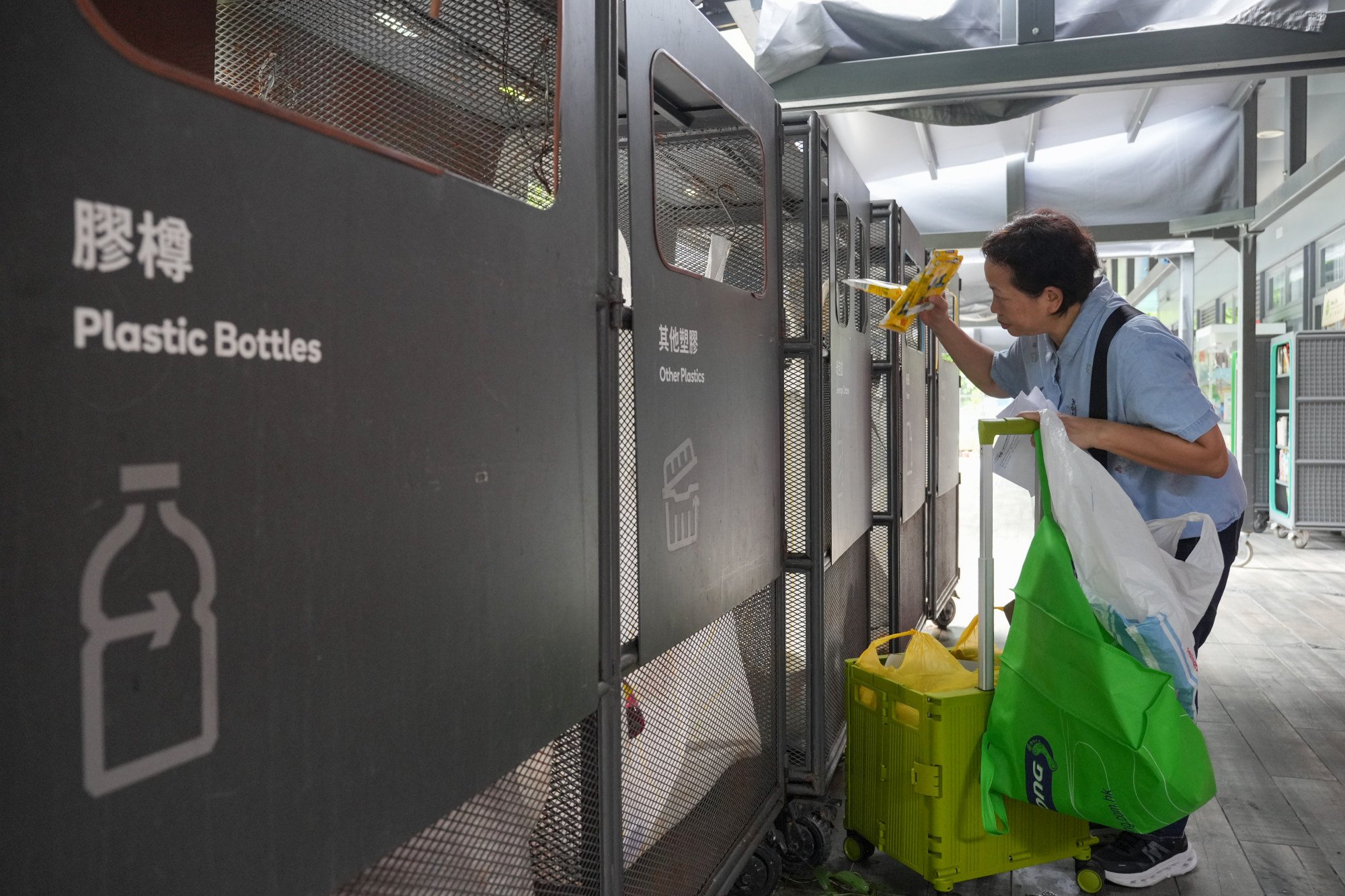
As for recycling figures, he said authorities relied on recycling businesses to provide data.
“If we asked for too many details, such as what types of plastic they collected, they would not have time to entertain us, so we tried to get a general figure only,” he said.
The spokesman also said that it was unnecessary to separate the recycling figures for glass drink bottles, as they were likely to have accounted for most of the recycled glass. The same reasoning applied to drink cartons within the overall Tetra Pak waste category.
He added that the government did not need a baseline recycling figure to assess whether its policies are effective.
“If the decline in disposal volume is sudden and sharp, we could attribute it to the policy,” he said.
“We are working towards the goal of achieving zero landfill by 2035; some of the waste is not classified in the report, but it doesn’t mean we have no idea what they are. We expected the decline to continue.”
The government earlier shelved its pay-as-you-throw waste-charging scheme indefinitely, arguing that the recycling rate had increased and the disposal rate had declined for at least three consecutive years, even without the legislation.
In 2024, the city sent an average of 10,510 tonnes of waste to landfills each day – equivalent to 1.4kg per person – with a recycling rate of 34 per cent. -- SOUTH CHINA MORNING POST