SINGAPORE (The Straits Times/ANN): Singapore is setting aside S$1 billion (RM3.3bil) over a period of five years from 2025 to 2030 to boost its public research capabilities in artificial intelligence (AI).
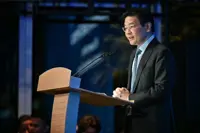
Announced by Minister for Digital Development and Information Josephine Teo at a gala dinner during the Singapore AI Research Week on Jan 24, the funding is drawn from both the Research, Innovation and Enterprise (RIE) 2025 and 2030 plans.
This is the second tranche of government funding for public research and development in AI, after the first investment of over $500 million from 2019 to 2023 under RIE2020 and 2025.
The RIE plan is a strategic road map that outlines Singapore’s key directions, priority areas and programmes to further strengthen its research capabilities and drive impactful innovation. The plans are administered by the National Research Foundation.
The latest investment comes amid Singapore’s push to strengthen its position as an AI research hub.
The funding will focus on three key areas – fundamental AI, applied AI and talent development.
Fundamental AI research looks into the core AI models and technologies that are trained and then adapted to power many different applications.
The Government will establish research centres of excellence (RCEs), hosted in Singapore’s public research institutions.
“These centres will comprise teams of researchers – established as well as upcoming individuals – focused on long-term, difficult questions. We expect them to partner actively with others in our local ecosystem and internationally. We also want their research discoveries to be shared openly, to contribute to the global knowledge commons,” said Mrs Teo.
These RCEs will complement the current network of more than 60 AI Centres of Excellence, which are launched by technology firms in conjunction with the Government to help drive AI adoption in enterprises.
But there will be fewer RCEs, and each centre is backed by larger investments.
The research centres will focus on four priority areas.
One is resource-efficient AI, which refers to AI systems designed to use less computational power and data.
On its relevance to Singapore, Mrs Teo said that AI training and inference are extremely resource-intensive as they draw on large amounts of energy and water.
She noted that the Republic already has one of the region’s densest concentrations of data centre capacity, and any expansion must be carefully managed. This is where research into resource-efficient AI can complement the green data centre road map and yield strategic value.
“We aim to find new ways to gain efficiency across the tech stack – from chip architectures to model and application design. Achieving success will not only benefit ourselves, but others with similar constraints,” said Mrs Teo.
Another priority area is responsible AI, which involves designing systems that guard against misuse for malicious purposes like producing harmful content.
There are also emerging AI methodologies, which are new ways of building AI to make it smarter and more flexible, such as models that handle multiple types of data or act autonomously.
The last priority area is general-purpose AI, which can handle many tasks across fields. For example, in drug development, it can read research papers and analyse proteins, all in one system.
To complement research into fundamental AI, Singapore will also invest in applied AI research, which focuses on using AI to tackle real-world problems.
Capabilities will be built to support the adoption of AI in key industries such as manufacturing and trade, health, urban solutions and sustainability, and science.
Mrs Teo highlighted Jewel at Changi Airport, where the gala dinner was held, as an example of applied AI. The airport uses AI in security screening, automated baggage handling, and robots for inspections and cleaning.
To further strengthen Singapore’s applied AI research capabilities, the funding will go towards nurturing research talent – individuals who are proficient in AI and have domain expertise.
“We aim also to build core AI engineering capabilities for the translation of theory to systems and applications,” said Mrs Teo, adding that Singapore has good foundations to build on.
She cited examples such as national programme AI Singapore, which has helped hundreds of organisations use AI; and the Sectoral AI Centre of Excellence for Manufacturing, which has rolled out use cases in industrial automation, predictive maintenance and product design.
The last key area that the funding will support is talent development.
Mrs Teo said: “We will strengthen our talent base through nurturing AI research expertise at all levels. We will continue to support our International Olympiad training teams. We will enhance scholarships and research opportunities for our students, so they will be well-placed for competitive PhD, post-doctoral and faculty openings in top institutions.”
The RCEs will also continue to attract top-tier AI start-ups and tech companies to base their research and innovation teams in Singapore, she added.
In addition, the funding will support the AI Visiting Professorship (AIVP), where world-class overseas researchers work with Singapore collaborators on projects aligned with the national AI research agenda. Launched in 2024, the initiative has supported eight projects to date.
One beneficiary of the AIVP is Mr Gregory Lau, a PhD student at the School of Computing at the National University of Singapore. He is currently working under an AIVP project led by a top natural language processing researcher, Dr Koh Pang Wei, who is based at the University of Washington.
One key project Mr Lau has been working on involves developing AI foundation models that scientists can use to design new proteins for applications such as drug delivery.
The research addresses challenges in leveraging the rich scientific information from data in a wide variety of forms – from abstract knowledge in scientific papers to experimental and simulation data, such as 3D protein structures and amino acid sequences.
Mr Lau worked in Dr Koh’s lab from September to December 2025, where he benefited significantly from the vibrant AI ecosystem in Seattle and the University of Washington.
“One key aspect is learning how to bring different perspectives and approaches together to tackle big, ambitious problems. For example, the project I am working on involves deep expertise from the scientific domain, large-scale model training and natural language processing methods,” he said.
“I picked up a lot of learning points in not only all these areas, but also how such a team can work well together.” -- The Straits Times/ANN