YANGON (Bernama): The third and final phase of Myanmar’s national voting kicked off on Sunday morning, paving the way for the formation of a new government after the final results are announced later this month.
Election Commission Chairman U Than Soe yesterday briefed international election observers in Myanmar who are monitoring the final round of the polls, being held for the first time in five years since the military took control in February 2021.
"Political parties and Hluttaw (lawmakers) candidates conducted their campaigns in accordance with the law and regulations, enabling the elections to be held peacefully without major conflicts or disputes,” Than Soe told foreign observers, reported state media The Global New Light of Myanmar today.
Due to internal political instability, the elections are being conducted in different phases. Phase 1 of the voting was held on December 28 last year, followed by Phase 2 on January 11.
A total of 4,863 candidates from 57 political parties are contesting in the election - vying for the Pyithu Hluttaw (lower house), the Amyotha Hluttaw (the upper house), and state and regional parliaments, according to the state media.
More than 24 million eligible voters are registered nationwide to cast their ballots across 692 constituencies.
The pro-military Union Solidarity and Development Party (USDP) has taken a major lead in the polls, which is likely to form the government, according to media reports.
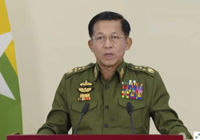
The State Security and Peace Commission Chairman, Senior General Min Aung Hlaing, the current leader of the government, is tipped to be elected as the country’s next president.
Malaysian Foreign Minister Datuk Seri Mohamad Hasan said the Association of South-East Asian Nations (Asean) did not recognise the election, citing concerns over lack of inclusivity and transparency.
"Malaysia also did not send representatives or observers to the elections, as we have already stated that they must allow full participation and not be selective,” he said told the Malaysian Parliament on Tuesday. -- Bernama