Major international marques, from Tesla to Volkswagen, continued to lose market share in mainland China, as consumers increasingly favoured new domestic electric vehicle (EV) models equipped with hi-tech features.
But in 2026, foreign carmakers are expected to stage a comeback when they launch models with innovative technologies, which are expected to attract buyers in spite of sluggish consumer demand, according to industry officials and analysts.
“Finally, foreign OEMs [original equipment manufacturers] will fight back because they will have the same products,” said Denis Depoux, global managing director at consultancy Roland Berger. “I think this comeback will take place this year.”
Competition in China would not remain a “one-way traffic” because international marques have learned from their mainland counterparts, particularly the assemblers of pure electric and plug-in hybrid vehicles, on which features most appealed to local consumers, according to Depoux.
His assessment reflected how major foreign carmakers, who led the Chinese auto sector over the past three decades, remained under pressure to close the distance with domestic rivals in the world’s largest automotive and EV market.
International marques, via their mainland joint ventures, delivered 7.44 million vehicles to customers in the first 11 months of 2025, data from the China Passenger Car Association (CPCA) showed.
That number translated into 34.6 per cent of the 21.15 million total deliveries nationwide during the period. It also represented a further decline in their China market share, which stood at 39.5 per cent in 2024, according to the CPCA.
Driven by their bestselling petrol vehicles, international marques in 2022 commanded a 52.7 per cent share of the mainland’s car market before it dropped to 48.1 per cent the following year.
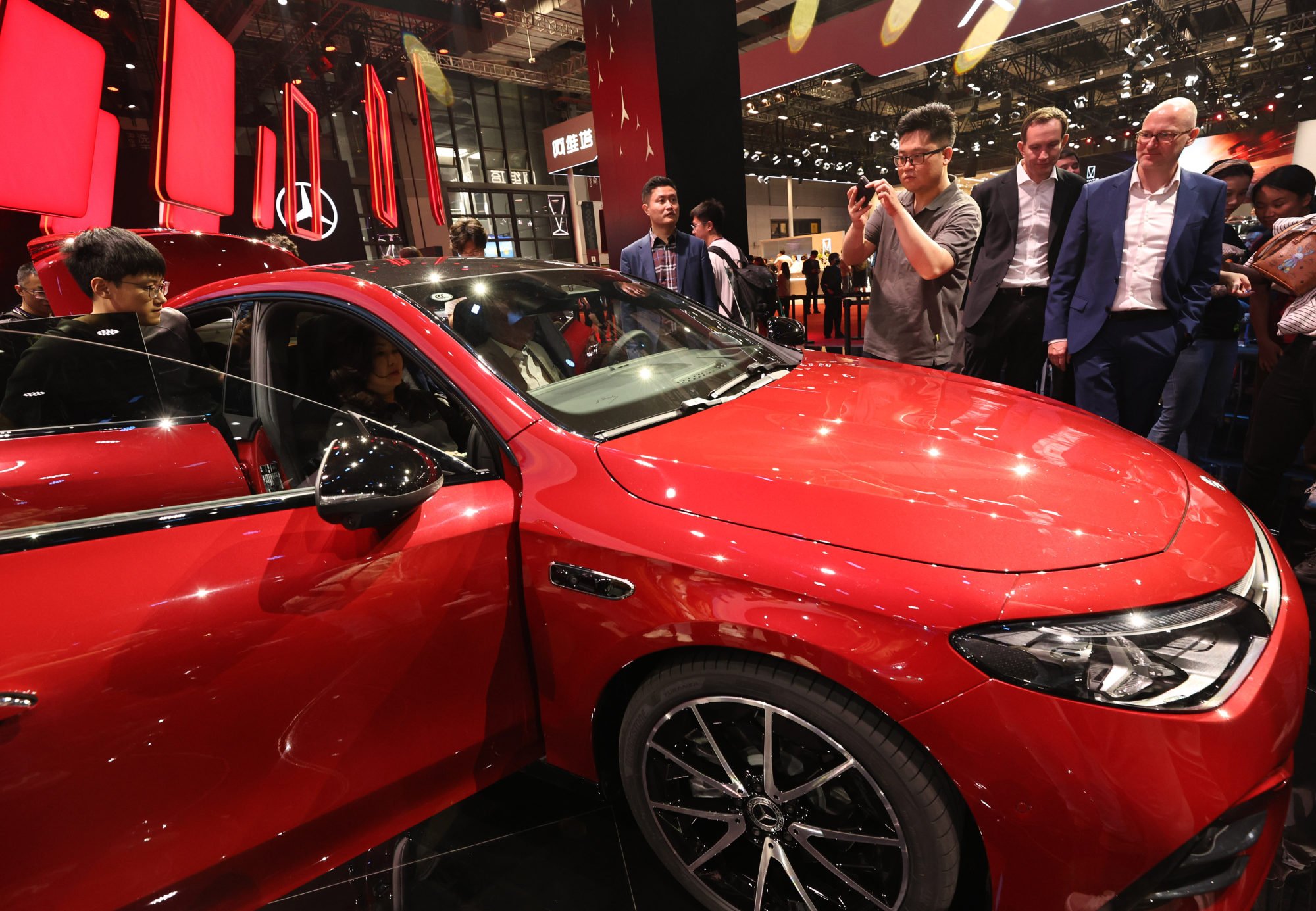
Last year, heavyweight international carmakers – including Toyota Motor, Nissan Motor, Mercedes-Benz and BMW – launched new EV models in China that featured preliminary self-driving systems and sophisticated digital cockpits, aiming to regain lost ground.
Most of them relied on Chinese supply chain vendors and technologies to design and build intelligent EVs to attract local consumers, according to a report by Deutsche Bank.
Some of those models proved to be successful in the local market, where the EV penetration rate exceeded 50 per cent.
At present, Tesla remained the only foreign carmaker that owned and operated a plant in China. Other international firms assembled vehicles through their Chinese venture partners.
Launched in April, Nissan’s N7 sedan, which is equipped with a preliminary autonomous driving system, reported 45,382 deliveries last year.
The fully-electric N7, with prices from 119,900 yuan (US$17,226), was reported to be on par with Xpeng’s Mona M03, which was one of China’s bestselling pure electric sedans last year.
Both models had features found in Tesla’s Model 3, but sold for less than half the price of that Shanghai-made EV.
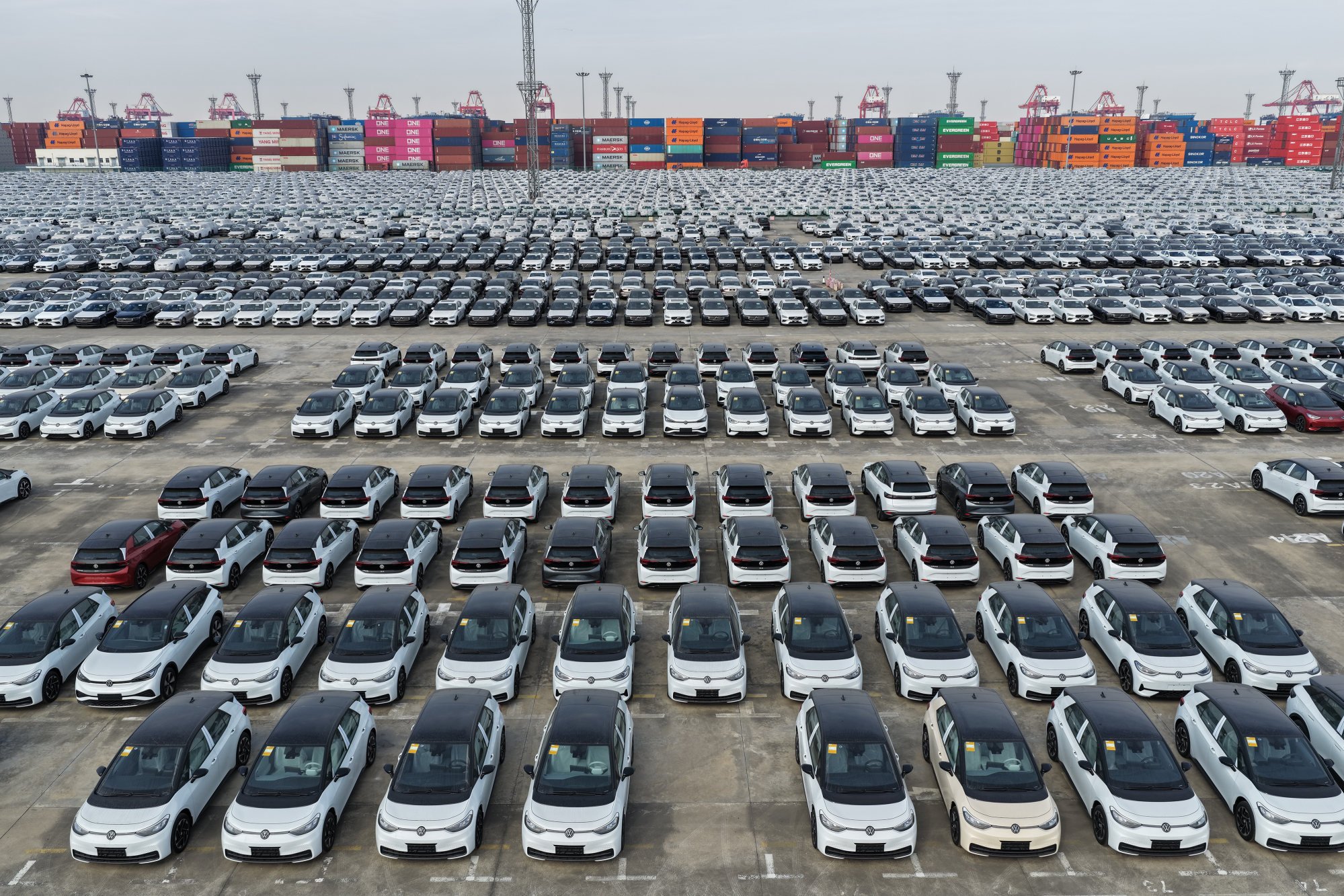
Volkswagen, once China’s bestselling car brand, announced in November that its mainland operations were now able to design and validate new models without going through approvals from its German headquarters, a move that was expected to strengthen its competitiveness against local brands.
The establishment of the Volkswagen Group China Technology Company marked a groundbreaking move for the carmaker to develop China- specific EVs through shortened decision loops and quicker innovation to maturity, according to Thomas Ulbrich, chief technology officer at VW China.
The German marque is poised to launch a new EV model this year that leverages Chinese technology, as its competed against domestic players like BYD and Geely.
The mainland’s second-largest carmaker, Geely, on Thursday unveiled its goal to deliver 6.5 million vehicles a year, comprising both petrol and electric cars, by 2030. That would represent a 58 per cent jump from its 4.12 million deliveries in 2025.
Geely CEO Andy An Conghu said 75 per cent of its vehicles in 2030 would be electric-powered, as the company aimed to become a top five global carmaker.
While Chinese EV giant BYD and Geely were currently ranked among the world’s 10 largest marques, McKinsey predicted that up to five Chinese vehicle assemblers would likely make the top-10 list by 2030.
Between January and November, Japanese brands including Toyota and Honda Motor had a 12.2 per cent share of the Chinese car market, compared with 13.7 per cent in the whole of 2024, according to the CPCA.
German marques also saw their market share slide to 15.4 per cent during that period from 17.7 per cent in 2024. US carmakers’ market share slipped to 5.8 per cent from 6.1 per cent.
Deutsche Bank estimated mainland passenger car sales would fall 5 per cent in 2026, while JPMorgan forecast total deliveries to decline from 3 to 5 per cent this year. Meanwhile, Swiss bank UBS predicted total deliveries in China could see a 2 per cent drop this year. -- SOUTH CHINA MORNING POST