
US President Donald Trump’s accelerated push to seize Greenland has transformed a once-quirky idea into a full-blown diplomatic crisis, with observers warning it could deal a near-fatal blow to the post-war transatlantic order.
Trump initially did not rule out the use of America’s military to control the autonomous Danish territory but backed down at the World Economic Forum in Davos on Wednesday, saying that he “won’t use force”.
He also called off tariffs against European countries over their objections to his efforts to acquire Greenland, and in a social media post Trump said he and the Nato chief had reached “the framework of a future deal” regarding the island.
In an interview with CNBC soon after, he said: “We’re going to work together on something having to do with the Arctic as a whole, but also Greenland. And it has to do with the security, great security, strong security, and other things.”
Trump did not elaborate on the “framework” except to say that the agreement would last “forever”.
The dispute over the Arctic island has strained Europe’s relationship with the US and it could force the EU to recalibrate its ties with Beijing because of Washington’s increasingly coercive and unpredictable ways.
Home to the world’s eighth-largest reserves of rare earths, as well as other critical minerals needed for electronics, defence systems and green technologies, Greenland is geographically close to North America but remains politically tied to Denmark.
Greenland’s mineral wealth, especially in rare earth deposits, has long generated interest, with Trump saying in 2019 that the territory’s acquisition would be “strategically nice” for the US. But realising this potential has been impeded by logistical challenges, environmental considerations and opposition from residents.
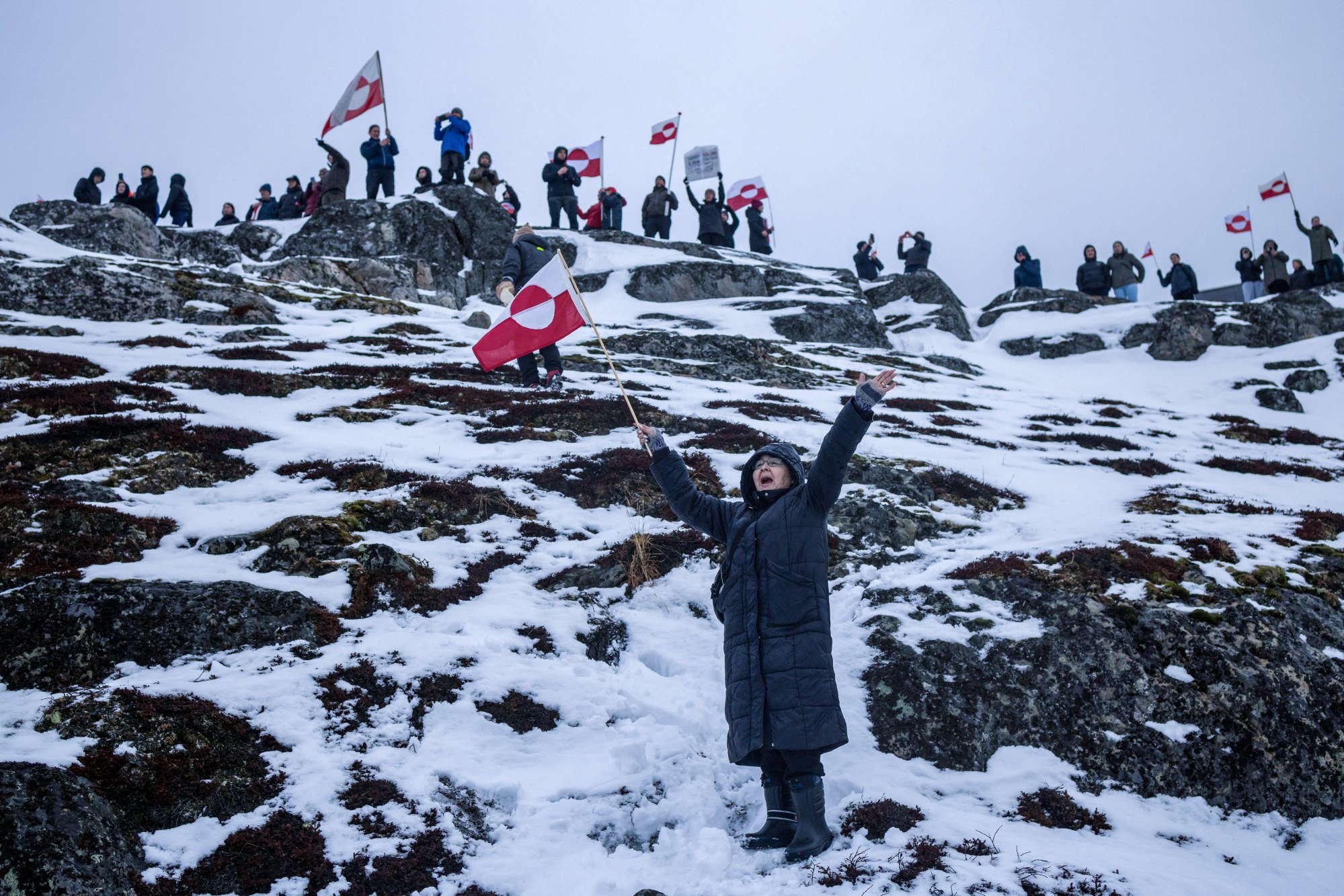
Overlooking key North Atlantic and Arctic shipping lanes, Greenland’s importance has grown as Washington and its Group of Seven partners have sought to reduce their dependence on China’s dominance in processing critical minerals.
In addition, melting sea ice resulting from global warming has opened possibilities for shorter trade routes to Asia and made it easier for the extraction and transport of those untapped deposits of rare earths.
Under a 1951 defence agreement with Denmark, the US already enjoys extensive rights to station troops and operate military bases in Greenland, including the Pituffik Space Base (formerly Thule Air Base), which underpins American missile warning and space surveillance operations.
In framing Greenland as essential for countering Russian and Chinese influence in the Arctic, Trump has doubled down on his long-voiced desire to acquire the world’s largest island, insisting that anything short of US ownership would be “unacceptable”.
While China aims to become a “polar great power” by 2030, as Beijing stated in a 2018 white paper, its presence in the Arctic, especially militarily, has been modest, despite growing joint coastguard operations there with Russia since the Ukraine war started in 2022.
China has established scientific research stations in Iceland and Norway and invested in projects such as Russian liquefied natural gas and a Swedish railway line. It also operates a few icebreakers equipped with deep-sea mini-submarines and satellites for Arctic observation, which it claims are for scientific research.
Cui Hongjian, head of European Union studies at Beijing Foreign Studies University, dismissed Trump’s warnings about China’s Arctic ambitions, instead describing them as “normal economic activities conducted on a mutually beneficial basis, not the ‘threat’ that America claims”.
For Washington, even hypothetical future Chinese control would be intolerable, pushing the US towards a “control first, use later” approach, said Cui, a former diplomat. He called Trump’s insistence on acquiring Greenland “imperialist expansion”, unconstrained by alliance ties or international law.
“This reveals the fundamental starting point of Trump’s foreign policy, the supremacy of strength. How far one can go depends entirely on hard power,” Cui added.
He urged China to show its principled stance towards Europe and reassure the international community with “certainty and stability”.
“The international community urgently needs a balancing force to check US hegemony and imperial thinking,” Cui said. “We cannot allow the US to continue its current course.”
“China needs to balance managing relations with America with standing firm on principle,” he added. “Its stance on Greenland should take into account both US and European factors and serve as part of its global governance agenda.”
Analysts said a US takeover of Greenland would effectively dismantle Nato, a view echoed by Danish Prime Minister Mette Frederiksen, who warned that a US attack on Greenland “would be the end of Nato”.
With mutual trust in the transatlantic security alliance at its lowest point in decades, a US attack on Denmark would plunge most European countries into a political crisis and mark “the final step of decoupling the US and Europe”, according to Andreas Osthagen, research director for Arctic and ocean politics at Norway’s Fridtjof Nansen Institute.
Constanze Stelzenmueller, director of the Centre on the US and Europe at the Brookings Institution, agreed that outright military coercion would fundamentally violate Nato’s principles, but called it “the least likely” scenario.
Instead, Stelzenmueller described a “broad grey zone” of milder coercion, including “reopening and staffing abandoned US military bases”, economic suasion, political pressure and propaganda campaigns.
“That would not necessarily constitute a violation of the letter of the Nato treaty, but it would still violate its spirit, with expectable consequences,” she added.
Amid the risk of “a crisis in the transatlantic alliance”, Gabor Csizmazia, a research fellow at Ludovika University in Budapest, expressed less concern, citing Nato’s resilience seen in past crises and Europeans’ accommodating approach towards the Trump administration on defence spending, trade relations and arms to Ukraine.
Csizmazia said the Greenland issue could be resolved diplomatically between Washington and Copenhagen, with neither side abandoning collective defence cooperation.
But other analysts warned that, for Europe, Greenland had transcended a sovereignty dispute, becoming a stress test of how far the US was willing to go in the Arctic and how much strain the transatlantic system could bear.
Cui said that if the transatlantic disagreement over Greenland were to spiral out of control and force Europe to bend to American pressure, Brussels could reassess its alignment with Washington on Beijing, creating opportunities for selective cooperation on climate, minerals and supply chains.
As the US sought to isolate China, Europe might not follow suit, perhaps even “moderately aligning itself with China, using China as a card against the US”, he added.
A deeper rift between the US and Europe could create diplomatic openings for China and contribute over time to a more multipolar, less “Western-centred” order, Cui said.
In the short-run, multipolarity increases volatility and raises the costs for all major powers, including Beijing, which must navigate multiple contentious relationships at once, he added, and “the diversion of US attention may reduce concentrated pressure on China in the longer term”.
For China and Russia, the crisis is double-edged, according to many analysts.
Moscow and Beijing would be expected to exploit “cracks in the Western alliance and try to widen them”, Csizmazia said, yet he cautioned that their increased military activities in the Arctic would likely elicit “unease in Europe” and could ultimately strengthen Western coordination.
Others pointed to the irony that Trump’s push for Greenland coincided with US pressure on allies to curb their dependence on China, a contradiction that could hasten Europe’s dual de-risking from the great powers.
The inconsistency in American policy could bring Europeans to reflect critically on their relations with both the US and China, realising that overreliance on Washington’s security guarantees carried political risks, including pressure on their sovereignty.
According to Osthagen, Trump’s coercive approach, which he said was fuelled by a “skewed and irrational idea of strategic interests” and diplomacy, risked driving Europe to develop its own security and industrial capabilities more assertively and undermining coalitions for disengaging from China.
Other European analysts said that while the Greenland crisis had accelerated Europe’s pursuit of strategic autonomy, it was unlikely to draw Brussels closer to Beijing, given the bloc’s wariness of China’s influence.
Andreas Boje Forsby, a senior researcher at the Danish Institute for International Studies, noted that Europe’s existing efforts to de-risk from China did not stem mainly from US pressure but from deep concerns about Beijing’s ties to Moscow and its role as a “strategic enabler” of Russian aggression in Ukraine.
“China, just like the US under the Trump administration, resorts to coercive diplomacy to pursue its own core interests,” Forsby said. “While Europe is certainly drifting away from Washington in its pursuit of strategic autonomy, it will remain highly sceptical of Beijing for these reasons.”
Analysts largely agreed about Greenland’s strategic value.
Cui from Beijing framed the Greenland drive as part of Washington’s “western hemisphere strategy”.
He said he saw Greenland as “about defining the boundary of the ‘western hemisphere’”, a “strategic fulcrum” that extended US dominance into the Arctic, where Russia was the dominant military power and China was seen as a “poor developer” whose investments supposedly threatened America’s advantage.
Meanwhile, Stelzenmueller said the rationale behind Trump’s claims had been “changing all the time”.
She said one rationale was that Greenland was needed as a site for US radar to track intercontinental ballistic missiles coming from the Eurasian continent, adding that this was a right “the US already has”.
Stelzenmueller also highlighted an “underdiscussed rationale” regarding Greenland’s vast exclusive economic zone, which offers vital maritime access to both the Arctic and North Atlantic, as well as future seabed resources for mining and critical infrastructure.
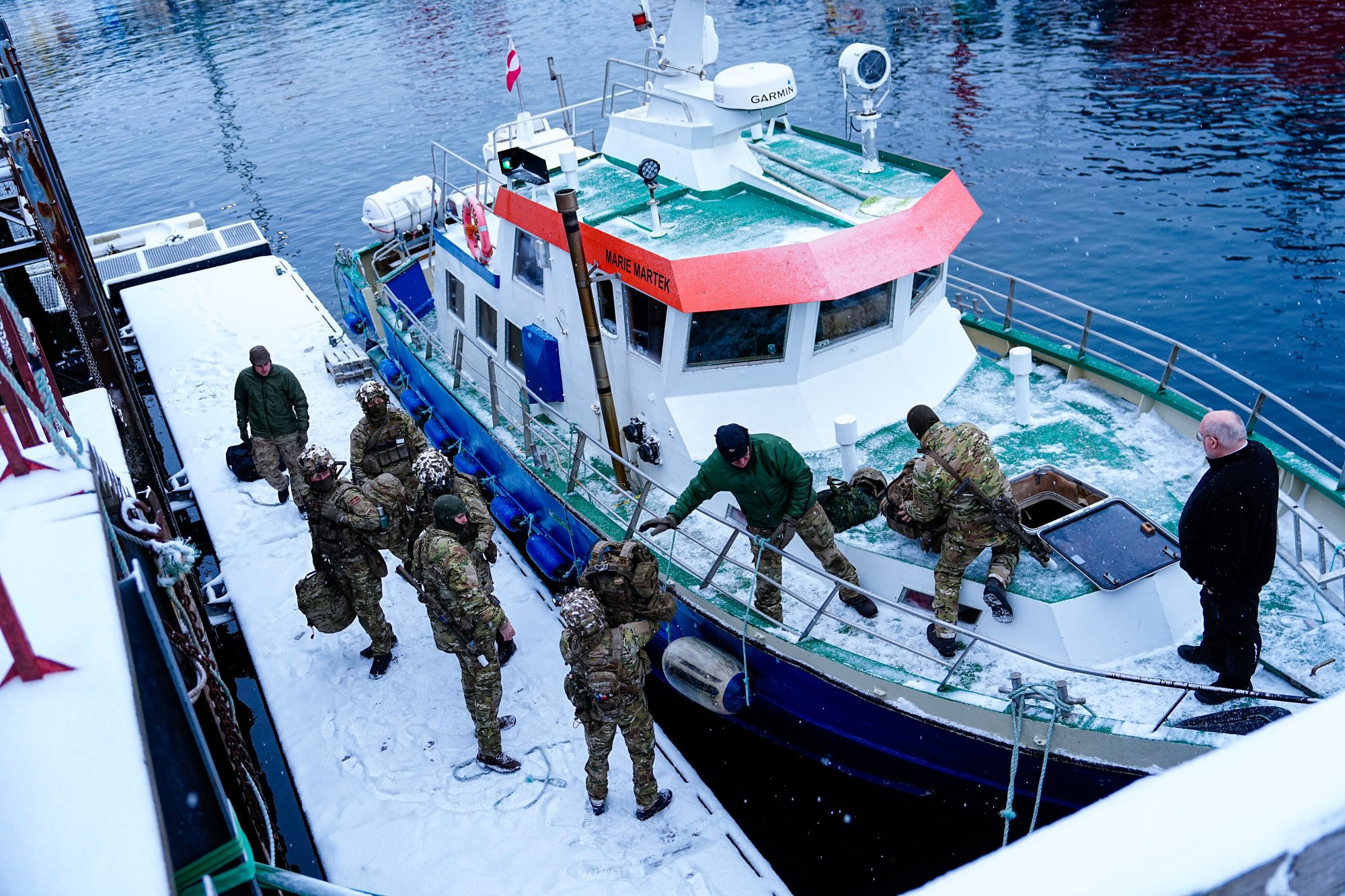
Csizmazia similarly stressed Greenland’s enduring strategic value.
“Greenland was important for basing US forces during World War II and the Cold War, and today’s great-power competition for the Arctic only adds to the island’s geographic importance,” he said, linking it to the Trump administration’s ambition to develop the so‑called Golden Dome missile defence system.
Other analysts argued that Trump’s latest insistence that the US must “own” Greenland “whether they like it or not” was tied to his personal style and political symbolism.
Forsby argued that “this has little to do with security” since Washington already had military access to Greenland through the 1951 agreement.
“Trump’s persistent demands can ultimately be reduced to his idiosyncrasies, specifically his obsession with ownership, expansionism and hemispheric dominance,” he said.
A Reuters/Ipsos poll last week showed that only 17 per cent of Americans supported Trump’s efforts to acquire Greenland, with more than 70 per cent opposing the use of military force against a Nato ally.
Forsby questioned Trump’s repeated assertions linking his push to a claim that, without US intervention, Greenland would have “Chinese destroyers and submarines all over the place”.
He noted that since the 2018 release of China’s Arctic policy in which the country called itself a “near-Arctic state”, China’s presence in the region “has been on the wane as the Arctic states have actively terminated or prevented Chinese projects and investments”.
Forsby said the reduced interest in engaging Beijing stemmed partly from fears of validating Trump administration narratives that used China as a pretext for acquiring Greenland.
Osthagen echoed this view, saying that discerning Trump’s thinking remained difficult and indicated a gap between Washington’s ambitions and diplomatic realities.
“If I had to choose, I’d say it is about symbolism, legacy and a miscalculated policy approach to both the Arctic and to European allies,” he said.
Osthagen added that despite China’s interests in Greenland and the Arctic, Chinese ships mainly sailed to and from Russia with raw materials and that many Chinese-invested projects “have been put on hold for security reasons”. -- SOUTH CHINA MORNING POST