Hong Kong authorities are “very concerned” about the tenants facing eviction from a Cheung Sha Wan building in March, as the landlords’ plans to upgrade the premises to comply with new rules left dozens living in subdivided flats in need of temporary housing.
The Housing Bureau said on Monday that it was in contact with 109 households in Yee Wa Building on Un Chau Street, with 72 expressing a need for transitional housing.
The remaining 37 households said they were considering applying for such housing or had already found accommodation.
“The Housing Bureau will process these transitional housing applications as quickly as possible,” it said.
The bureau said it was “very concerned” about the situation and understood that ownership of the Yee Wa Building had changed hands in November last year.
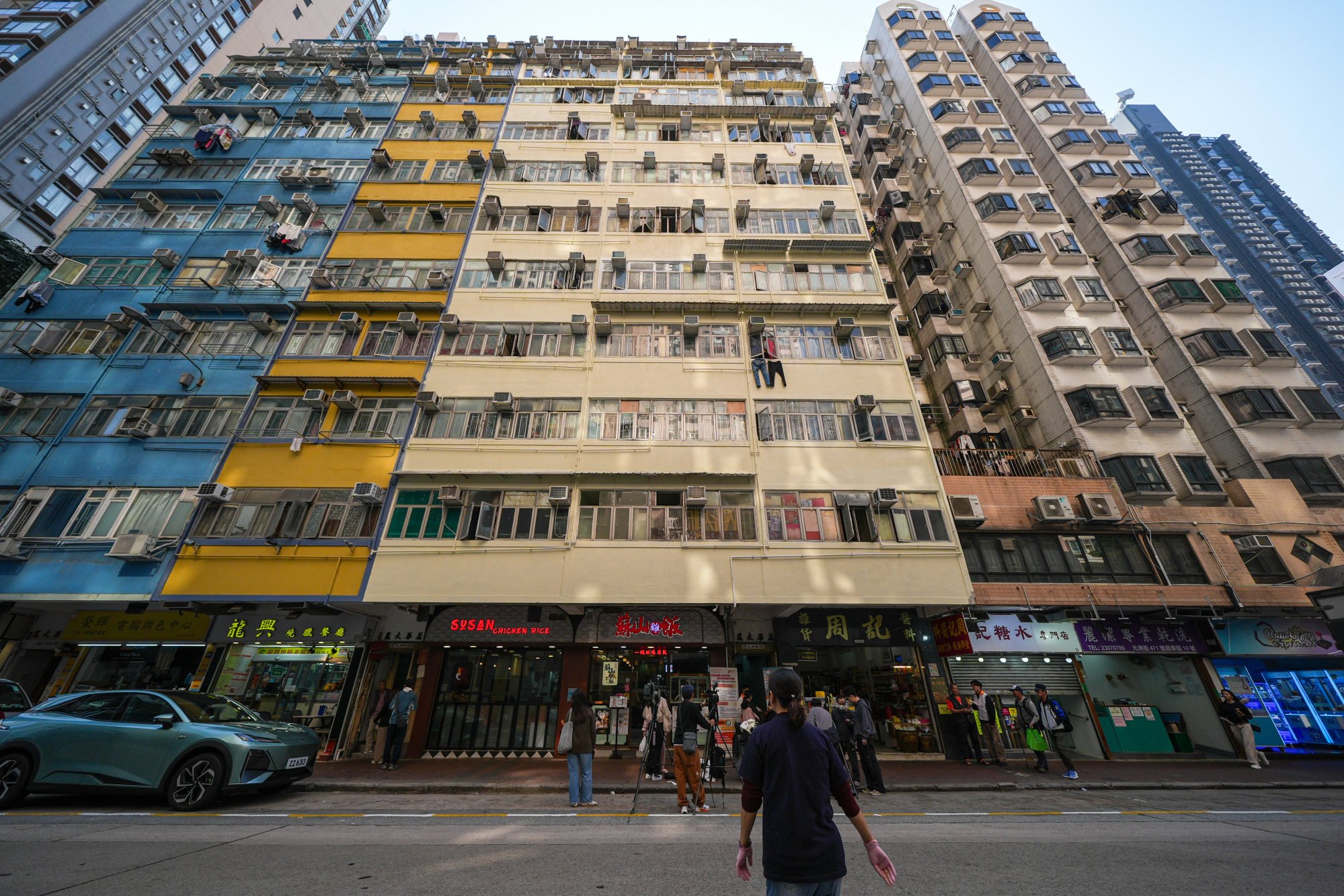
The two new owners, Long Champ 31 and Golden City International (Cheung Sha Wan), intended to reclaim the flats from the principal tenant to convert them into basic housing units required under a new law taking effect in March, the bureau told the Post.
“After communicating with the tenants, the new owners have granted extensions of three to 12 months (until between March and December 2026) to allow tenants more time to prepare for relocation,” it said.
Around 100 units – about half of the building’s subdivided flats – were already vacant or their tenants had moved out.
Some of the building’s residents, many of whom are elderly and retired, said they were worried about having to move to other districts.
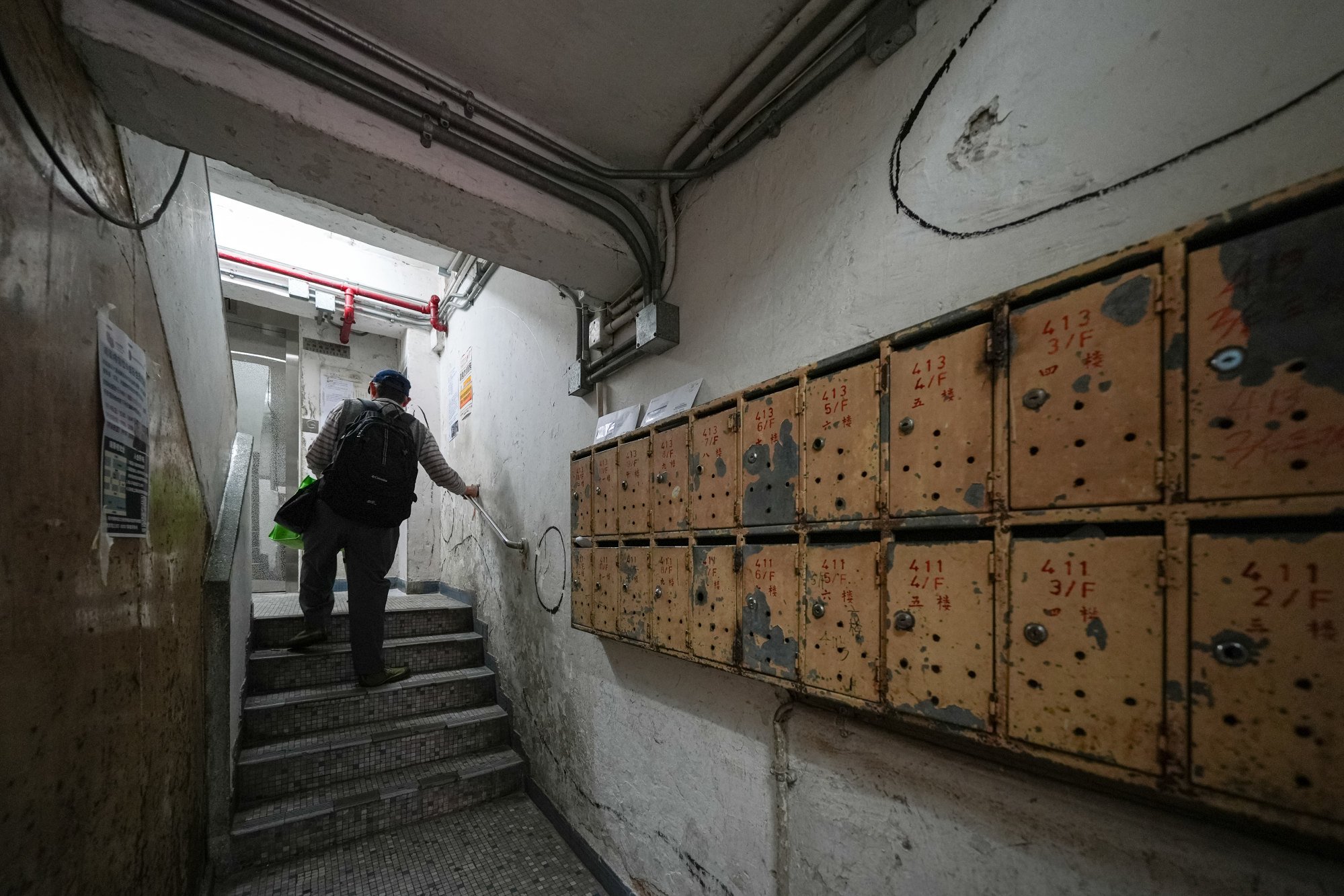
Tenants of the block, built in 1963 with 66 flats, told the Post on Monday that they hoped for an extension of the deadline for moving out and a rent subsidy to ease the pressure of relocation.
On the 10th floor, a single flat has been partitioned into multiple rooms, separated by thin wooden walls. Most are cramped and have bunk beds, with the top level used for storage.
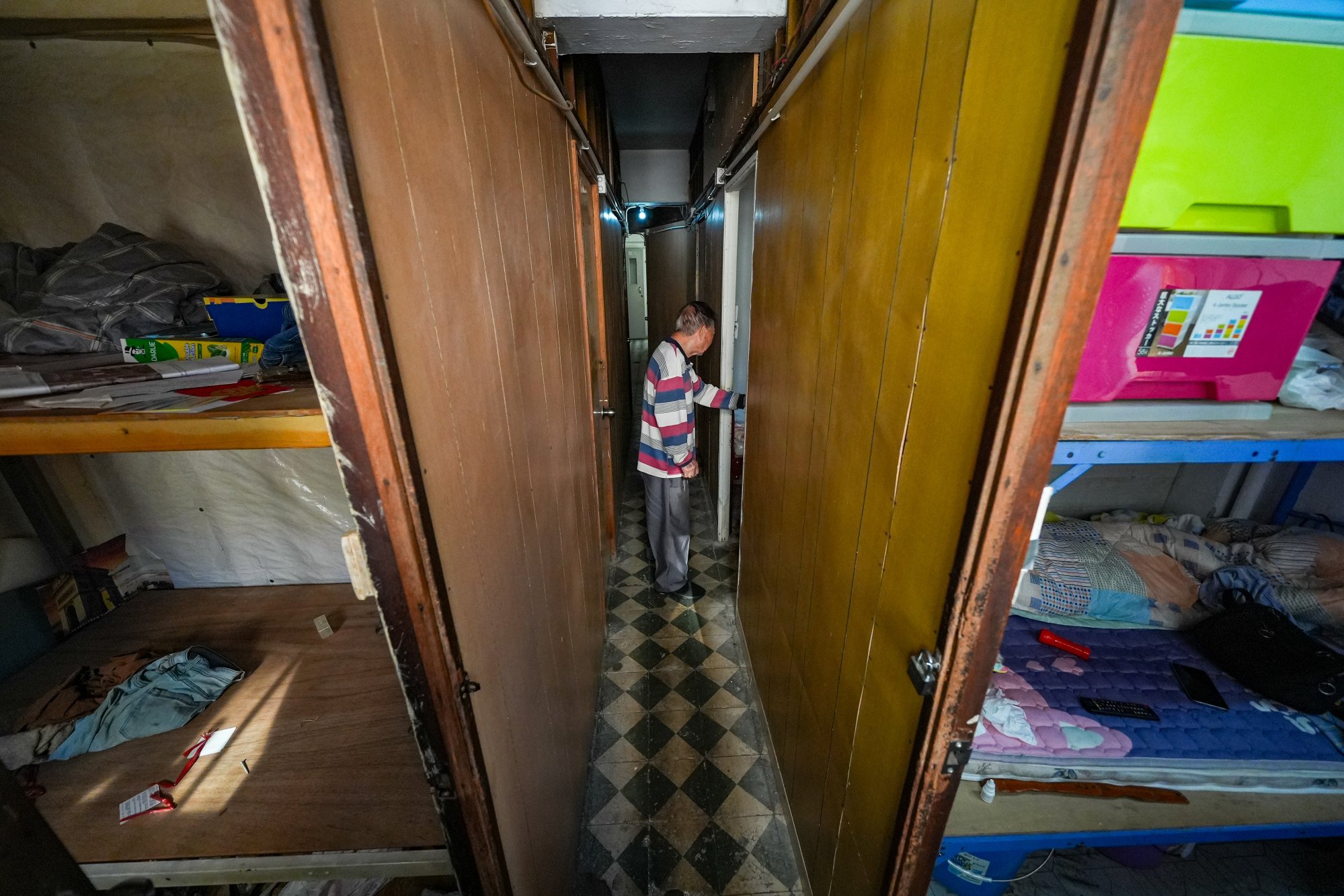
Tenant Ng Yim-sun, 75, said most of the neighbouring rooms were already vacant. Ng, who has lived in his 42 sq ft room for just over a year, said he felt “helpless” when he heard the news about having to move out and hoped for an extension until early June.
Ng, who pays HK$2,900 (US$370) a month for his space, said he could not afford a room in the same neighbourhood in a building with a lift, as rents could exceed HK$5,000.
Retiree Chan Sai-chiu, 72, has been organising meetings with residents since they were notified that they had to leave.
He said most residents, around 80 to 90 per cent of whom were elderly, preferred to relocate within Cheung Sha Wan rather than move to transitional housing in districts such as Yuen Long or Tai Po.
“[Some said] if you ask [them] to move elsewhere, it’s like asking [them] to die,” Chan added.
“Some have been [making a living by] collecting cardboard ... What can they scavenge for if they [move to] Yuen Long?”
Alice Lau Oi-sze, chief executive of the charity Lok Sin Tong Benevolent Society, said the NGO was currently handling eight households from the building, referred by housing authorities.
She said the NGO’s social housing scheme in Tai Po, which was currently accommodating victims of the Wang Fuk Court fire, would have around 30 vacancies by February for tenants evicted from their subdivided flats.
Lai Kin-kwok, a member of the Concerning Subdivided Units Alliance, an advocacy group, said more tenants of substandard flats were expected to face eviction with the new rules taking effect in March. The government also faced a challenge resettling them in urban areas.
He suggested authorities work with private care homes in urban areas to provide subsidised temporary accommodation for evicted single elderly tenants.
Last September, lawmakers passed legislation to eliminate substandard subdivided flats, with enforcement expected to start in 2027.
Landlords will be able to register their subdivided flats with authorities starting in March and will have a 36-month grace period, from March 2027 to February 2030, to bring their properties into compliance.
The Basic Housing Units Bill requires all subdivided flats to meet new standards for “basic housing units”, including a minimum size of 86 sq ft, a ceiling height of 2.3 metres (7.5 feet), proper windows and at least one toilet per unit.
According to official data, about 30 per cent of the city’s 110,000 subdivided homes, or 33,000, do not meet the criteria, though authorities said there would be a sufficient supply of public flats to rehome those displaced by the new regulations. -- SOUTH CHINA MORNING POST