
QUANG NINH: An ancient tomb covering a total area of 150sq m has been excavated in Vang Danh Ward in the northern province of Quang Ninh, revealing many major archaeological findings.
The Quang Ninh Museum and Library complex has announced the preliminary results from the archaeological excavation of the ancient tomb, while seeking expert consultation on its characteristics, historical value and strategies for conservation to ensure the preservation and enhancement of the heritage site.
The Chap Khe brick tomb, located adjacent to the Chap Khe Church in Vang Danh Ward, was uncovered during land levelling work by locals.
The Quang Ninh Museum has collaborated with the archaeological team led by Dr Nguyen Van Anh, head of the History Department at the University of Social Sciences and Humanities, Vietnam National University, to conduct excavations since December 2025.
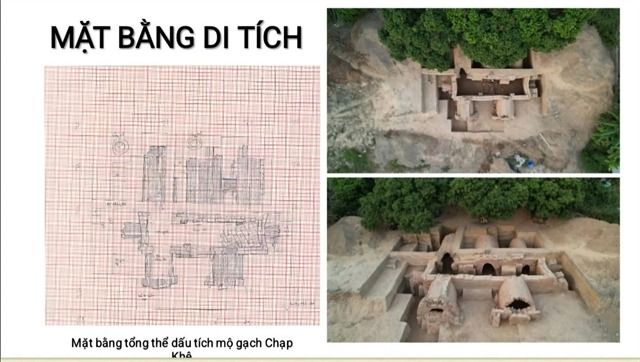
The results indicate that this is a brick tomb situated on a raised mound, covering an area of about 150sq m, significantly larger than other brick tombs previously discovered in Quang Ninh and across the country.
At a depth of 2.5m, archaeologists discovered a substantial structure consisting of two front chambers, one central chamber, and three rear chambers.
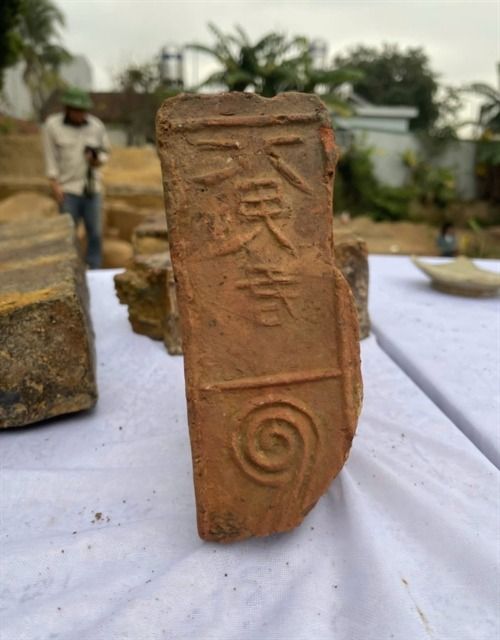
The entire tomb is constructed with high-fired rectangular bricks, featuring a vaulted ceiling. The bricks are adorned with decorations including coin motifs, diamond patterns, concentric circles, and 'S' shapes – symbols characteristic of early Common Era artistic design.
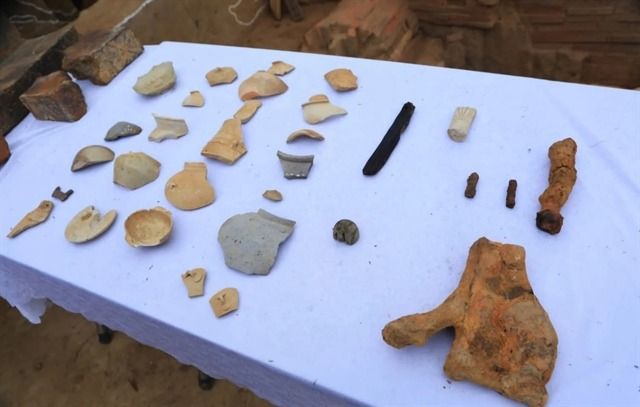
The artefacts retrieved from the excavation can be categorised into three main groups: architectural materials, including rectangular bricks and grapefruit-shaped bricks; terracotta pottery, which features models of houses and pots; and glazed ceramics, encompassing various types of vases, jars and lampstands.
Based on the structure and decorations of the artefacts, the tomb dates back to the 1st to 2nd centuries CE, about 2,000 years ago.
This type of burial site has been commonly discovered in the Bach Dang River basin, particularly in the former districts of Quang Ninh, such as Quang Yen, Uong Bi and Dong Trieu, as well as in the old districts of Hai Phong and Hai Duong, including Thuy Nguyen and Kinh Mon.
These findings serve as evidence of the crucial role that the Bach Dang River basin played as a cultural centre, administrative hub and densely populated area during the early Common Era.
The Quang Ninh Department of Culture and Sports, in collaboration with local authorities, has agreed to continue researching the structure, scale and dating of the site. They will compile a scientific record of the heritage site to propose its classification and develop a conservation plan to preserve the exposed site in its original condition.
There are also plans to transform this area into an archaeological park to support cultural preservation efforts and enhance heritage education, along with promoting cultural tourism in the region.
In Hải Phòng, the Côn Sơn - Kiếp Bạc Heritage Management Board has also discovered several large wooden posts within the grounds of the Kiếp Bạc Temple. Scientists are currently excavating and conducting tests to determine their dating. — Vietnam News/ANN