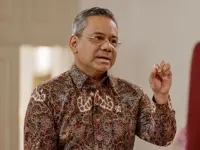
JAKARTA (The Straits Times/ANN): In a first for the country, Indonesia has been elected to chair the United Nations’ Human Rights Council (UNHRC) in 2026.
While Indonesian officials have hailed the appointment as proof of the country’s increased standing in the international community, several experts and human rights groups have raised doubts as to whether the development will improve the country’s human rights situation.
Indonesian Human Rights Minister Natalius Pigai hailed the appointment as a great achievement. “This is the first time in Indonesia’s 80 years of independence that we are leading an international, multilateral body,” he told reporters on Jan 6, two days before the country was officially appointed.
The Indonesian Ministry of Foreign Affairs echoed Mr Pigai’s sentiments, noting that the support that Indonesia received from the UN’s Asia-Pacific member states was a result of the country’s reputation as a “bridge builder”.
“The trust (in Indonesia) is based on Indonesia’s track record and consistency in working for the promotion and protection of human rights at the international level,” the ministry said in a statement on Jan 8.
Questions of credibility
Indonesia’s appointment was the result of a year-long negotiation with other UNHRC members, said Mr Pigai.
UNHRC was formed in 2006, with the promise of better effectiveness over its predecessor body – the UN Commission on Human Rights established in 1946, which had been criticised for its perceived bias. This was partly because its membership included states with questionable human rights records.
To address such concerns, UNHCR was created with a significantly smaller membership, with the aim of excluding the worst human rights offenders.
Yet, Indonesia’s appointment suggests that the problems that beset UNHRC’s predecessor body continue to plague the council, critics pointed out.
Amnesty International Indonesia executive director Usman Hamid said in a Jan 8 statement that Indonesia’s appointment was nothing to be proud of as it was simply the Asia-Pacific region’s turn in 2026 to chair the council.
“(Indonesia) did not get the position by virtue of its human rights progress,” he said, adding that, if anything, its human rights situation has worsened in recent years.
The question is whether the government could be using the appointment to reduce international pressure on resolving ongoing human rights issues, said Associate Professor Shofwan Al Banna Choiruzzad, an international relations lecturer at University of Indonesia.
The issues include concerns regarding freedom of expression and assembly, and the rights of minority religious groups.
“For Indonesia to optimise its leverage and legitimacy as president of the UNHRC, Indonesia has a moral responsibility to improve the quality of human rights protection in the country,” he told The Straits Times.
Poor human rights record
Amnesty International Indonesia had, in a statement issued in late December, called the year 2025 a “human rights catastrophe” for Indonesia, citing 5,338 arbitrary arrests of protesters and 238 attacks against human rights defenders, as well as the government’s “inadequate” response to the flooding in northern Sumatra.
In November, the UN raised similar concerns, with experts and special rapporteurs appointed by UNHRC flagging forced evictions in Lombok, West Nusa Tenggara, related to the Mandalika supertourism project – which aims to develop the area into a “new Bali” – as well as the lack of recognition for indigenous peoples in the country.
In August, the government also came under fire for the way it had dealt with widespread protests that were triggered after an armoured police vehicle ran over 21-year-old delivery driver Affan Kurniawan.
These circumstances raise serious doubts about Indonesia’s appointment, said Mr Dimas Bagus Arya, who heads Jakarta-based rights group Commission for the Disappeared and Victims of Violence.
“A forum that normatively places dialogue and participation at the core of its work is, paradoxically, being led by a state that routinely disregards public aspirations and criminalises expression and protest within its own civic space,” Mr Dimas said in a statement on Jan 8.
A possible turning point
Padjadjaran University international relations expert Teuku Rezasyah, however, expressed a more optimistic view.
“There is no country in this world that does not have human rights problems,” Dr Teuku told ST. “I think that (Indonesia becoming president of the UNHRC) is a sign that the international community recognises that while Indonesia has some human rights problems, there is progress.”
He said that Indonesia could further improve its standing by ensuring that it acts impartially as president of UNHRC while simultaneously working to improve the domestic human rights situation.
ASEAN Parliamentarians for Human Rights board member and former Indonesian MP Eva Kusuma Sundari said that the appointment should not be seen as a form of appreciation but as an opportunity.
“Indonesia has a lot of strategic capital,” she told ST. “We have a large population, we are relatively democratic, and we have a strong position in ASEAN. So it’s a matter of whether or not we can use that capital to take advantage of this opportunity.”
She added that at UNHRC, Indonesia would have more room for manoeuvring than it has in ASEAN, as the UN body does not share the regional grouping’s principle of non-interference.
“So this should be a good chance for Indonesia to show what it can do when it cannot hide behind ‘non-interference’, especially during this time where there’s a human rights ‘recession’ both domestically and globally,” she said.
Mr Dimas also suggested that Indonesia’s presidency could serve as a turning point for the country’s human rights situation if used correctly.
“Indonesia has an opportunity to prove that human rights leadership is not simply a matter of diplomatic prestige, but of value consistency, principled advocacy, and genuine political will to place human rights above narrow state interests,” he said.
“Without critical reflection and concrete action, the presidency risks becoming an empty symbol that offers no meaningful contribution to democratic life at home. -- The Straits Times/ANN