
Hong Kong aims to develop its “NewSpace” economy by positioning itself as a leading hub for finance, insurance, legal and arbitration services, and materials application in alignment with the nation’s development plan.
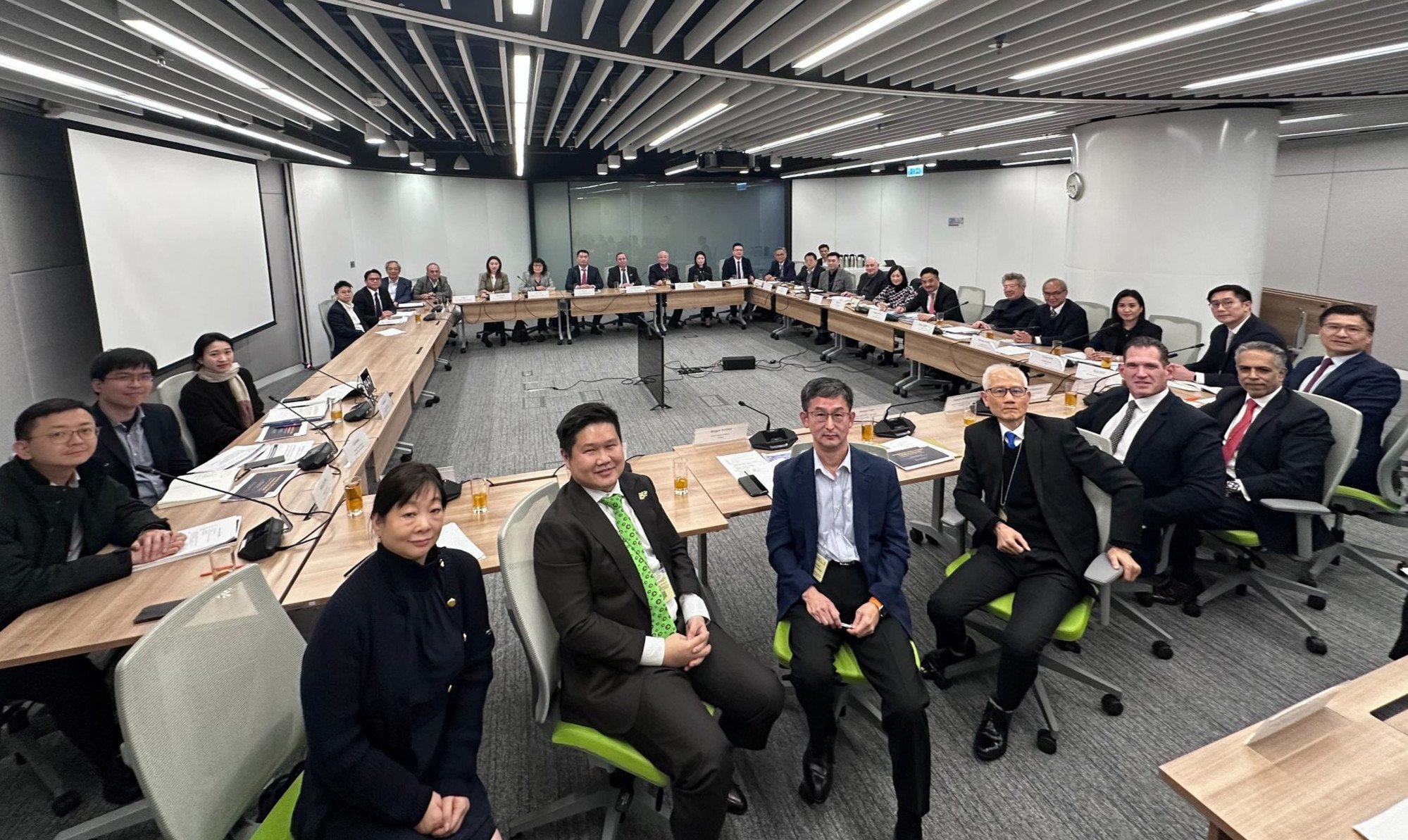
The Chief Executive’s Policy Unit revealed on Sunday that it had hosted a high-level round table on the space economy last week, inviting academics, investors and experts from mainland China and overseas to discuss Hong Kong’s strategic positioning and opportunities amid a global space economy boom.
NewSpace is an emerging industry that includes private firms involved in satellite manufacturing, launch services, space law, tourism and other commercial ventures concentrated on low Earth orbit – an altitude of 2,000km (1,240 miles) or less.
The unit said the global space economy could signal an era of “explosive industrial expansion”, and China’s 15th five-year plan – under which the country aims to cement its status as a “major space power” – had created a landmark opportunity for Hong Kong.
Chief Executive John Lee Ka-chiu highlighted the sector in his policy address last year, saying Hong Kong had advantages in internationalisation, financing and research.
Lee also announced at the time that the government had established a Space Robotics and Energy Centre under the InnoHK platform and had allocated HK$100 million (US$12.8 million) to six aerospace research projects covering materials, energy, communications, robotics, and data processing.
According to a 2024 World Economic Forum report, the global space economy is projected to surge from around US$630 billion in 2023 to US$1.8 trillion by 2035, at an annual growth rate of 9 per cent.
Stephen Wong Yuen-shan, who heads the policy unit set up in 2022 to gauge the public pulse and conduct research on mainland policies and international trends, said Hong Kong had to proactively seize the strategic opportunities presented by the nation’s 15th five-year plan.
He said that the national strategy – which covers the period from 2026 to 2030 – elevated the aerospace industry to new heights, particularly with the goal of helping commercial enterprises go global.
“For Hong Kong, the construction of a national aerospace powerhouse is not just a single-industry opportunity, but a strategic chance to participate in the entire industrial chain,” Wong said.
Hong Kong could contribute to basic research, professional services, international financing and data governance, injecting new momentum into the local economy, he said.
The government’s strategic investment arm, the Hong Kong Investment Corporation, pledged to facilitate NewSpace-related investment and the commercial application of aerospace technologies.
Among those who attended last Wednesday’s meeting were legal expert Anthony Neoh, Gregg Li, president of the Orion Astropreneur Space Academy (OASA), a start-up accelerator in Hong Kong, politicians including Regina Ip Lau Suk-yee and IT-sector lawmaker Duncan Chiu, and academics from local universities.
The policy unit quoted Neoh as saying that Hong Kong’s mature common law system and status as an international financial hub gave it a significant competitive advantage in space finance and legal services such as arbitration and regulation.
Ye Shalin, representing Chinese rocket maker LandSpace, often regarded as a challenger to Elon Musk’s SpaceX, discussed the commercialisation of reusable rockets and the roles Hong Kong could play in the global space industry chain.
Adam Janikowski, founder of merchant bank BDJ Capital, weighed in on international investment interests in emerging aerospace industries. Mahesh Harilela, family council convenor of the Harilela Group, discussed the group’s interest in the NewSpace economy and advanced technologies.
Attendees concluded that Hong Kong could leverage its strength in data processing and computing to become a data hub for the NewSpace economy and offer professional services, including international financing, insurance and legal compliance for mainland aerospace firms.
Another pressing issue raised was space sustainability, given the spike in space junk in low Earth orbit, which presented opportunities for Hong Kong in debris monitoring, active removal technologies and in-orbit recycling.
Three Chinese astronauts on the Tiangong space station had their return to Earth delayed by about a week last November after a piece of space junk struck the Shenzhou-20 spacecraft that was intended to ferry them home.
Professor Quentin Parker, director of the space research lab at the University of Hong Kong, pointed to the global threat to space sustainability posed by the Kessler syndrome, a situation in which the amount of space junk reaches a point where it creates more debris, ultimately causing gridlock for all satellites in low Earth orbit.
“This is something China is looking extremely serious about, things are moving at breakneck speed and Hong Kong must seize the opportunity,” he told the Post.
While Hong Kong had many strong cards to play, it was not sitting at the table, Parker said.
“One of the most important things that was clear is that there isn’t currently a champion within the government who could push for a space office,” he said.
The office should be inclusive and transparent and led by experts and stakeholders in the industry.
Parker said the development timeline was not discussed, but he described the situation as “super urgent”.
“Everyone said even this first meeting was long overdue,” he added.
“We cannot wait for the slow wheels of government to turn as Beijing is pushing hard now and our window of opportunity may close quickly if we do not act.” -- SOUTH CHINA MORNING POST