




When US President Donald Trump gave his blessing to sales of Nvidia’s powerful H200 artificial intelligence chips to China, he sparked a national security backlash in both countries.
Rather than seeing it as an olive branch, many Chinese commenters interpreted the move as a sophisticated Trojan horse-style trap that aimed to make Beijing dependent on American technologies in advanced semiconductors and other chokepoint sectors.
Trump’s green light for the H200 – a template that he said would be applied to other US chip giants like AMD and Intel – also led some in China to speculate that the Joe Biden administration’s “small yard, high fence” export control set-up was starting to crumble.
Meanwhile, several US lawmakers and former White House advisers labelled the scrapping of the embargo a disastrous break from bipartisan efforts to prevent China from challenging American technological dominance.
The range of views across the Pacific has laid bare the anxieties on both sides over the trajectory of the China-US tech war and what bearing the AI race will have on the two powers’ global standing.
But experts said that allowing the leading US chip designer to sell its second-best AI accelerators to vetted customers in China was unlikely to make a fundamental difference to the technological competition.
Zhao Minghao, a professor at Fudan University’s Institute of International Studies in Shanghai, noted that China had made progress across multiple fronts, from advanced chip manufacturing and lithography to domestically developed chip design software.
“A new chip ecosystem is emerging in China and this is a critical factor in understanding the new phase of the US-China tech rivalry,” he said.
“The shift in the Trump administration’s approach is primarily aimed at slowing China’s efforts to build a fully autonomous and self-sustaining advanced semiconductor ecosystem.”
Zhao added that the move could reflect a pragmatism about the US semiconductor industry’s own development and might even be intended as a gesture of goodwill towards China as part of a broader calculus.
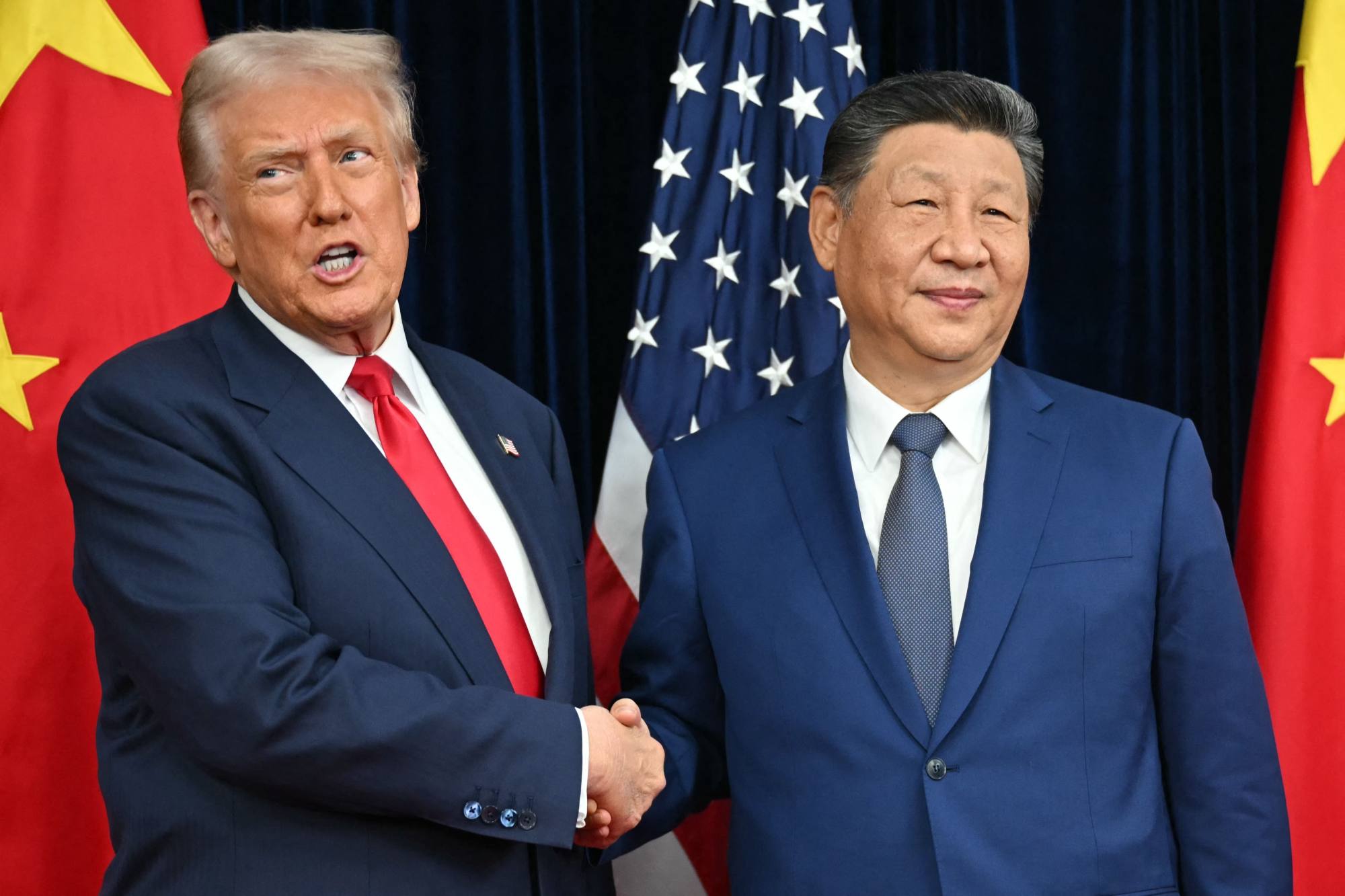
Both Beijing and Washington have been working to keep bilateral ties stable ahead of this year’s planned reciprocal visits by Trump and President Xi Jinping.
Last month’s H200 decision followed the meeting between the two leaders in South Korea at the end of October, which restored the trade war truce that broke down in September when Washington blacklisted more Chinese tech firms.
Beijing pushed back, calling the new sanctions an extension of the Biden administration’s “small yard, high fence” strategy of barring China’s access to technologies considered key to national security while broader trade and investment in other areas continued.
After Trump’s first administration cut off some major Chinese companies from advanced semiconductors and chipmaking equipment, his return to the White House was widely expected to put even more US technologies into a reinforced basket of restrictions.
However, the H200 move looked more in line with an idea of Trump’s chief AI adviser, David Sacks, that Washington should solidify its tech leadership by binding China and other countries to a US-powered stack – a layer cake of American hardware and software.
Sun Chenghao, a fellow at Tsinghua University’s Centre for International Security and Strategy, said the green light for the H200 did not negate the potential dynamic of Washington moving towards a “big yard, high fence” strategy.
According to Sun, the Trump administration may be taking a more complex approach – a “tiered high wall” around a yard that may not shrink.
The tech competition was no longer limited to a single chip or manufacturing process but gradually evolving into a contest of overall computing power architectures and technological ecosystems, he added.
The Trump administration was likely to be more inclined to blockade top-tier technologies while selectively permitting “controllable but commercially valuable” exports to balance security, economic gains and diplomatic manoeuvring, Sun said.
“The lifting of the ban on the H200 does not mean a de-escalation in the tech competition with China but more likely points to a more volatile, transactional model of tech containment,” he said, adding that US policy uncertainty may increase.
A regulation unveiled this week by the Department of Commerce’s Bureau of Industry and Security requires a US-headquartered third-party testing lab to review China-bound shipments of the AI processor to confirm their “technical capabilities and functions”.
The new rules, which come into effect on Thursday, also stipulate that China cannot receive more than half of the total amount of chips sold to American customers.
Before the formal green light for the H200 was announced, the US House of Representatives on Monday passed the Remote Access Security Act in a bid to further limit China’s access to US technologies, including AI chips, remotely through cloud computing services.
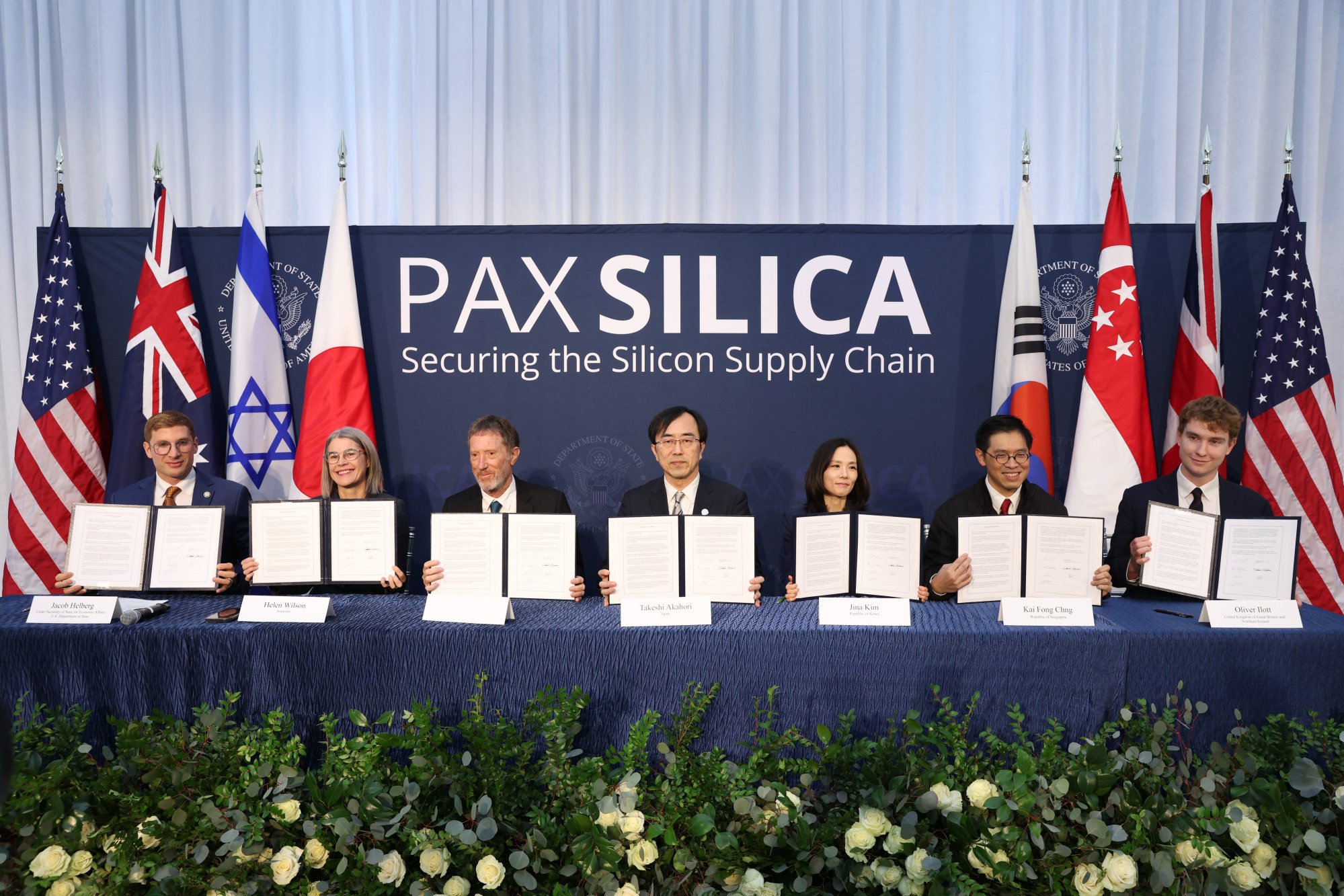
Washington earlier underscored its emphasis on shoring up AI-related supply chains amid China’s dominance in some areas, such as rare earths, when it spearheaded the Pax Silica, an initiative formed with eight US allies in December.
Also last month, Trump signed an executive order to ensure a national policy framework for AI, which he said was aimed at stopping China from “easily” catching the US in the race for the technology.
Ray Wang, from SemiAnalysis, a research company specialising in semiconductors and AI, said the H200 episode reflected a different form of “calibrated containment strategy” that remained debatable in Washington.
The decision on H200 sales was broadly in line with the Trump administration’s stated approach of permitting exports of lower-tier or downgraded AI accelerators to China, he said.
The H200 is roughly six times more powerful than Nvidia’s H20 chip that is currently available in China, but remains less advanced than its Blackwell series and next-generation Rubin chips – both slated for release this year and explicitly excluded from Trump’s sales clearance.
In return for raising the embargo, the US government will take a 25 per cent cut of the H200’s sales to “approved customers” in China, Trump said in a social media post on December 9.
The exports would be “under conditions that allow for continued strong national security”, he added.
Chen Li, economic research fellow at Beijing-based independent think tank Anbound, noted that even with “tactical” tweaks on specific products, the Trump administration’s core goal remained maintaining the US’ long-term generational lead in critical technologies.
She said she expected the US to continue tightening its grip on high-end technologies under a “national security narrative” while applying more granular licensing for near-frontier products to balance domestic industry interests, coordinate with allies and leave room for competing with China.
“That will make US tech policy towards China more uncertain and volatile,” Chen added. “Lifting the H200 chip ban will not affect the trend of technological decoupling between China and the US.”
Chen shares the view that the US is drifting towards a “large yard, high wall” tech policy on China that is highly structural and unlikely to change fundamentally with a presidential transition.
Kyle Chan, a fellow of the John L. Thornton China Centre at the Washington-based think tank Brookings Institution, said he did not expect the US decision on H200 sales to have a major impact.
“Unless the US takes more extreme measures, like allowing all Nvidia chip sales to China, the compute gap between the US and China is likely to grow significantly in the coming years,” he said.
According to Chan, American computing capacity is likely to “grow astronomically” through the Blackwell and Rubin chips as well as the massive spending on data centres.
Meanwhile, scholars from several prominent Chinese think tanks and universities concluded at a seminar in September that the capability gap between top-tier US and Chinese AI large language models was “steadily narrowing”.
A minute released on December 18, by Peking University’s Institute of International and Strategic Studies, which organised the event, said attendees agreed that China was “actively” advancing towards the international cutting edge in chip manufacturing.
China’s chip sector also enjoyed ample capacity in mature nodes, a massive consumer market and a complete industrial chain, the seminar found.
Beijing’s reaction to Trump’s H200 decision was restrained. Asked about the issue, foreign ministry spokesman Guo Jiakun said: “We have noticed the reports. China always advocates that China and the United States achieve mutual benefit through cooperation.”
The Trump administration’s earlier dropping of restrictions on H20 chip sales to China met a similar cold shoulder from Beijing, with a Chinese state media outlet characterising the less powerful AI processor as unsafe and urging buyers in the country to boycott it.
The Chinese government’s focus on hi-tech self-reliance and home-grown innovation in the sector has grown. It was one of the top priorities in the proposed outline of the next five-year plan approved by the Communist Party’s fourth plenum in October.
“We should ... drive decisive breakthroughs in core technologies across entire chains in key fields such as integrated circuits, industrial machine tools, high-end equipment, basic software, advanced materials and biomanufacturing,” the document said.
While Nvidia reportedly aims to begin shipping the chips to its customers in China by mid-February, uncertainty remains over whether Beijing will approve the purchases.
Tsinghua University’s Sun said that the limited easing of restrictions on the H200 would not alter China’s policy of accelerating domestic substitution. He added that uncertainty around US export controls could further strengthen Beijing’s strategic resolve to reduce external dependence on critical technologies.
Sun said he expected the US to continue consolidating its lead in the tech competition by maintaining a generational edge, while China would be seeking “good-enough, scalable” technological capabilities through asymmetric pathways.
“The two sides are likely to settle into long-term competition in different tiers and fields,” he said.
According to Chan from Brookings, Beijing was “more confident than before” of China’s ability to produce domestic chips that would allow its AI industry to continue making progress.
“While Nvidia’s future series of AI chips is likely to far outpace China’s domestic chips at the single-chip level, China’s AI industry is expected to have sufficient compute capacity to continue to reach broader goals for AI diffusion and adoption,” he said.
The dropping of the H200 ban has been seen as a win for the lobbying efforts of Nvidia co-founder and CEO Jensen Huang, who has long argued that China is only “nanoseconds” behind the US in AI.
Huang has also advocated for the US tech stack to become a global standard, akin to the US dollar’s role as the world’s leading reserve currency – a view echoed by Sacks, the White House AI tsar who is also a veteran Silicon Valley investor, and Trump’s science and technology policy chief, Michael Kratsios.
Anbound’s Chen said the role of corporate lobbying mainly reflected the “seeking commercial room within established security boundaries rather than changing the basic direction of whether to compete and control”.
Key variables shaping the future of tech competition could include whether the US political consensus prioritising national security would continue to harden, as well as the pace of China’s indigenous breakthroughs in advanced chips, AI computing power and software-hardware integration, she added.
Where the United States’ allies in Europe and East Asia would line up on technology standards and supply-chain security, as well as AI’s own development, were also noteworthy considerations. -- SOUTH CHINA MORNING POST



