A US spending bill approving US$300 million in cash assistance for Taiwan’s military has passed the House of Representatives and is expected to become law.
On Wednesday, the House passed a two-bill government spending package that would fund the Departments of the Treasury and State through September, along with other federal agencies, bringing the total to eight of 12 annual spending bills needed by January 30, to avoid a government shutdown.
The bills must now clear the Senate before they can become law.
The Senate passed three last year and passed another package on Thursday. It will consider the one containing Taiwan assistance later this month.
The 482-page State Department appropriations bill outlining military assistance for Taiwan comes as Taipei announced that more US arms sales to Taiwan are in the pipeline, with four deals yet to be notified to Congress. It follows Washington’s approval last month of a US$11 billion sales package, reportedly the largest ever for the island.
Beijing sees Taiwan as part of China to be reunited by force if necessary. Most countries, including the US, do not recognise Taiwan as an independent state, but Washington is opposed to any attempt to take the self-governed island by force and is committed to supplying it with weapons.
Beijing has long opposed US arms sales to Taiwan, with China’s Taiwan Affairs Office denouncing the December sale – the second approved under Donald Trump’s second term – as “flagrant interference in China’s internal affairs”.
US-based observers, meanwhile, have noted that years-long delays in arms deliveries and unimplemented authorities have fuelled concerns in Taiwan and elsewhere that US support is softening as Washington seeks to stabilise ties with Beijing – a perception they say could embolden Chinese coercion.
‘Strong signal’ of Trump administration’s support for Taiwan
Lauren Dickey, a former senior adviser for Taiwan at the Defence Department, said that the US$300 million allocation was a “strong signal of US commitment to enhancing Taiwan’s self-defence capabilities”, particularly in combination with the sale in December.
“[Taken together] the Trump administration is not only selling weapons systems to Taiwan, but also providing training and support for the use and integration of these systems via foreign military financing (FMF) authorities,” she said.
Dickey, now affiliated with the Centre for Strategic and International Studies think tank, added that while the move reflected continuity rather than a sudden shift, Chinese President Xi Jinping will “no doubt” raise concerns about US actions on Taiwan at his anticipated summit with Trump later this spring.
The Republican chair of the House Select Committee on the Communist Party cheered Wednesday’s passage, noting that the legislation “provides Taiwan with more support, helps it invest in its own defence, and reinforces last month’s historic arms sale by the Trump Administration”.
“In the past month, the free people of Taiwan have endured cyberattacks and aggressive PLA military exercises,” said John Moolenaar on Thursday, adding that “we must urgently deliver weapons to Taiwan to deter conflict in 2027 and beyond”.
Wednesday’s package also directs the State Department and Pentagon to “prioritise the delivery of defence articles and services for Taiwan”, similar to a 2024 appropriations bill, which also appropriated US$300 million for the island. That year’s figure represented a middle ground between House and Senate appropriators.
The same year, lawmakers appropriated additional emergency funds to support Taiwan-related military assistance.
Congress first authorised cash assistance for Taipei in 2022. Foreign military financing, which provides grants and loans to other countries for the purchase of defence articles and services, is available only to a select group of countries, including US allies such as the Philippines, Egypt, Israel and Jordan.
Wednesday’s package appropriates US$100 million in foreign military financing to Manila.
Per the 2022 law, Taiwan is eligible to receive up to US$2 billion in grants per year from 2023 to 2027, as well as up to US$2 billion in loans and loan guarantees each year during that period.
European allies urged by US to follow suit
The second Trump administration has strongly backed Taiwan’s plans to increase military spending, a move it has also urged its European allies to pursue.
“It was President Trump who said that Taiwan, which is an island that faces an existential threat from the People’s Liberation Army, from the Chinese military, should spend upwards of 10 per cent of its GDP on defence. I strongly support that,” said John Noh, Assistant Secretary of Defence for Indo-Pacific Security Affairs, in his confirmation hearing in October.
The announced December arms sales cover eight items, including HIMARS rocket systems that Ukraine used against Russian forces following Moscow’s invasion in 2022.
In November, Taiwan’s leader, William Lai Ching-te, unveiled an extra $40 billion in defence spending through to 2033 to underscore Taiwan’s determination to defend itself against potential Chinese aggression.
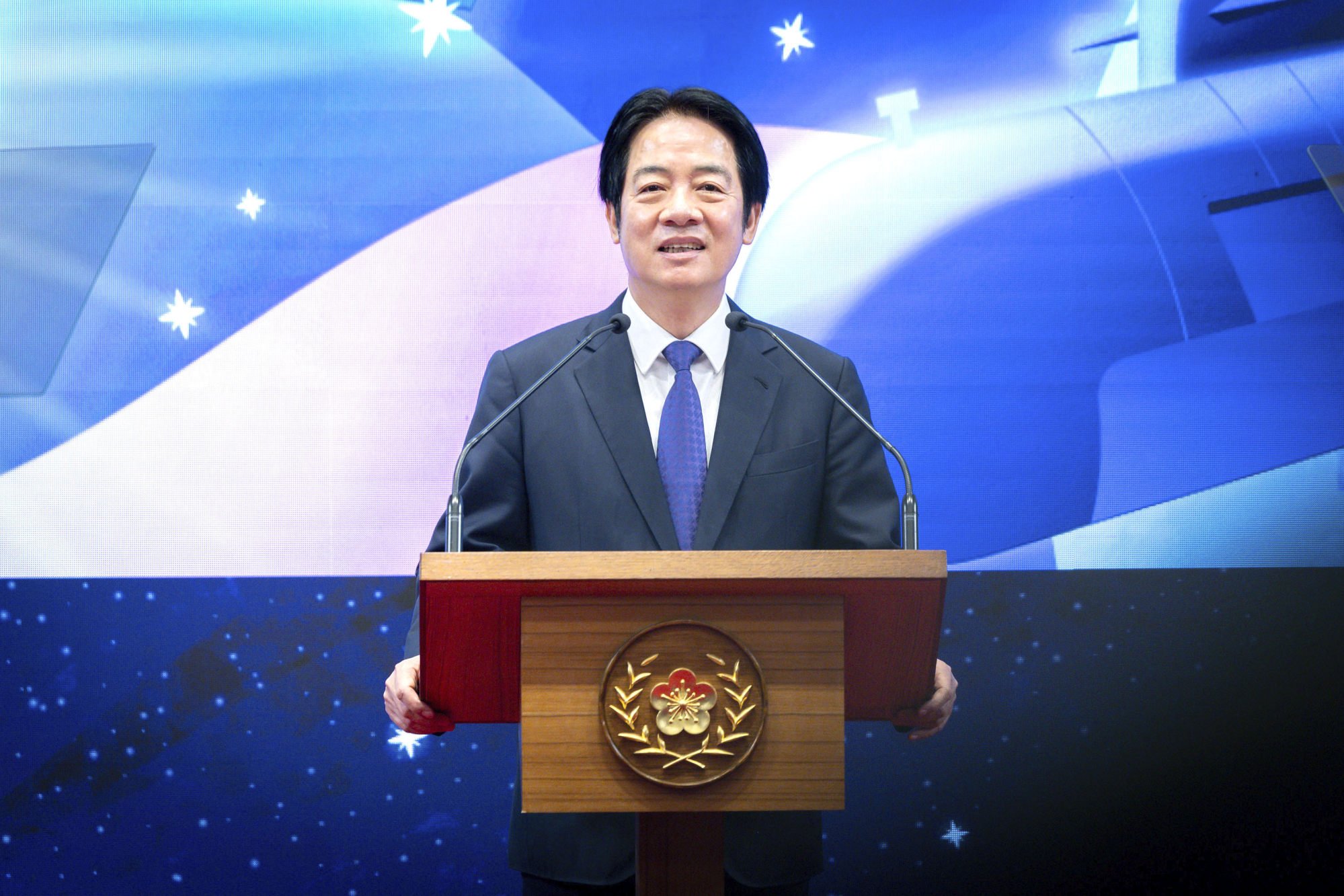
But Taiwan’s opposition party, which has the most seats in parliament, has not allowed the measure to progress to the committee stage for review, arguing that the spending details are vague.
The House passed a series of China-related provisions as part of the spending packages advanced this month, including a measure that would require the Commerce Department, Nasa and the National Science Foundation to submit quarterly reports to Congress on official employee travel to China.
A separate provision would bar Nasa and the Office of Science and Technology Policy from engaging in bilateral cooperation or agreements with Chinese entities without explicit congressional authorisation. Both aim to tighten oversight over exchange and research collaboration between the two countries. -- SOUTH CHINA MORNING POST