




One of China’s latest Earth observation satellites operating in low orbit could feature an optical aperture at a two-metre scale with “global leading” remote sensing capabilities, according to a China Science Daily report on Thursday last week.
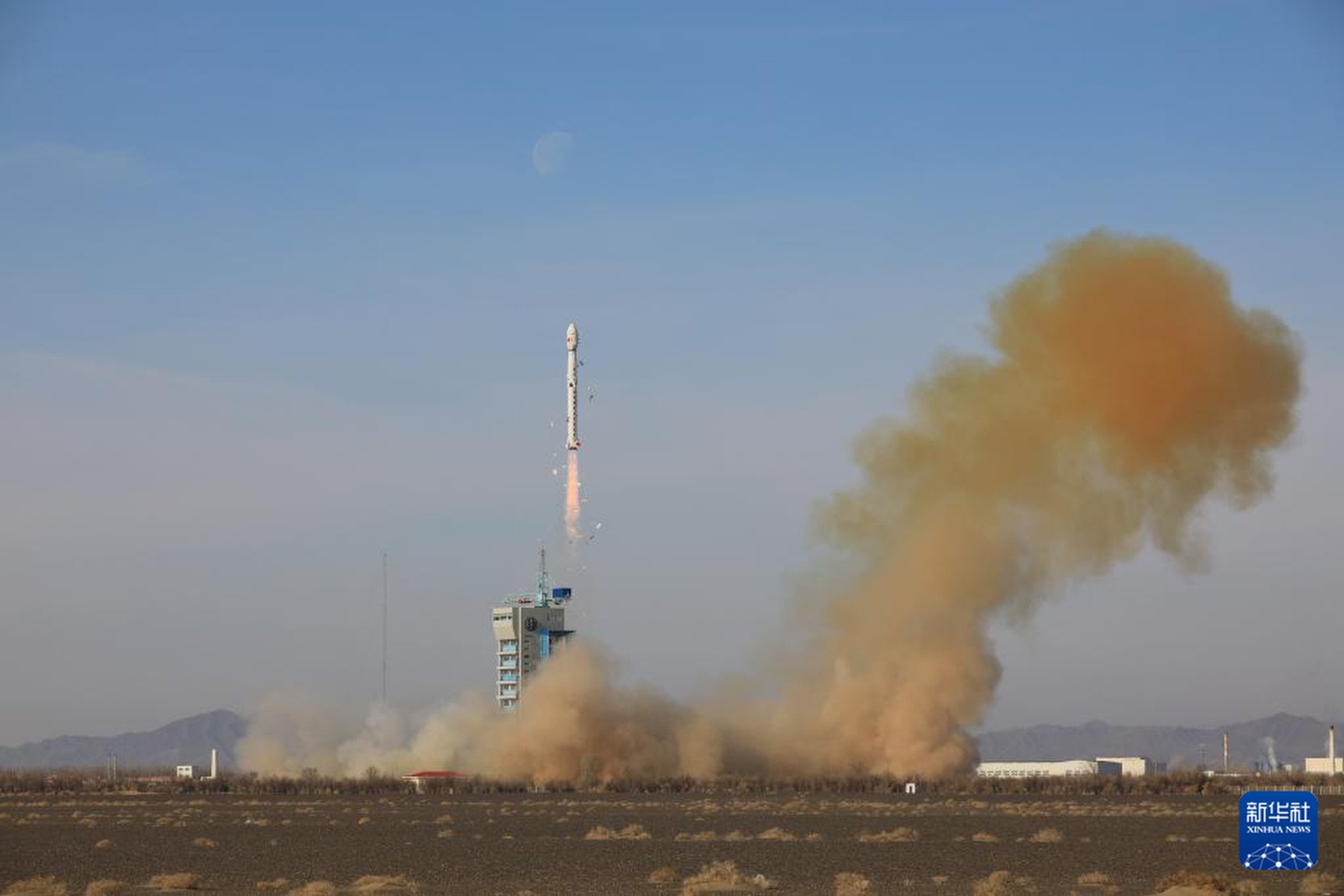
The report refers to the Yaogan-47 satellite, which was launched aboard a Long March 4B carrier rocket from the Jiuquan Satellite Launch Centre on December 9.
For comparison, the Hubble Space Telescope and likely the US KH-11 spy satellite have main mirrors with a 2.4-metre aperture.
The Long March 4B rocket used for this launch had a low Earth orbit payload capacity of around four tonnes. In comparison, the similar-aperture Hubble telescope weighs about 11 tonnes and a KH-11 satellite weighs up to 17 tonnes.
This suggests that Yaogan-47 may not carry a similarly massive telescope or could instead employ a lightweight design.
The Post cannot independently verify whether the reported two-metre optical aperture component is actually on board the Yaogan-47.
According to China Science Daily, the satellite will be mainly used for national land surveys, urban planning, road network design, crop yield estimation, environmental management and comprehensive disaster prevention.
The report also said Yaogan-47 marks a significant achievement in China’s satellite development during the 14th five-year plan period, especially the underlying hyperspectral remote sensing technology.
Unlike standard cameras that record only red, green and blue bands to synthesise colour images, a hyperspectral camera can observe hundreds of continuous spectral bands simultaneously, covering a broad range from visible to infrared light.
While optical information reveals shape and size, spectral data can detect material composition. This ability enables monitoring of water chlorophyll levels and greenhouse gas concentrations for environmental oversight; helps with assessment of crop growth, soil moisture and forest health; aids in mineral exploration by identifying specific spectral signatures; and assists in detection of camouflaged targets or monitoring military installations.
The core instrument aboard Yaogan-47 – a high-resolution hyperspectral payload – was developed by the Xian Institute of Optics and Precision Mechanics (XIOPM) under the Chinese Academy of Sciences (CAS).
The project was initiated in 2022. “This achievement is built upon multiple technological breakthroughs, including the development of an ultra-low-temperature cryogenic optical system, the independent R&D of large-format, high-frame-rate infrared detectors, and the integration of a complex, large-aperture, multichannel, multi-order optical system,” the China Science Daily report said.
Conventional materials like aluminium silicon carbide can deform at -180 degrees Celsius (-292 Fahrenheit). To address this, the research team established specialised vacuum cryogenic testing equipment and selected alternative materials for compatible design.
An April report on XIOPM’s website further revealed that, to support this major national science and technology mission, the institute independently built and put into operation a large-aperture optical payload integration and testing platform last year.
This platform provides robust support for the assembly, inspection and evaluation of optical payloads at the two-metre aperture scale.
“The institute’s large-aperture optical manufacturing platform is capable of handling the entire process – from grinding and polishing to coating and inspection – for optical components measuring 0.8 metres, 1.6 metres and 2.5 metres,” a report on their website said.
On October 25, 2025, a team led by Professor Zhang Geng at XIOPM published research in IEEE Transactions on Geoscience and Remote Sensing, detailing progress in using AI large models to process hyperspectral data for the precise and rapid identification of materials on Earth’s surface.
Internationally, several large-aperture hyperspectral imaging systems have been deployed, aiming to improve spatial resolution to the metre or even sub-metre level, spectral resolution to the nanometre level, expand the detection range from visible to long-wave infrared and increase the number of spectral bands to several hundred.
“Several international systems have been deployed, aiming for sub-metre spatial resolution, nanometre spectral precision and hundreds of spectral bands across the visible to infrared range,” said Professor Wang Yueming from the Shanghai Institute of Technical Physics, CAS, in a March article for the journal Chinese Optics.
“International competitors include the US’ Landsat-9 and WorldView-4, Germany’s EnMap, Italy’s PRISMA, and Japan’s HISUI.
“China’s comparable systems include the visible-short wave infrared hyperspectral camera and full-spectrum multispectral imager on board the GF-5 satellite, the hyperspectral and visible/near-infrared multispectral cameras on the 5M optical satellites 01 and 02, and the Zhuhai-1 03 satellite group.
“However, current hyperspectral imaging systems often suffer from limitations such as low resolution, limited spectral coverage and an inability to simultaneously acquire full-spectrum, high-resolution data.” -- SOUTH CHINA MORNING POST


