
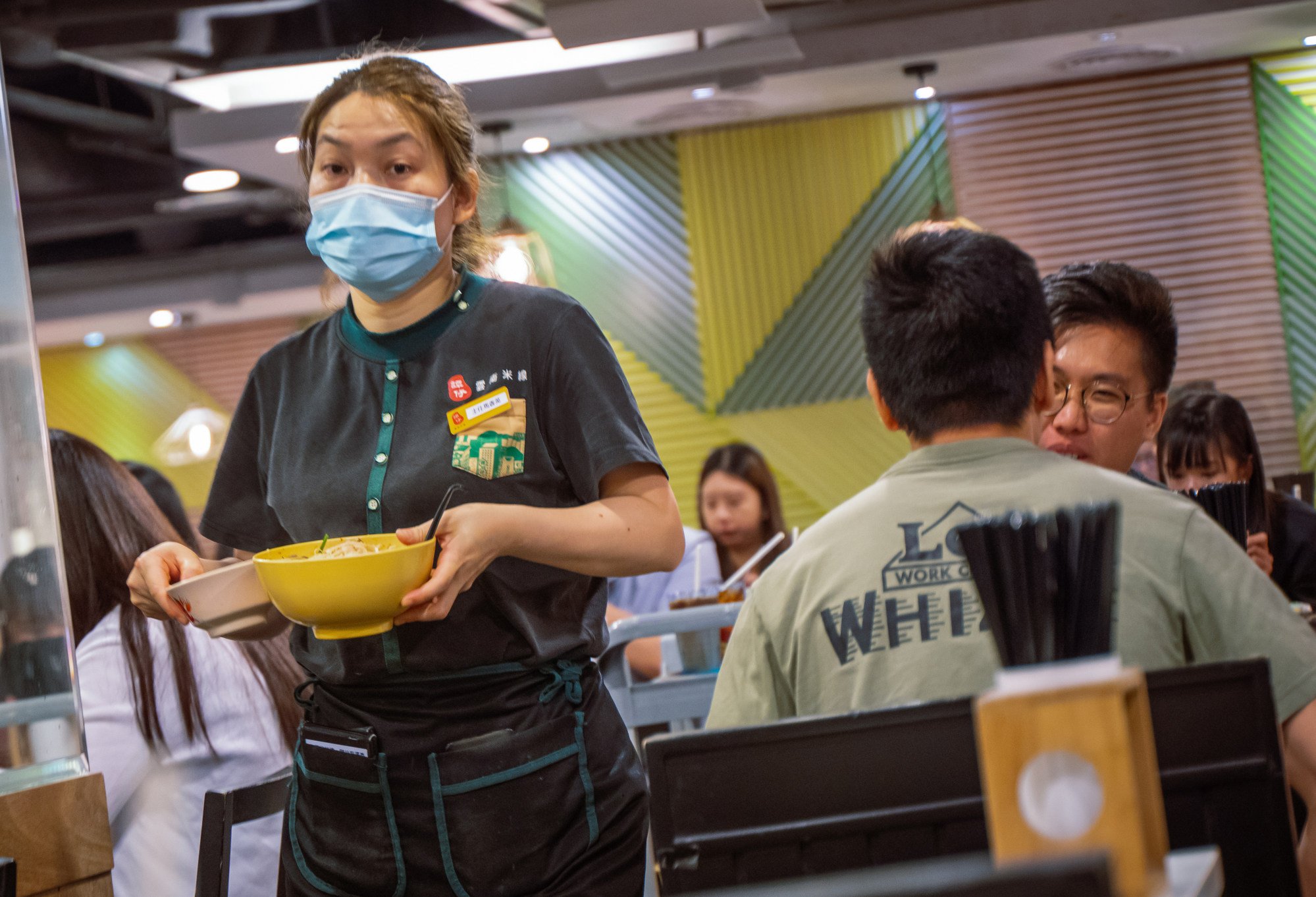
Scroll through Tam Jai International’s mobile apps and you will encounter a wave of perks, menu offerings and other choices laid out to tempt you to the Hong Kong restaurant group’s staple offering, noodles.
The apps are among several strategies, along with filling all dining segments from breakfast, lunch, tea and dinner with new menu items, that the chain has introduced in the past few months to win back diners who continue to cross the border in droves for leisure and dining.
Ronald Wong Kin-pong, the firm’s chief marketing officer, said the measures were a bid to tackle the “tough trend” of Hongkongers heading north to mainland China to spend their money.
“It’s been very ... different from our expectation prior to Covid. For the locals ... they are spending more and more time across the border in the Greater Bay Area cities. That is why we’ve been seeing, you know, weak weekend sales, weak holiday sales. That’s the first trend,” he said.
“And secondly, the tourists are not coming back as much as we expected. So that gives us extra pressure. And then add the competition from across the border also.”
But Tam Jai’s efforts were paying off, Wong said, noting that its dinner business had jumped 10 per cent in the past few months compared with before the customer relationship management (CRM) programme was revamped.
The group’s digital transformation resulted in sales penetration from the programme of “over 50 per cent”, meaning half of the revenue now came from known customers, a significant increase from the previous “20-something per cent”.
Hong Kong’s restaurant industry is confronting an “irreversible” shift as diners increasingly flock to neighbouring Shenzhen for better value and novel experiences, forcing operators from major chains to independent eateries to overhaul their business models through digital innovation, menu streamlining and corporate partnerships.
With northbound travel surging and restaurant receipts falling, industry leaders warn that only establishments offering superior quality and service will survive in a market that has structurally shrunk.
Tam Jai, one of the largest restaurant chains of its kind in Hong Kong, is among local food firms constantly tabling new strategies to lure back diners heading to Shenzhen – a trend that showed signs of worsening during the past Christmas and New Year holidays.
Samme Cheng Pak-man, vice-chairman of catering trade body the Institute of Dining Professionals, offered a sobering forecast for 2026, noting that consumer trends had fundamentally altered the industry’s landscape.
“It is totally irreversible. Going to Shenzhen at weekends has already become a part of Hong Kong people’s routine. We just simply cannot compete with the price that Shenzhen offers,” Cheng said.
He noted that the industry’s rigid cost structure, including wages and raw materials, was unchangeable. Even if rents fell and provided some relief, the impact would ultimately be limited.
Cheng added that the competition from the mainland was particularly acute, even “predatory”, because of aggressive business tactics and financial strategies that prioritised market share over immediate profit.
“They can lose money at the beginning by using their capital to strike you down first, then slowly build up and earn money just to establish their strong presence.”
‘Irreversible’ reality
Official data highlights the shift: Hong Kong’s outbound travel via land ports to the mainland surged from 53.6 million trips in 2023 to 87.1 million in 2025, with total resident departures hitting 114.6 million last year.
Restaurant receipts – a barometer of demand for the city’s eateries – declined further, dipping 0.1 per cent in 2024 to HK$109.3 billion before falling 0.4 per cent year on year in the first three quarters of 2025.
A number of listed food and beverage operators recorded double-digit declines in net profits in their latest financial reports.
Cafe de Coral Holdings, which runs 378 outlets in the city and 190 across the border, saw net profit slump 67.6 per cent to HK$46.7 million in the six months to September 30, 2025, from the same period a year earlier.
Rival Fairwood Holdings’ net profit fell 14.9 per cent to HK$13.2 million in the same period.
Cha chaan teng operator Tsui Wah’s net profit fell by 23.7 per cent to HK$4.9 million, partly due to higher selling and distribution expenses and finance costs.
Tsui Wah Holdings told the Post that it was countering the “cross-border consumption” headwinds with a “cautiously optimistic” strategy that had already yielded a 13 per cent rise in Hong Kong revenue, despite a nearly 24 per cent drop in interim profit attributable to shareholders.
The group said it was aggressively re-establishing its presence in core tourist districts like Central and Tsim Sha Tsui to capture “mega-event” foot traffic, while simultaneously expanding its footprint in Greater Bay Area transport hubs, with two new outlets slated for Guangzhou Baiyun Airport’s Terminal 3 in the first quarter of 2026.
Moving beyond traditional restaurant operations, Tsui Wah is diversifying through “cross-industry collaborations”, such as a strategic alliance with Hong Kong Express Airways to serve its signature curry beef brisket on flights, and leveraging a portfolio of six sub-brands, which now account for 33.4 per cent of the group’s total revenue.
Tam Jai International, following its privatisation and delisting in August 2025, is now a wholly owned subsidiary of Tokyo-listed restaurant group Toridoll Holdings.
According to Toridoll’s financial results for the six months ended September 30, 2025, Tam Jai’s revenue decreased by 7.4 per cent year on year to 25.26 billion yen (US$3.2 million), affected by it closing unprofitable stores in mainland China and Singapore.
Economist Simon Lee Siu-po of the Shenzhen Finance Institute at the Chinese University of Hong Kong said the shift in local dining habits was no longer a temporary trend but a structural “irreversible” reality.
“The gap in value and quality between the two cities is still huge. Hongkongers regularly going to Shenzhen is not going to be reversed,” Lee said.
“The outlook for 2026 is driven by a market that has shrunk to a fixed number of people who are willing to stay in Hong Kong, where only the restaurants providing superior service and products will survive.”
Public relations professional Chan Ching-yee, a frequent spender in Shenzhen, said her tastes had evolved since 2023 from bargain hunting to seeking high-concept entertainment and fine dining with the opulence of ancient times, an experience she claimed was impossible to find in Hong Kong.
Chan and her friends travel to Shenzhen at least twice a month to Xuyan, a Tang dynasty-themed banquet hall in Nanshan district that offers an immersive 90-minute theatrical performance for around HK$500 (US$64) via online booking platforms.
“The service and experience are unbeatable for the price. Hong Kong restaurants are simply too cramped for us to dress up, dance and take photos on their open floor,” the 34-year-old said.
She said diners could rent a Hanfu and hire a make-up artist for about HK$200.
“This isn’t just a meal any more. The food is so delicate, but it’s more about the emotional value of escaping into a dream for a few hours. Shenzhen has filled a gap that Hong Kong’s dining scene just cannot reach,” Chan said, noting that she never felt rushed to leave the restaurant.
‘Radical shift needed’
Cheng of the institute advocated a radical shift towards “boutique” eateries specialising in fewer menu items to preserve Hong Kong’s unique international flavour and liven up its dull restaurant scene.
He pointed to a Korean barbecue craze years ago as a prime example of how conglomerates once launched trending sub-brands to capture market share and provide a lifeline to struggling parent companies.
However, simply chasing trends was no longer enough, he argued.
“You have to stay on trend and attune to the market and know exactly what Hongkongers want that Shenzhen simply cannot offer,” he said.
That meant leaning into the city’s strengths in Western and Japanese cuisine – areas where there remained a “quality gap” between Hong Kong and the mainland – and creating culturally authentic or “Instagrammable” experiences.
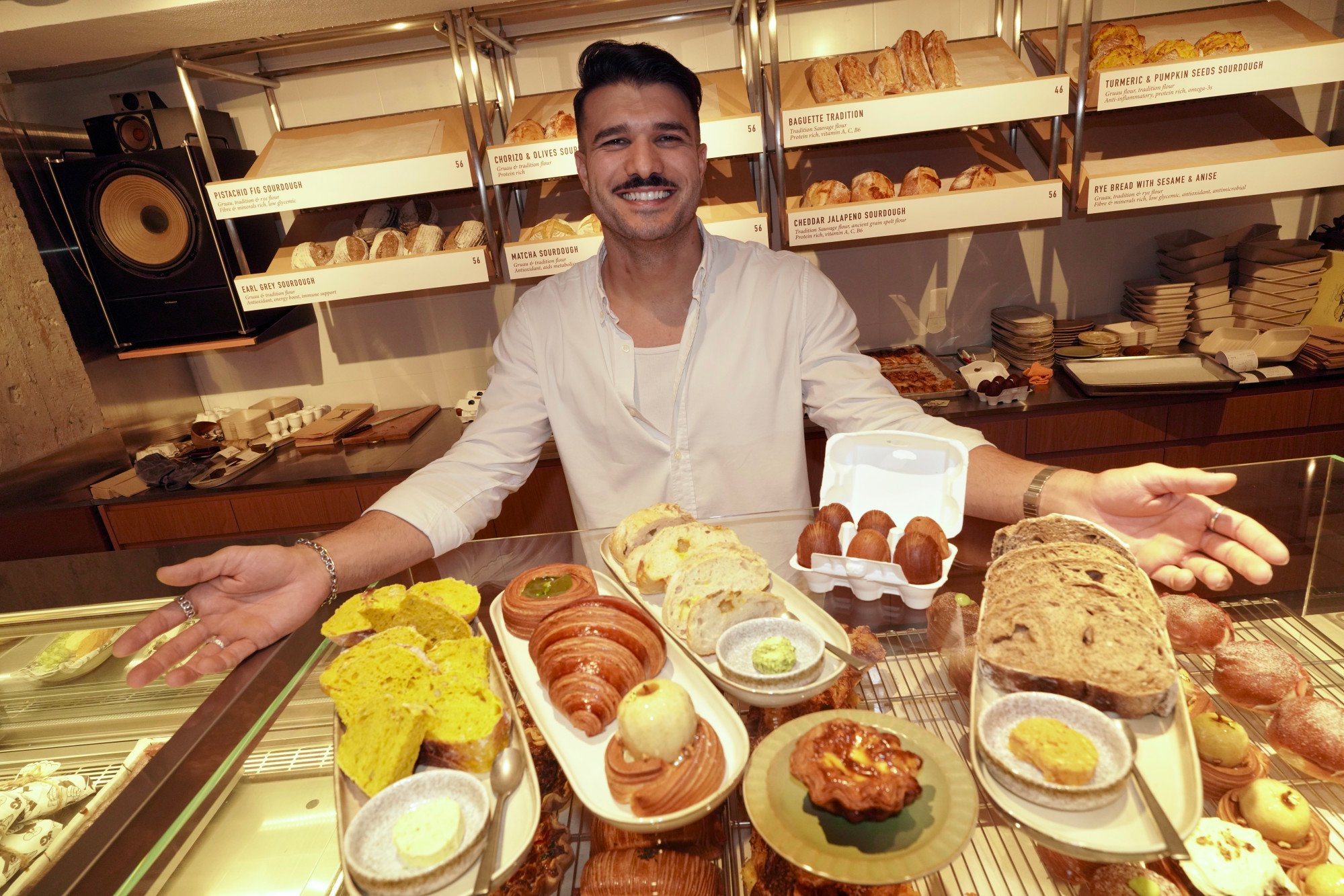
Christophe Younes, 33, who opened bakery and cafe Social Goods in Central on January 1, was surprised to break even in just three days – much earlier than the three months he had expected.
“The daily sales target and volume I had in mind after three months, we had it after three days,” said Younes, adding that the 100 per cent organic social media traction had been “mind-blowing” for his team of 20 that had not even officially launched any marketing efforts.
Despite the city’s high rents and the “Shenzhen effect” hitting local spending, Younes, a French expatriate who has lived in Hong Kong for 17 years, said his focus in 2026 was relentless menu innovation and quality.
The bakery’s menu balances classics with modern updates, led by its signature HK$18 “Eggie”, a reinvented egg tart. Younes also transforms the space into a cultural hub for yoga classes and vinyl sessions to drive foot traffic.
“It’s a balance between having the classics and bringing completely new products,” he said, adding his goal was affordable luxury paired with high-level innovation.

Lee, the economist, urged operators to focus on superior quality and a radical improvement in service attitude to justify premium prices amid high labour and raw material costs, warning: “If your food is bad, you are doomed.”
“Menu analysis is crucial as it can help you highlight your signature dish to thrive. Take Yat Lok Restaurant in Central as an example. People are always queuing up for its signature roasted goose. It’s the same at Sister Wah Beef Brisket in Tin Hau,” he said.
“Screening out menu items that don’t sell well or have a low profit margin will not only save unnecessary costs, but also allow you to excel at what you’re already good at – making the trip worthwhile for the customer.”
He added restaurateurs also needed to consider closing outlets if they could not reach maximum capacity to better manage costs.
“It helps a restaurant lower its third-highest cost, which is rent, but more importantly, it forces a more efficient use of the second-highest cost, which is labour. A smaller shop is easier to manage with a younger, leaner and more attentive team to ramp up customer service.”
Changing business models
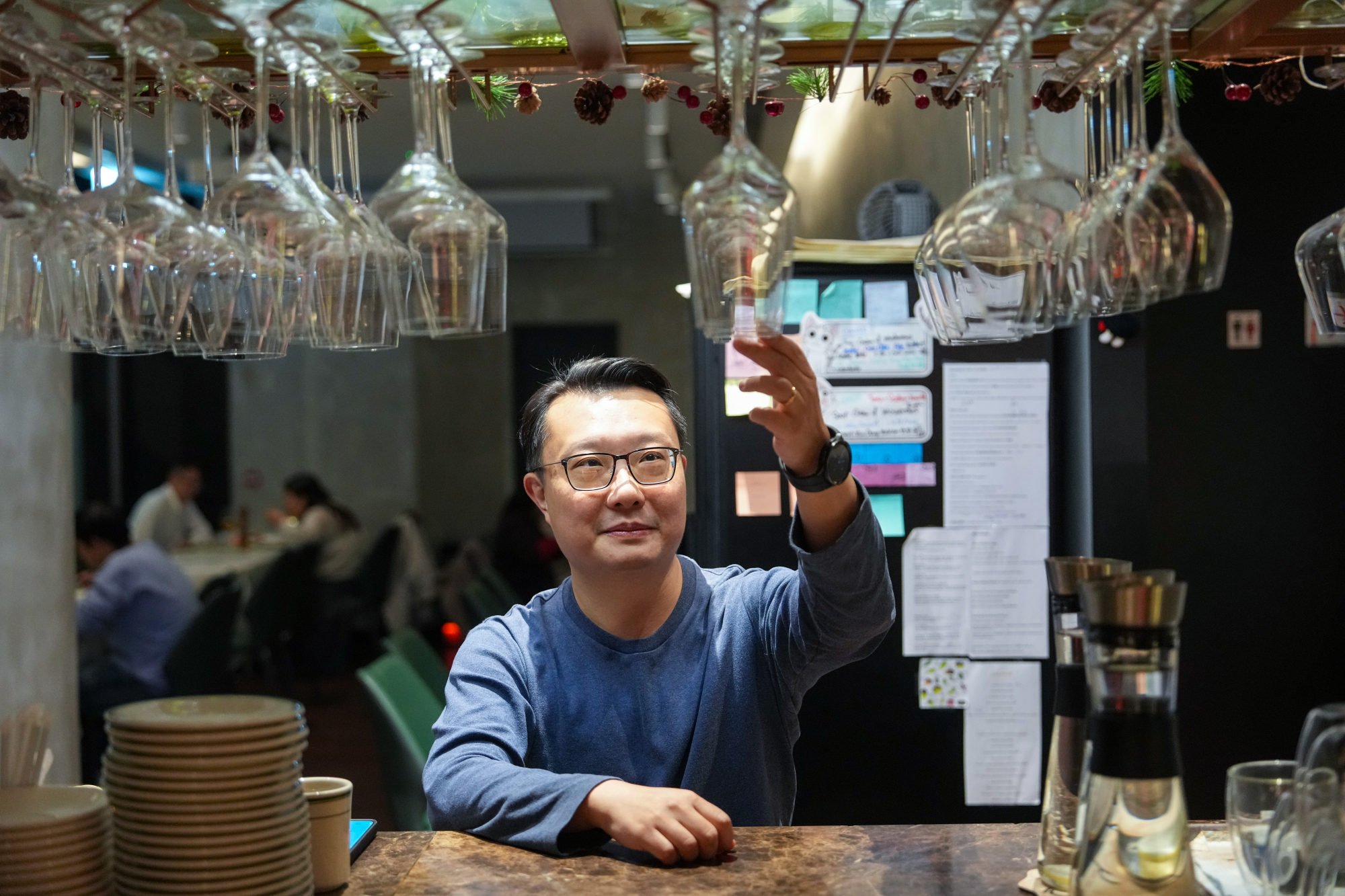
After posting a loss in 2025, Charles Lam Tsz-ching, 47, co-owner of Western steakhouse Forkers in Wan Chai, said he had abandoned traditional marketing for a rigorous business-to-business survival strategy.
Facing rising costs and the unpredictability of dine-in guests, Lam said he would reposition his 55-seat establishment as a strategic partner for global brands and corporate clients to stabilise cash flow.
“You can’t just rely on social media and hope for a viral hit. We need more reliable channels,” Lam said.
The centrepiece of this pivot is a collaboration with Australian winery Penfolds to host exclusive wine dinners alongside fixed-budget menus for international corporate delegations to secure guaranteed revenue streams.
Lam is also targeting business travellers by partnering with a local travel agency that manages delegations for the nearby Hong Kong Convention and Exhibition Centre.
“I’m offering a fixed-budget menu for international groups from the Middle East and Europe. By adjusting my pricing to meet agency budgets, I can secure a guaranteed flow of revenue that walk-in traffic can no longer provide,” Lam said.
To maximise income, Lam is also offering some quiet time slots between 3pm and 5pm for companies to host team-building exercises and meetings. Priced between HK$10,000 and HK$20,000 for 30 people, the package provides a professional space for presentations followed by networking, wine tastings and food.
“An afternoon booking can basically cover a significant chunk of our rent. Our environment is way better than party rooms in industrial buildings,” Lam said, adding he had already secured six bookings in the coming months.
Maxim’s Group, arguably the largest food and beverage firm in Hong Kong, said that it was actively responding to the “northbound consumption” trend by deploying “futuristic” dining concepts and strategically expanding its footprint in the Greater Bay Area with new sub-brands.
With a portfolio of more than 2,000 outlets across 80 brands in Hong Kong, Macau and Southeast Asia, the unlisted giant said it would maintain its scale while pursuing “strategic expansion” in high-growth community locations this year. Its Maxim’s Cakes chain already had about 160 stores along the MTR network, it said.
The group is banking on unconventional innovations to drive engagement and stay ahead of market trends, such as the “wellwellwell” concept at Pacific Place in Admiralty, which offers a “futuristic take on Chinese cuisine”, and Arome’s technology-driven “-18C Frozen Brûlée Cheesecake”.
For noodle chain Tam Jai – which operates the TamJai Yunnan Mixian and TamJai SamGor Mixian brands in Hong Kong – store profitability has improved considerably despite sales remaining flat year on year, according to Toridoll’s financial results.
It attributed the turnaround to “improved shift management” reducing labour cost ratio, revisions to the menu reducing the cost of goods sold ratio, and reduced commission costs by balancing deliveries with its in-house CRM platform.
To mitigate market risks, Tam Jai would expand through plans to open more branches in Malaysia and launch its first store in the Philippines soon through a franchisee partnership.
Wong, the chief marketing officer, expressed resilient optimism despite the headwinds facing the sector, believing that by prioritising value, quality and innovation, the group could navigate the “critical year” ahead.
“Seriously, I think we are still hopeful,” Wong said. -- SOUTH CHINA MORNING POST