BANGKOK: Italian-Thai acknowledges its mistake and requests government approval to resume work – Engineer confirms the crane was not defective and examines the cause of the crane collapse.
Progress on the crane collapse incident at Si Khiew, Nakhon Ratchasima, which resulted in 32 fatalities and numerous injuries on Wednesday (Jan 14), is being closely monitored. Initial reports indicate the crane was part of the high-speed rail construction project undertaken by Italian-Thai Development (ITD).
On Friday (Jan 16), Wichian Rungrujirat, the executive of ITD, provided his first public statement regarding the incident. He clarified that the dismantling of the steel frame was carefully planned, with the State Railway of Thailand (SRT) serving as a consultant.
The machinery currently on-site was deemed appropriate for the task, he said, adding that the work is set to proceed according to the SRT timeline, with completion expected by January 17.
The operation focuses heavily on safety, with a detailed process in place for lifting and cutting the steel frame using slings. Workers are methodically unscrewing bolts one by one, ensuring no welding is used to cut the steel, though some delays are anticipated due to rust or wear on the bolts.
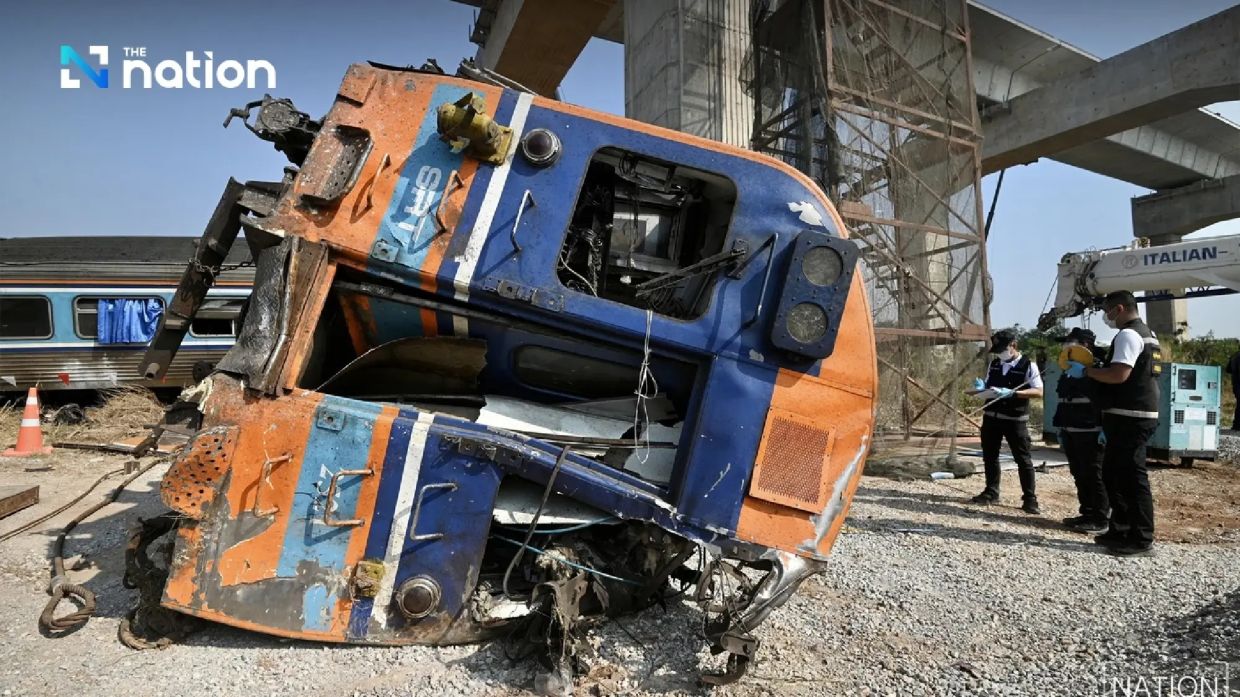
Provided no further issues arise, the dismantling operation will meet the specified deadline.
However, due to government orders, all high-speed rail construction involving lifting and installation of elevated road sections is temporarily halted nationwide until further notice.
As for the company’s future projects, Wichian apologised for the incident, acknowledging the company’s responsibility. Moving forward, the company will conduct thorough equipment checks and training to restore confidence.
He added that he has received an official work suspension notice from the Si Khiew Subdistrict Municipality and that the company must complete the dismantling process before applying for permission to resume construction.
Wichian acknowledged that the contract cancellation would affect the company, as it is a construction business reliant on ongoing projects and income. The lack of work would be detrimental, as it would impact the company’s financial performance and the livelihoods of thousands of employees and their families.
He expressed a desire for the government to avoid reaching the point of contract termination.
As for the company’s future projects, Wichian apologised for the incident, acknowledging the company’s responsibility. Moving forward, the company will conduct thorough equipment checks and training to restore confidence.
Regarding the communication with the SRT, Wichian confirmed the company had notified the SRT of the planned work on January 16, though the incident occurred on January 14, without prior notice.
Wichian was not present at the site at the time, but typically, communication is made via radio between the site and the train operations. While the exact details of the communication remain unclear, there were ten workers on site, with safety personnel monitoring the operation.
The cause of the incident is under investigation, but Wichian admitted that it resulted from both human error and systemic issues. He has already acknowledged the situation to the Prime Minister, and the police have summoned three employees for questioning.
In terms of compensation, the company has already provided 150,000 baht to the families of seven deceased victims. The government is considering additional compensation, following a suggestion by the Prime Minister to provide 1 million baht per victim, with the final amount still under review.
Engineer confirms crane not defective, raises contract concerns
Kritsada Yongkamlang, assistant director for the high-speed rail project at ITD, confirmed awareness of the contract cancellation but stressed the need to review the contract details before discussing the next steps.
He expressed concern about the impact of the cancellation, particularly as the project was nearing completion, with only 300 metres left to build.
Regarding the crane, which was imported from China and is relatively new, Kritsada assured that the crane was not defective and that proper maintenance schedules were followed.
Engineers have already assessed the safety of the equipment and outlined a plan to disassemble the crane into three parts, which will be safely lowered using a crane, he said.
Kritsada emphasized that the company always coordinates with the SRT before moving cranes to ensure compliance with regulations, including halting construction when trains are in operation. He added that the incident occurred during preparations to move the crane.
A detailed investigation is still underway, but initial analyses suggest the incident may have been caused by an issue with the crane's support system. - The Nation/ANN