
In the daytime the temperature in northern China often stays below freezing, but for many rural villagers the prohibitive cost of heating means that they have little choice but to endure the cold.
“We dare not turn on the heating during the day,” one woman from Guan county in Hebei named Wang said.
The 75-year-old’s home is around 70km (43 miles) from the centre of Beijing, but running the heating all day would cost between 60 and 90 yuan (US$8-13), an expense that could soar over the course of a winter to more than 6,000 yuan (US$860).
The sum amounts to nearly one-third of the province’s official 2024 disposable income for rural residents. Meanwhile, Wang receives a monthly pension of a little over 200 yuan (US$29) and is living on her savings.
Meanwhile, to the north of Wang’s village in nearby Beijing, officials said last week that the metropolis of more than 21 million residents recorded just one heavy pollution day last year – its best performance since data was first collected over a decade ago.
The capital’s improvement in air quality is inextricably linked to the changes that Wang and nearly 27 million farmers in Hebei have made to their energy use since they were required to abandon traditional coal-fired heating and cooking methods in 2017.
The government helped with the switch to cleaner natural gas by paying for installations and subsidising heating costs for three years.
But the subsidies have diminished in recent years amid the overall economic slowdown, leaving Hebei’s rural residents facing a difficult choice: warmth or their wallets?
Their dilemma has emerged at a delicate moment – just as China’s green transition is showing tangible results, the adverse effects of its stringent measures are quietly surfacing.
The winter chill that the Hebei farmers are enduring has drawn widespread attention across Chinese society, with numerous voices – including state media – calling on local authorities to make sure they have adequate warmth.
The issue has also raised awareness of how rural areas are limited in their access to urban public service networks and prompted an urgent call to address the rural-urban gap and the limited support for vulnerable groups.

According to rural development and climate experts, pollution control in northern China is not merely an environmental issue but also a matter of public welfare, and resolving it must not come at the expense of farmers’ interests.
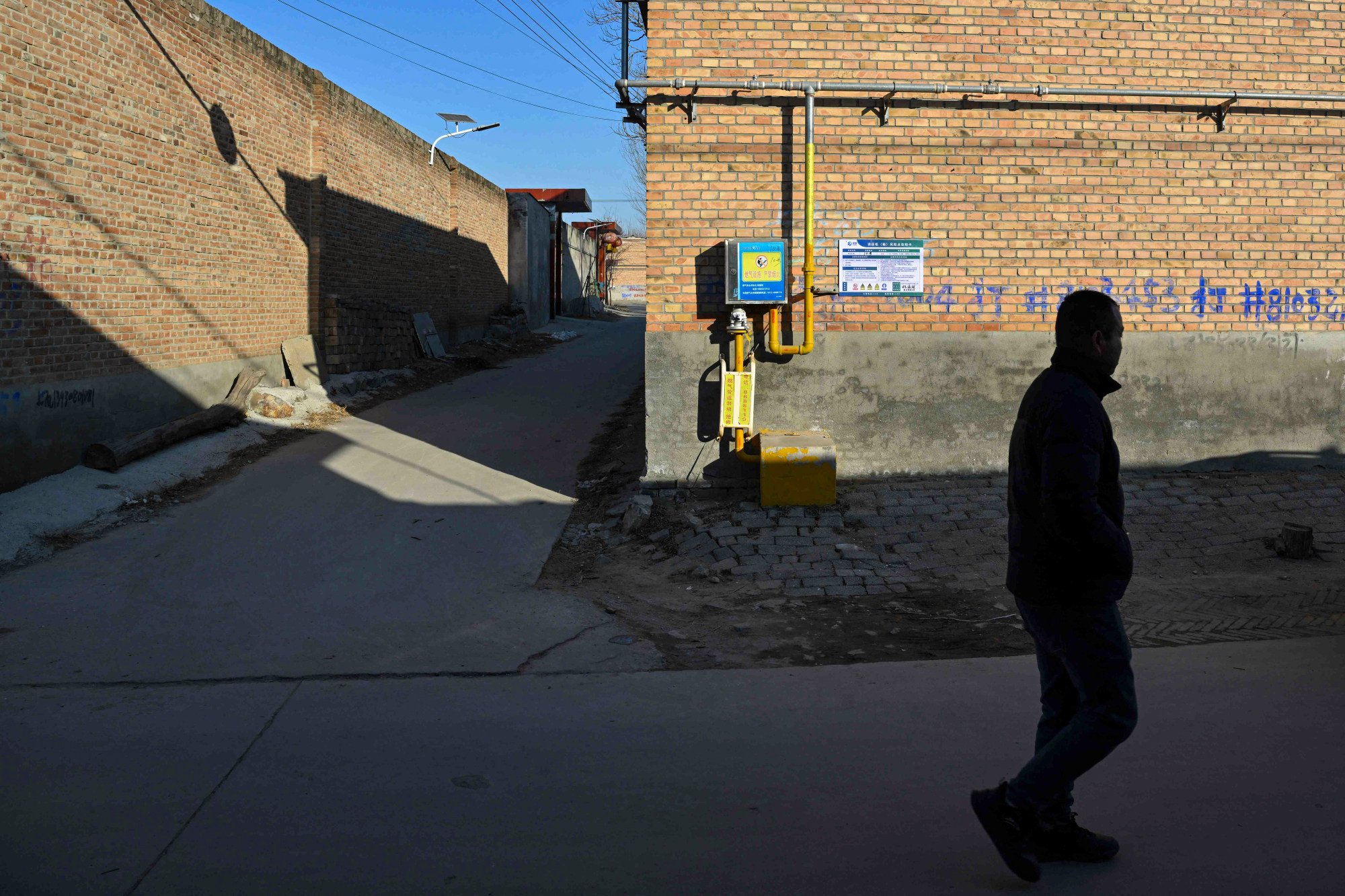
In Wang’s village last Tuesday before sunset, the Post observed that only a handful of households had gas emissions from their pipes – indicating they were the only ones using heating equipment.
Wang and several other villagers spend most daylight hours in their courtyards wrapped in thick padded jackets – both a defence against the cold and a way to save money. Running the heating around the clock to warm the sun-deprived interiors would be prohibitive – costing at least three times the previous coal-fired heating.
According to several villagers, they no longer have access to coal for heating. Hebei’s official regulations now strictly govern both the transport and use of coal briquettes, they said.
Official media reports from 2018 showed that farmers who used coal were fined by local police.
According to weather data from Hebei, the average temperature last winter was minus 1.6 degrees Celsius (29.12 degrees Fahrenheit), while parts of Zhangjiakou and Chengde in the province’s north recorded temperatures below minus 8 degrees.
Most residential areas in these urban districts of Hebei and other northern cities benefit from municipal central heating during winter, which is priced significantly lower than privately bought natural gas.
The municipal heating system does not extend into rural areas, where self-built homes largely lack the specialised insulation found in urban commercial properties.
The effective banning of coal-fired heating – for decades the primary heating method in northern villages – followed global attention on the region’s air pollution when it reached a crisis point in 2013, particularly in Beijing.
The Chinese government introduced multiple environmental policies to curb pollution and vowed to restore blue skies to Beijing. Heavily polluting enterprises in provinces like Hebei were shut down and clean heating methods were vigorously promoted from 2017.
The result in Beijing has been a decrease in the primary pollutant indicator PM2.5, from 89.5 micrograms per cubic metre in 2013 to 27mcg per cubic metre last year, representing a reduction of nearly 70 per cent, according to last week’s press conference.
He Kebin, from the Chinese Academy of Engineering, told the briefing that more than 50 per cent of the improvement in the capital’s air quality stemmed from “local emission reductions” while 30-40 per cent came from “regional emission reductions” – a reference to the contribution of neighbouring areas such as Hebei.
According to official data, more than 11 million rural households – nearly 27 million people – in Hebei had completed “clean heating upgrades” by 2022. However, the process was not entirely smooth sailing.
That winter, there were sudden disruptions to natural gas supplies across parts of Hebei. Some mainland media reports attributed the shortages to rising costs for gas companies, driven by price increases stemming from the war in Ukraine.
Li Shuo, director of the Asia Society Policy Institute’s China Climate Hub, said that nearly a decade of practice had shown that the coal-to-gas environmental scheme “suffers from both poor energy efficiency and economic viability”.
Improving the thermal insulation of rural buildings “should also be placed on the agenda”, Li said.
According to Zheng Linyi, a researcher with the China Academy for Rural Development at Zhejiang University, the persistently high natural gas prices in rural areas stemmed from the absence of an integrated market.
The reluctance of farmers to use heating also reflected the “wide urban-rural income gap” because they had “low per capita disposable income and lack stable income sources”, Zheng said.
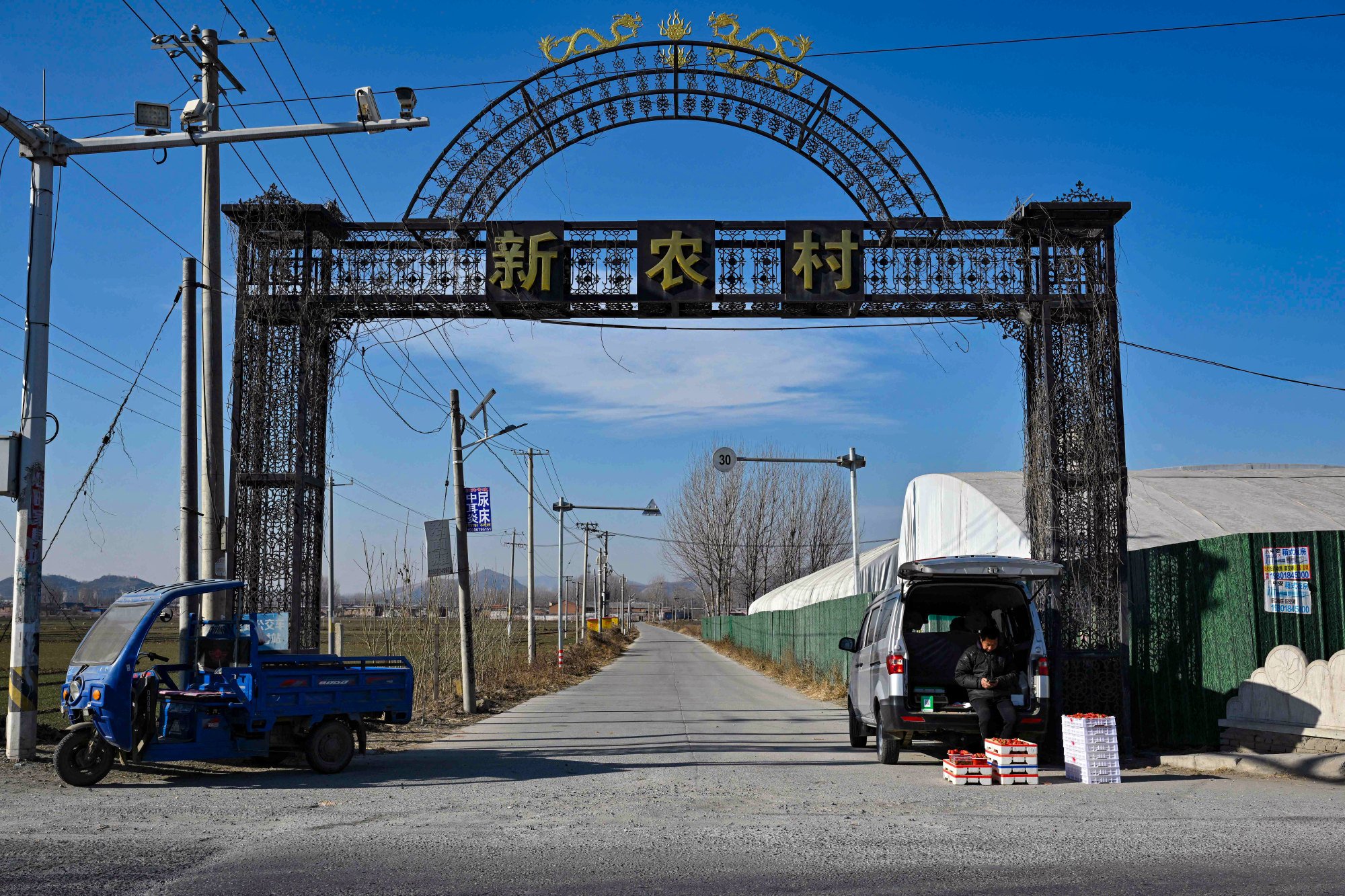
In another village 40km (25 miles) west of Wang’s home, in the county-level city of Zhuozhou – also near Beijing – a 42-year-old who gave his name as Zhang runs a metalwork shop where he repairs agricultural machinery.
Zhang said it cost an estimated 4,000 yuan (US$570) to heat his tiled-roof home during winter by heating the 120 square metres (394sq ft) dwelling only at night. “It’s not for warmth, just to avoid the chill,” he told the Post.
The years since the coal-to-gas conversion have been challenging for Zhang’s village, spanning stringent Covid-19 restrictions followed by the record-breaking floods of July 2023, when torrential rains hit Beijing, Hebei and Tianjin.
Zhang’s shop and many villagers’ homes were completely submerged in the catastrophic flooding that claimed 29 lives in Hebei. Then, residents faced the dual burden of home repairs and natural gas heating bills, on top of farmland rendered barren by the deluge.
Zhang said the high cost of heating had made it difficult to save for the Lunar New Year in recent years.
In the initial phase of the coal-to-gas conversion, local authorities provided annual subsidies to farmers of up to 1,200 yuan (US$170). However, several farmers told the Post the amount had been reduced in recent years and they were yet to receive any this year.
During last year’s annual session of Hebei’s provincial legislature, People’s Congress deputy Yang Suhui told People’s Daily Online that her research indicated it could cost 7,560 to 11,340 yuan to maintain an indoor temperature of 18 degrees throughout the winter in a 100 square metre rural dwelling in Hebei.
Yang proposed extending urban central heating systems to rural areas. Local authorities in Hebei have yet to make a public statement or respond to the online discussions.
Li from the Asia Society said that environmental protection, economic development and people’s livelihoods “need not necessarily be mutually exclusive”. China recognised that economic growth could not come at the expense of the environment, hence its determination to tackle air pollution at all costs, he added.
“Viewed from a broader perspective, air pollution in northern China is not merely an environmental issue but also a matter of public welfare.”
According to Li, resolving such complex problems “requires years of sustained effort and will inevitably involve back and forth”.
Zhejiang University’s Zheng said that “energy transition is never achieved overnight; income growth, changing customs and practices are also crucial”.
He recommended that the government “should strive by all means to increase farmers’ income”. It should also “strengthen rural energy infrastructure to reduce natural gas usage costs for rural residents”.
In an article on Wednesday for online news portal Guancha.cn, Lu Dewen, from Wuhan University’s School of Sociology, argued that rural Hebei’s predicament stemmed from local governments’ “extreme measures to deeply intervene in people’s livelihoods in pursuit of environmental targets, thereby creating significant social problems”.
Lu noted that the altering of heating methods “constitutes a project demanding substantial fiscal expenditure”. While financially robust Beijing might manage this, “neighbouring Hebei and Shanxi provinces could face immense pressure”.
There have also been calls for Beijing to compensate farmers in Hebei for their losses.
Commentator Hu Xijin, former chief of the nationalist Global Times newspaper, wrote in an article last Monday that Beijing and neighbouring Tianjin “share the same sky” as Hebei and are “beneficiaries of [its] widespread rural coal-to-gas conversion”.
Beijing and Tianjin should “contribute to alleviating the increased heating costs faced by Hebei farmers due to switching from coal to gas or electricity”, Hu said.
Also last week, the official Farmers’ Daily said that “the heating issue in rural Hebei cannot be delayed any longer”. The article was later deleted after triggering an intense debate. -- SOUTH CHINA MORNING POST