
Towering accordion steps and a fantastical spiral staircase greet visitors to a massive bookstore in northern Tianjin, where its striking interior is a bigger draw for selfie snappers than scholars.
Sales of hard-copy books across the country have failed to bounce back to pre-pandemic levels, data shows, despite authorities’ efforts to boost domestic consumption and an e-commerce boom.
Yet in recent years the number of physical bookshops has “maintained steady growth”, the head of a publishing industry group said last January.
“A wave of bookstores with unique characteristics” has emerged, Ai Limin said.
Tianjin’s Zhongshuge, which opened in September 2024, on social media draws comparisons to Harry Potter’s gothic Hogwarts.
“The photos come out looking really beautiful,” said graduate student Li Mengting, who stepped inside to snap some pictures when visiting the city with a friend.
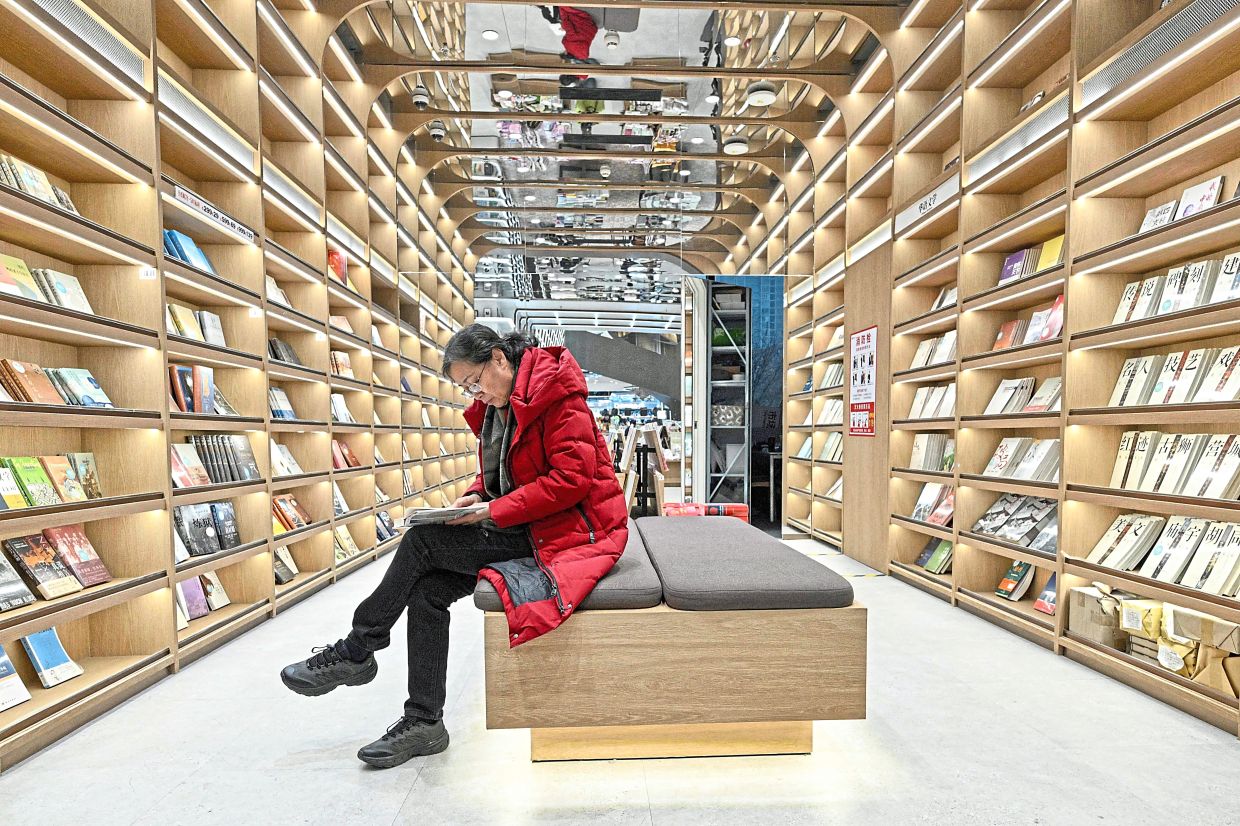
Some bookstores in China now invest in creating interiors meant to be photographed, said Beijing-based architect Zheng Shiwei.
“This has become relatively mainstream,” Zheng, whose firm the China Architecture Design and Research Group is also involved in bookstore projects, said.
But, he warned, “that might lead to a lot of people going not just for the purpose of reading, which may result in some unintended consequences”.
Last June, a bookstore in the eastern city of Nanjing that had become a tourist hotspot posted a notice banning flash photography, tripods, loitering and photoshoots staged without permission.
The nonstop pictures at Librairie Avant-Garde “interfered with reading,” said finance worker Yuan Jia, who is from Nanjing and an avid reader.
At a bookstore in the heart of Beijing converted from a former Taoist temple, dozens of tourists strolled in to browse tables of trinkets and order tea.
“Books bring in relatively low profit,” said founder Juli Hu, who opened the store in 2024.
She said she welcomes people who take photos to post online and frequently sets up new cultural displays.
“Selling books definitely cannot be the core of what sustains an entire bookstore,” Hu said. “There must be other things.” — AFP
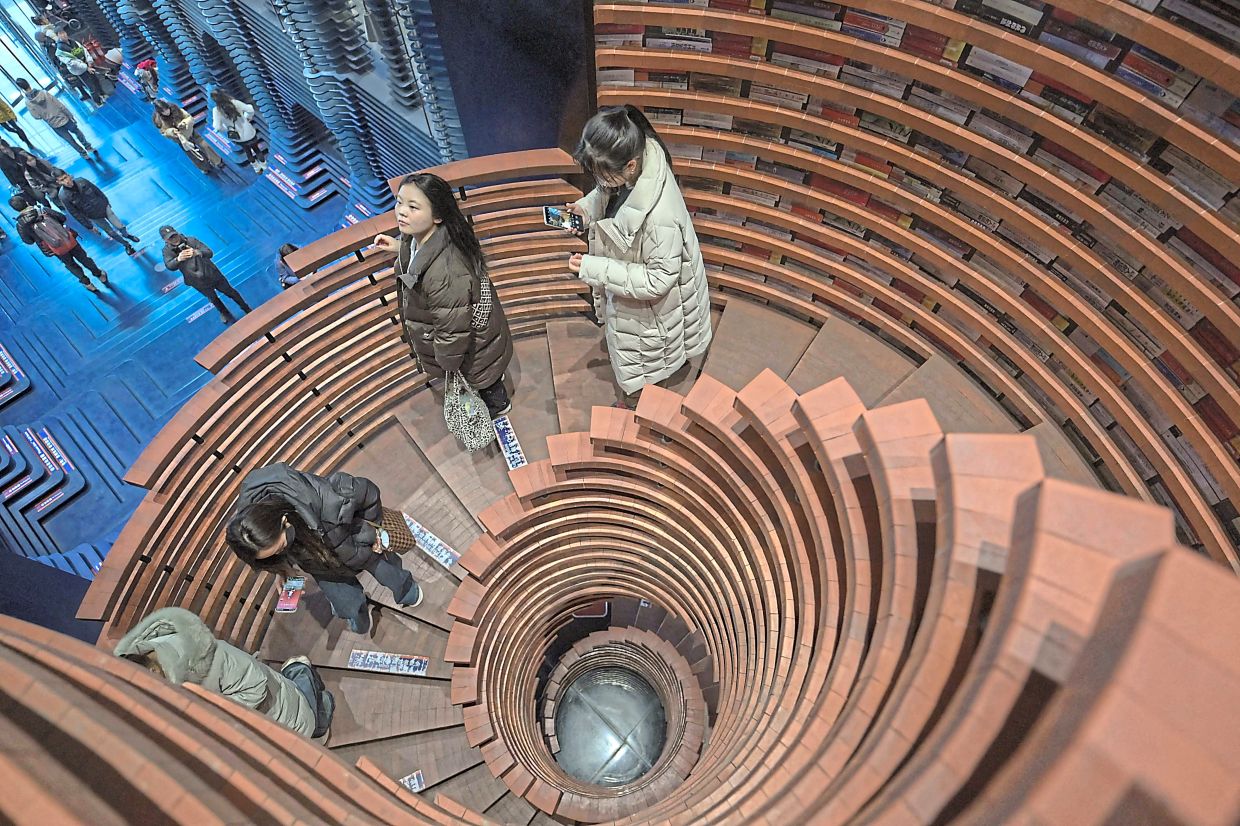
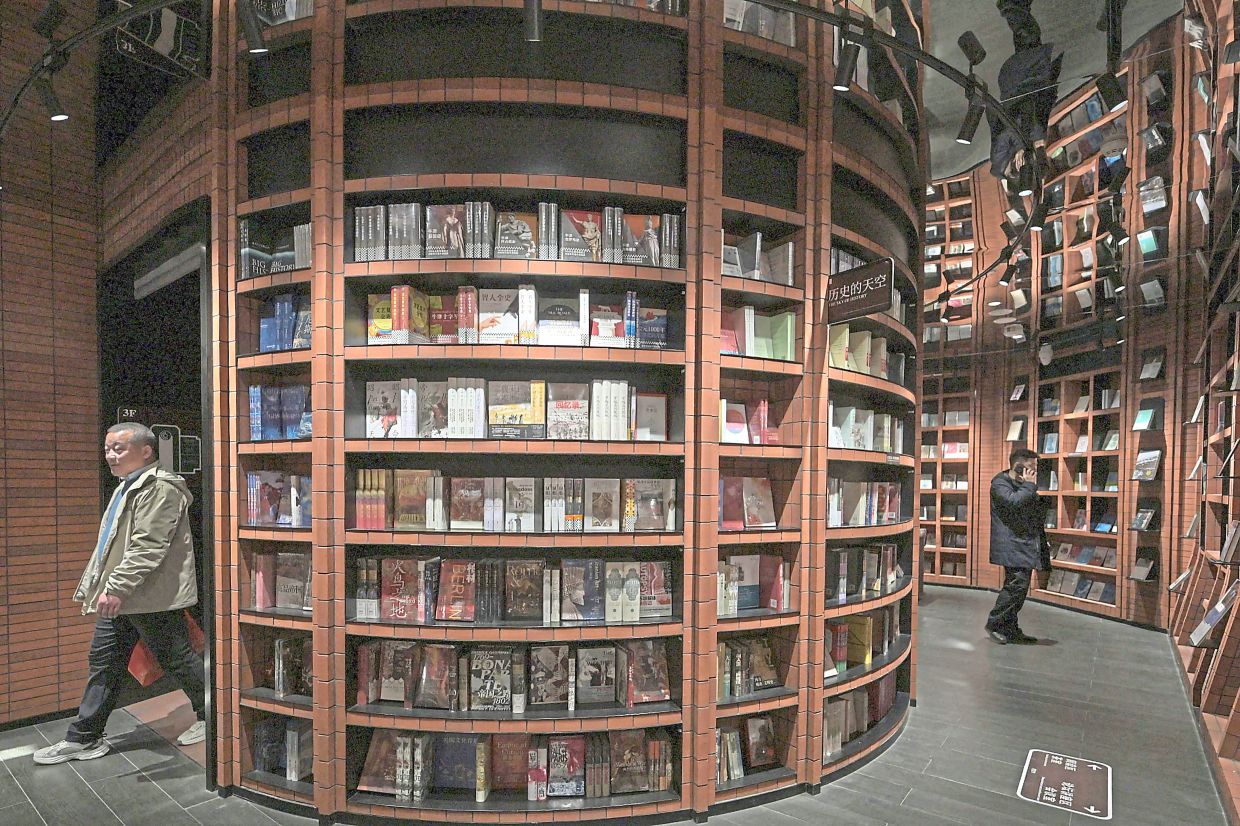
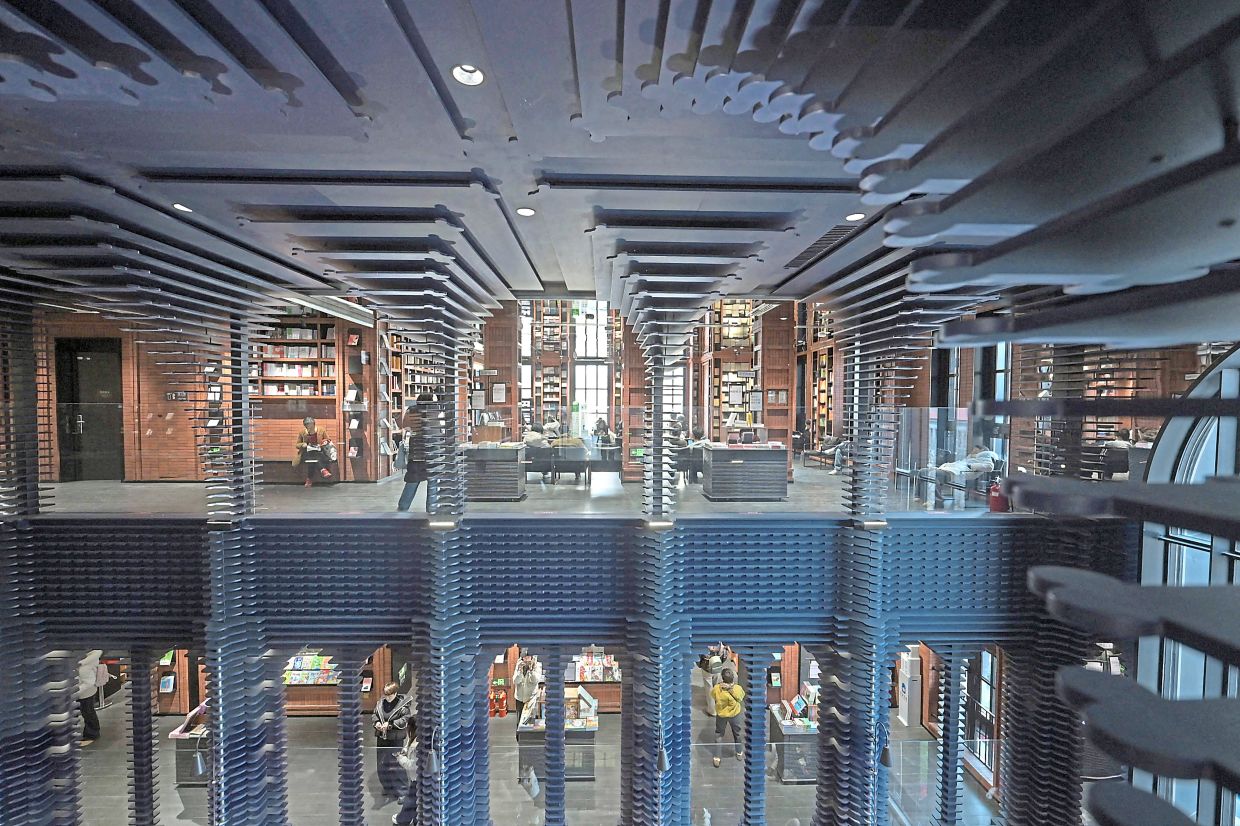
Fairytale tower: Visitors flocking to a bookstore in Tianjin, where towering accordion steps and a fantastical spiral greet more selfie snappers than scholars. — AFP