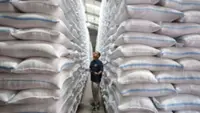
PHNOM PENH (Bernama): Cambodia is confident of exporting one million metric tonnes (MMT) of rice this year despite the global market suffering from oversupply and low prices.
Cambodian milled rice exports reached 940,000 metric tonnes last year, buoyed by strong imports from the European Union (EU) and China. More than 60 per cent of these exports were fragrant rice.
It (Cambodia) earned RM2.5 billion (US$602 million) in revenue from total rice exports, said the Cambodia Rice Federation.
"We are targeting one million metric tonnes this year. Cambodia’s overall production capacity is strong, and there is strong export demand from more International buyers,” the federation President Lay Chhun Hour told Bernama.
The Southeast Asian nation, although not a major rice exporter, has consistently produced the grain for export, mostly its long-grain fragrant jasmine rice.
Thailand and Vietnam remain top regional exporters, each shipping out about eight million metric tonnes annually. While India is the world’s top rice exporter, with about 20 million metric tonnes yearly.
The global rice market is facing extraordinary high supply and rising inventories, plus India’s surging rice production, will challenge the price regime of the grain, warn industry analysts.
The Indian Rice Exporters Federation last December told Bernama that rice prices will remain weak in 2026 due to massive oversupply in the global market.
The federation forecast that India could export about 25 million metric tonnes of the white grain in the 2025-2026 period.
Director of the Centre for Sustainable Agriculture and Development Studies at Professor Jayashankar Telangana State Agricultural University, Samarendu Mohanty, said that the EU’s preferential access and China’s Free Trade Agreement are supporting Cambodian milled rice exports, particularly fragrant rice.
"I think its (Cambodian exports) impacts on global supply and prices are not significant. We are already in an oversupplied situation due to record surplus in key rice exporting and importing countries in Asia,” Mohanty told Bernama.
Decisions by two major rice importers in the region - Indonesia and the Philippines, the world’s largest rice importer - in 2026 are likely to shake up the rice market.
The Philippines’ Department of Agriculture announced in December that it expects rice imports to drop below four million metric tonnes this year, as domestic production is projected to reach a new record.
While Indonesia took a similar stance to ban rice imports due to a healthy domestic production this year, and has achieved self-reliance in rice, reported Antara News Agency.
"Cambodia can repeat its export volume in 2026 despite lower imports by Indonesia and the Philippines. The EU and China will import Cambodian rice in 2026, which accounted for more than 60 per cent of total Cambodian exports in 2025.
"Cambodia can focus on its fragrant rice and secure its market even in an oversupplied market,” said Mohanty. - Bernama