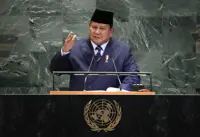
The country began enforcing its newly ratified penal code, replacing a Dutch-era criminal law that had governed the country for more than 80 years and marking a major shift in its legal landscape.
Since proclaiming independence in 1945, the South-East Asian country had continued to operate under a colonial framework widely criticised as outdated and misaligned with Indonesia’s social values.
Efforts to revise the code stalled for decades as lawmakers debated how to balance human rights, religious norms and local traditions in the world’s most populous Muslim-majority nation.
The 345-page Indonesian Penal Code was passed in 2022. At the time, then-US State Department spokesperson Ned Price said the United States was “closely monitoring the revised criminal code” of its democratic partner.
It criminalises sex outside marriage and reintroduces penalties for insulting the president and state institutions. It comes into force following a three-year transition period.
A previously revised code was poised for passage in 2019, but then-president Joko Widodo urged lawmakers to delay a vote amid mounting public criticism that led to nationwide protests involving tens of thousands of people.
Opponents said it contained articles that discriminated against minorities and that the legislative process lacked transparency.
A parliamentary task force finalised the Bill in November 2022 and lawmakers unanimously approved it a month later in what the government called a “historic step”.
The enforcement of the new penal code marks “the end of the colonial criminal law era and the beginning of a more humane, modern, and just legal system rooted in Indonesian culture,” said Coordinating Minister for Law, Human Rights, Immigration, and Corrections Yusril Ihza Mahendra.
“This is a historic moment for the Indonesian nation,” Yusril said. — AP