
China needs to adapt to a more competitive global environment driven by market power, technological innovation and institutional leverage, according to analysts at a leading Beijing-based think tank.
These pillars were more critical than conventional military dominance or strengthening territorial control in the great power rivalry, particularly as Beijing sought to project itself as a stabiliser in an increasingly fractured international order, the analysts added.
In an article this week, Fu Xiaoqiang, president of the China Institutes of Contemporary International Relations (CICIR), said the world had entered a decisive phase of transition, marked by accelerating multipolarity, intensifying security concerns and growing strain on a global order shaped by Western dominance.
“Market appeal, technological innovation and institutional influence are becoming the core metrics of competition, reshaping how states pursue power and legitimacy,” he said in a review published on Tuesday by the Beijing-based think tank affiliated with the Ministry of State Security.
Fu attributed this shift to a new wave of technological and industrial transformation driven by advances in artificial intelligence, new energy, biotechnology and digital infrastructure.
He said these factors were rapidly reconfiguring global supply chains and innovation networks and exposing the limits of an international order built around Western industrial and financial dominance.
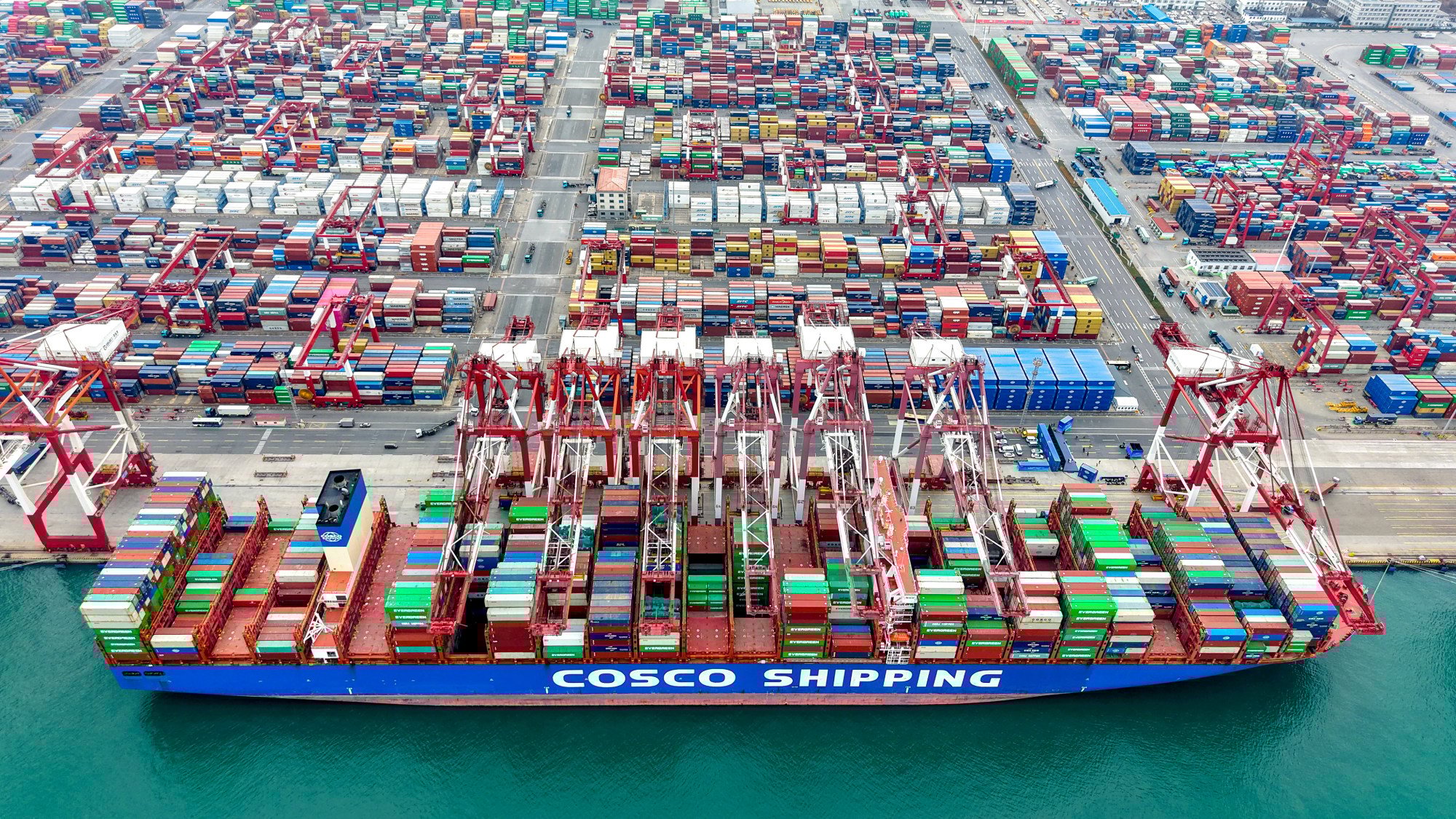
According to Fu, China was the only country that met the United Nations classification for a complete industrial system and was a major trading partner for more than 150 economies, complicating Western efforts to reduce reliance on mainland supply chains.
He called the so-called de-Sinicisation of supply chains “a false proposition”.
In recent years, China has weathered persistent trade tensions and economic disputes with the US and the European Union, both of which have sought to de-risk to cut their dependence on the Asian economic giant.
Chinese companies have also sought to expand overseas to consolidate market share to counter fierce competition at home and circumvent US trade and tech containment.
Fu said that in sectors such as electric vehicles and renewable energy, China was “moving beyond exporting individual products to exporting entire industrial ecosystems, strengthening its market and technological influence”.
Beijing and Washington were likely poised for protracted competition punctuated by periodic engagement, according to Chen Wenxin, who directs US studies at CICIR.
“What determines the ultimate outcome is not short-term advantage, but the long-term contest of inner strength, resilience and endurance,” Chen said in an article published on Wednesday.
Addressing institutional leverage, Fu argued that the expansion of blocs like Brics was improving the collective influence of emerging economies, accelerating the transition towards a more multipolar global order.
To counteract Washington, Beijing has prioritised ties with developing countries, such as those belonging to Brics and the Global South.
However, economic and geopolitical risks that intensified in 2025 were likely to persist in the new year, according to Chen Qinghong, a deputy director of the Institute of World Political Studies at CICIR.
Chen Qinghong warned that growing mistrust among major powers, the securitisation of trade and technology, as well as the erosion of global governance norms would continue to shape international politics in 2026.
In a separate review published on Tuesday, he said the US had increasingly framed economic and technological competition through a national security lens, deploying tariffs, export controls and industrial policy as strategic tools.
Chen Qinghong argued that this approach had encouraged similar security-driven responses elsewhere, fragmenting global markets and deepening the international security dilemma, thereby leading to acute regional pressures. -- SOUTH CHINA MORNING POST