JAKARTA: The Indonesian government’s controversial decision to award coal mining concessions to religious groups in 2024 has splintered the leadership of the country’s largest Islamic organisation.
Nahdlatul Ulama (NU) is embroiled in bickering as several of its leaders and factions vie for control over the highly lucrative venture, prompting many of its grassroots members to call for the return of the mining rights to the government.
The group, which was in August 2024 awarded a 26,000 ha coal mining concession in East Kalimantan formerly granted to a Jakarta-based company, has not started operating the mine.
Most of its grassroots members have demanded that their leadership return the mining concession to the government, citing it as the primary cause of the ongoing dispute.
They have also urged the leadership to reconcile their differences, warning that their open hostilities are damaging the group’s reputation.
Dr A’an Suryana, a visiting fellow at the ISEAS-Yusof Ishak Institute, described the unfolding crisis as significantly deeper than the internal frictions that the Islamic group had faced in the past. He attributed the conflict to a clash between two top elite camps, each backed by rival business groups.
“NU cannot manage a mining business on its own. It needs to partner with a private business. The coal mine has not even started operations, yet the fighting over it is already under way,” he told The Straits Times.
In May 2024, then outgoing President Joko Widodo issued a government regulation allowing religious organisations to operate mines, despite doubts about whether these groups would have the technical capacity and financial strength to develop mines.
The country’s second-largest Islamic organisation, Muhammadiyah, has also received a mining concession after it rejected the offer initially. It received a concession in South Kalimantan province, which was previously granted to Jakarta-based Adaro Energy. The mine has not started operations under Muhammadiyah. It is not known whether it has partnered a private company to help develop the mine.
The regulation had come about after a Cabinet meeting earlier in 2024 on improving economic equality. The argument was that Indonesia’s rich natural resources should not be enjoyed only by established business groups.
Observers, however, said the motive was politics. Nahdlatul Ulama, with an estimated 80 million members, is widely seen as an important player in the political landscape, and political elites are keen to woo it.
The mines contain an abundance of resources. Indonesia is the world’s largest exporter of thermal coal, which is used in power generation, and has the world’s largest reserves of nickel, a main raw material in making electric vehicle batteries.
South-East Asia’s largest economy received US$30.48 billion from coal exports in 2024, compared with US$34.59 billion in the previous year, according to the national statistics agency. It shipped more of the commodity overseas in 2024, but the dollar value declined because of falling coal prices.
At a Dec 17 Nahdlatul Ulama gathering in Jombang, East Java, Yenny Wahid, who sits on the the group’s executive board, reminded everyone that a disaster is inevitable if a matter or responsibility is entrusted to those not qualified for it.
“It would be better if we returned the mining rights to the government. If the government wants to support mass organisations, they could just donate money, which could be then spent on building schools, student dormitories, hospitals,” she told the crowd.
“There may be some of us who disagree with me, but it is now undeniably clear that a great harm stands before our very eyes: the harm of division. This is what we must address,” Yenny added.
Nahdlatul Ulama has effectively fractured into two factions since Dec 9, when its Supreme Council, which is equivalent to a board of advisers, dismissed chairman Yahya Cholil Staquf and appointed then deputy chairman Zulfa Mustofa as acting chairman.
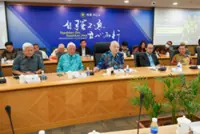
On Dec 21, Nahdlatul Ulama held a “Musyawarah Kubro”, or a major consultative meeting, in Kediri, East Java. Constituents at the meeting called for an extraordinary congress to pick a new leader. They demanded a candidate with strong integrity and no business conflicts, and is unaffiliated with the factions currently embroiled in internal strife.
The meeting, attended by 308 of the organisation’s provincial and city branches, which make up about 55 per cent of its total regional offices across Indonesia, also urged conflicting leaders to reconcile for the sake of the group’s good name and that the group return the mining rights to the government.
Some of the organisation’s leaders think that the mining rights need not be returned.
Savic Ali, an Nahdlatul Ulama leader in charge of the media, information technology and advocacy, has proposed converting the organisation’s East Kalimantan coal concession into a carbon credit project rather than developing it for extraction.
“NU does not need a mining business that would generate so much money, trillions of rupiah, if the cost is an ecological disaster,” Savic told The Straits Times.
“But returning the mining rights to the government carries a risk. The concession could simply be reallocated to private business who might manage the site irresponsibly.”
In the latest development on Dec 27, however, Nahdlatul Ulama’s Supreme Council made a commitment to reinstall Yahya, on reconciliation appeals from other leaders and members.
Whether the council follows through on its commitment remains to be seen, but the rift is expected to end.
If the internal conflict becomes a protracted stalemate, it will trigger a crisis of legitimacy for Nahdlatul Ulama, warned Dr A’an.
“The NU base could shift their allegiance... as they seek spiritual guidance elsewhere, likely gravitating towards stricter, more conservative groups. This would be a catastrophic loss for NU, an organisation that has historically championed moderate Islam,” he said. - The Jakarta Post/ANN