
Economy Secretary Marcelo Ebrard on Monday defended Mexico’s decision to impose new tariffs on imports from China and other Asian countries, describing the move as a necessary step to protect hundreds of thousands of domestic jobs rather than a provocation to any trading partner.
The tariff package, approved by Congress last week, will take effect on January 1 and introduce duties ranging from five to 50 per cent on 1,463 products from countries without trade agreements with Mexico. These include China, India, South Korea, Indonesia, Brazil and Turkey.
Affected imports span 17 sectors, including textiles, footwear, steel, aluminium, plastics, automobiles, auto parts and household appliances, something officials argue will help stabilise Mexico’s manufacturing base, which has come under pressure from a growing influx of cheaper Asian goods.
According to the Economy Ministry, Mexico imports roughly ten times more from its ten main Asian trading partners, excluding Japan, than it exports to them. In 2024, imports totalled about US$227 billion, compared with exports of only US$22 billion.
Addressing reporters at President Claudia Sheinbaum’s morning press conference, Ebrard stressed that the new tariffs were not politically motivated but rather a defensive measure to ensure fair competition.
“The purpose of this tariff package is to protect 350,000 jobs in Mexico. That is the final goal,” he told the audience at the National Palace.
“We are not imposing tariffs because of where a product is made, but because we must safeguard industries that are being placed at an unfair disadvantage.”
He noted that the measure had been refined after months of consultation with industrial representatives to prevent harm to sectors dependent on imported components. The expected inflationary impact, he estimated, would be around 0.2 per cent, which he described as manageable in exchange for preserving employment and productive capacity.
The Senate passed the reform last week with 76 votes in favour, five against and 35 abstentions. Lawmakers said the law would apply to imports valued at roughly US$52 billion, or 8.6 per cent of Mexico’s total import volume.
Ebrard noted that the initiative addresses long-standing trade imbalances with Asia.
“We export one and import nine. That alone should call our attention [to this],” he remarked. “Our industries can compete, but not when prices are below international reference levels.”
While Mexican officials have framed the measure as an economic correction, China has voiced strong concern. The Ministry of Commerce in Beijing last week urged Mexico to “correct its erroneous practices of unilateralism and protectionism as soon as possible”, warning that the duties “will considerably harm the interests of trading partners such as China”.
The ministry noted that its investigation into barriers to trade and investment involving Mexico remains underway and pledged to monitor the implementation and effects of the tariffs. Beijing also expressed hope that both governments will maintain dialogue and safeguard the broader framework of their economic relationship.
Ebrard maintained that the tariff plan aligns with Mexico’s international commitments and reflects the government’s duty to defend its industrial base.
He added that the measure is consistent with the country’s preparations for the 2026 review of the United States-Mexico-Canada Agreement, a process expected to bring closer scrutiny to regional supply chains.
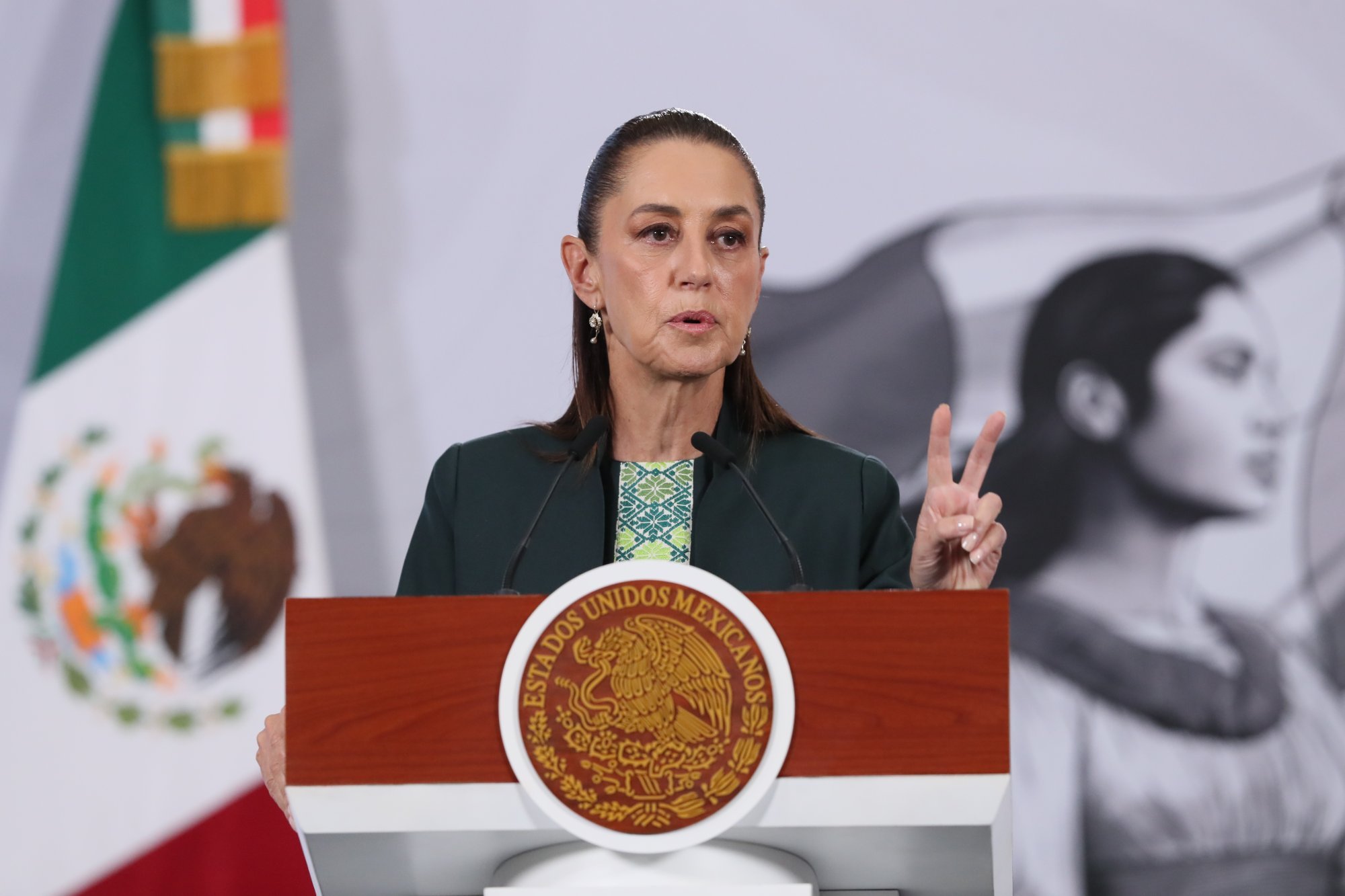
President Sheinbaum has said the tariffs form part of her administration’s broader strategy to promote domestic production, strengthen small and medium-sized enterprises and attract investment to new regional development hubs.
Ebrard reaffirmed that Mexico intends to stay in contact with China and other countries affected by the new duties.
“We have a good relationship with China, and we respect them,” he noted. “This decision is not about confrontation. It is about ensuring fair conditions for Mexican workers and producers.” -- SOUTH CHINA MORNING POST