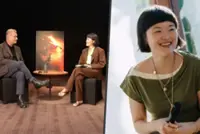
A top scientist has sharply criticised China’s increasingly resource-driven research culture, warning that a reliance on vast accumulated funding, manpower and data for scientific output is inefficient and actively undermines genuine innovation.
Zhang Hong, a senior cell biologist at the Institute of Biophysics in Beijing and a member of the Chinese Academy of Sciences, condemned what he called “a vicious cycle” in how life sciences research was increasingly done in China.
Projects were inflated for scale, engineered to land in elite journals and then cashed in for titles and even greater resources, he told science communication outlet The Intellectual in an article it posted to its social media account on Monday.
“You often hear people boasting about publishing a paper that costs tens of millions of yuan in a top journal like Science, Nature or Cell. What they’re really showing off is how many resources they control,” Zhang said.
This kind of research, while good at chasing hot topics and expanding existing ideas – often known as “1-to-100” science – has squeezed out the space, culture and funding needed for true innovation, according to Zhang.
“Zero-to-one” breakthroughs – characterised as original, high-risk discoveries that opened up entirely new directions – often had little to do with scale and were becoming increasingly difficult to pursue in such an environment, he warned.
China’s investment in science and technology has soared in recent years, with total spending on research and development last year topping 3.6 trillion yuan (about US$500 billion), to make it second only to the United States.
Chinese scientists have led the world in research output since 2019. Last year, they accounted for half of all medical-related papers globally.
Several US-based studies have also suggested that China has surpassed the US in research quality and impact across multiple disciplines.
Despite this rapid rise, the Chinese government has repeatedly called for more “zero-to-one” breakthroughs. Top leaders have stressed the need for bold innovation to reduce reliance on foreign technologies and establish China as a true scientific powerhouse.
Zhang acknowledged that Chinese scientists excelled at “1-to-100” research, with hundreds of papers published in elite journals this year. “It’s like stamp collecting,” he said. “But zero-to-one discoveries are so rare.”
He also noted that some Chinese papers in the past had been hard to reproduce, sometimes because of fraud or cherry-picked data. “Now they’re irreproducible because no one else can afford them – thousands of omics tested, tens of thousands of samples analysed. Who has the resources to replicate that?”
Zhang pointed to a growing inequality in research funding, with senior scientists who returned from abroad often receiving tens of millions of yuan soon after arrival, while home-grown researchers quietly doing original work struggled for support.
The imbalance was pushing young scientists to chase the resource-driven path, he warned. “This shift in research culture is alarming. It could distort an entire generation, maybe more.”
Zhang said he was not opposed to large-scale projects per se, just to those that were bloated with money and personnel with no other goal than to produce eye-catching papers.
Too often, such projects chased flashy theories, frameworks and buzzwords that appeared new but lacked depth, he said.
“This is a false prosperity built on self-promotion. It misleads policymakers and ultimately harms the country. I’m deeply worried.”
Passionate about science? Dive deeper with the Dark Matters newsletter, a weekly in-depth analysis on China’s rise in science, technology and military that goes beneath the surface. Sign up for free now.