
Chinese carmaker BYD plans to build a new factory in Brazil within the next three years after rising demand for electric buses filled its existing production capacity and forced the company to redraw its manufacturing strategy in the country.
The project would sharply expand output, create hundreds of jobs and support exports across South America, with Africa also being considered, as BYD strengthens a business segment that predates its move into passenger electric vehicles.
BYD has assembled electric bus chassis in Campinas, Sao Paulo state, since 2015. Over nearly a decade, the plant produced about 600 chassis, a figure shaped by slow early adoption of electric buses, regulatory uncertainty and the disruption caused by the pandemic.
That trajectory is now set to change. Orders already secured mean BYD expects to manufacture around 1,200 chassis in 2026 alone, roughly double the total output of its first 10 years of operations in Brazil.
“Only in 2026 we will produce around 1,200 chassis,” said Marcelo Schneider, BYD Brazil’s director for commercial vehicles. “That is already more than what we produced in the last 10 years.”
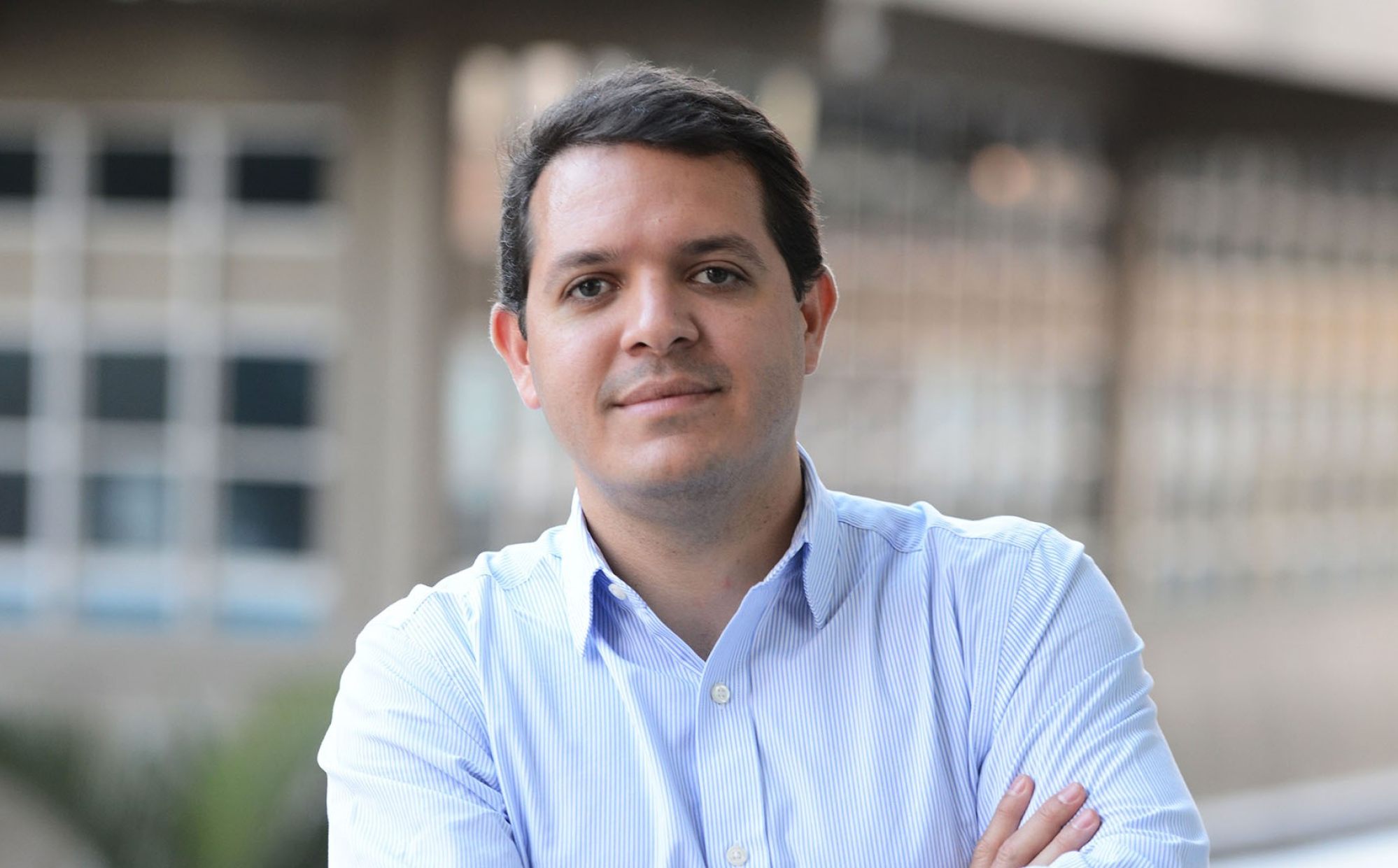
Schneider said the increase reflects a delayed but concentrated wave of fleet replacement, particularly in Sao Paulo, where operators are now renewing buses that remained in service longer than planned during the pandemic.
The Campinas plant has a nominal capacity of up to 2,000 chassis per year under ideal conditions, but its effective output is lower because it builds different bus configurations, including articulated models that require more time and resources.
As a result, the factory’s production schedule for next year is already fully taken, according to Schneider, leaving no room to absorb additional orders despite growing interest from other cities.
“We already have orders that take practically the entire year,” he said. “Today, we cannot accept new orders.”
To prevent the bottleneck from slowing deliveries, BYD plans to expand production in stages. In the short term, the company intends to set up a temporary manufacturing operation near Campinas that would roughly double current capacity within four to six months.
In parallel, BYD plans to build a new, purpose-designed factory in Sao Paulo state, expected to open within two to three years.
The greenfield site would span about 180,000 square metres (1.94 million square feet), a sharp contrast with the current Campinas operation, which occupies about 7,000 square metres across several rented buildings.
Once operational, the new plant would replace all existing commercial vehicle facilities currently scattered across the Campinas region.
The new factory would also be designed to accommodate electric truck production, a segment BYD currently serves in Brazil through imports. The plan is to close the current facility once the new infrastructure is completed.
At full scale, the new factory could produce between 6,000 and 7,000 chassis per year, several times the output of the current operation. Employment in the segment could rise from about 80 to 100 workers today to between 700 and 800.
Beyond Brazil, the project is designed to support exports. Schneider said BYD sees Brazil as a natural manufacturing hub for supplying electric buses to neighbouring South American markets, particularly within Mercosur.
Africa has also been discussed as a longer term possibility, though Schneider said any move beyond South America would come later, once production and logistics are consolidated.
BYD had already established a presence in Brazil’s electric bus sector before its recent rise in passenger vehicles. Early efforts relied on fully built buses imported from China, which proved ill-suited to Brazilian operating conditions.
That experience led the company to shift to local chassis assembly and partnerships with Brazilian bodybuilders such as Caio Induscar and Marcopolo, anchoring its commercial vehicle operations in Campinas.
Over time, BYD expanded into electric trucks for specialised applications and added solar panel and energy storage operations, reflecting its origins as a battery manufacturer.
Momentum increased after the pandemic as delayed fleet renewals converged with local regulation and subsidy programmes, particularly in Sao Paulo. Other cities including Curitiba, Goiania, Belo Horizonte and Rio de Janeiro have also begun introducing electric buses, though at a smaller scale.
While Brazil still trails countries such as Chile and Colombia in overall fleet electrification, Schneider said its size gives it long-term potential once the transition gains scale.
BYD’s confidence in Brazil was reinforced in October with the opening of the company’s large passenger vehicle factory in Camacari, in the northeastern state of Bahia. Built on the site of a former Ford plant, the complex represents BYD’s largest investment in the country.
The Camacari facility carries an investment of R$5.5 billion (US$1.02 billion) and is expected to create up to 20,000 jobs. Initial capacity is set at 150,000 vehicles per year, with plans to double output in a second phase.
Schneider said the company’s immediate focus is on delivering existing orders while expanding capacity in stages.
“The challenge now is execution,” he said. “We have to deliver what the market is asking for.” -- SOUTH CHINA MORNING POST