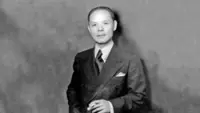
Japan is likely to become the “most serious and direct” threat to both China and Russia in the Asia-Pacific, a former Chinese diplomat and foreign ministry official has warned.
Wu Hailong, assistant minister of foreign affairs from 2009 to 2011, now heads the semi-official China Public Diplomacy Association.
Russia should factor in the challenge from Japan, he told a forum in Beijing last week.
“When discussing China-Russia relations, I cannot avoid mentioning the Japan factor,” Wu said, according to the media outlet Guancha.
“China and Russia should join hands to guard against Japan creating trouble for us in the Asia-Pacific region.”
Jointly hosted by the Guancha’s Beijing Club for International Dialogue and Russia’s Valdai Discussion Club, a Moscow-based think tank, the event drew over 20 analysts from both nations.
Wu was speaking amid the ongoing row triggered by Japanese Prime Minister Sanae Takaichi’s comments that an attack on Taiwan could prove an existential threat that may prompt Japan’s military to intervene.
This enraged Beijing, which considers the remarks an interference in its internal affairs and a departure from Tokyo’s long-term policy of strategic ambiguity on Taiwan. Beijing has since launched a series of retaliatory measures.
“It is blatant interference and obstruction of China’s great cause of national reunification. This cannot but arouse the highest vigilance on the Chinese side,” Wu said of Takaichi’s comments.
Beijing sees Taiwan as part of China, to be reunited by force if necessary. Most countries, including the US and its treaty ally Japan, do not recognise Taiwan as an independent state. But Washington is opposed to any attempt to take the self-ruled island by force and is committed to supplying it with weapons.
Wu referred to Japan’s 50-year colonial rule over Taiwan and accused Tokyo of long-standing collusion with pro-independence forces.
“The party that least wants to see cross-strait reunification is Japan; the main external force actually obstructing reunification is also Japan,” he said.
“Japan has never truly reflected on or repented its crimes of aggression in World War II, and its ambition to revive militarism has never ceased,” he added.
“Japan’s military power is continuously expanding, and it is accelerating military deployments targeting China and Russia. Japan is highly likely to become the largest and most direct threat to China and Russia in the Asia-Pacific region.”
Stressing that both China and Russia were victors in World War II and shared a common responsibility to defend the post-war order, Wu warned that a resurgent Japan could unleash “catastrophic consequences”.
“No matter how the international situation and great-power relations change, China and Russia will always remain reliable partners and friends.”
Wu, a former ambassador to the European Union, said that China had “consistently ... adhered to an objective and impartial stance” over the Ukraine war.
He added that Beijing “stood firm against US threats, withstood pressure from Europe and unswervingly maintained close cooperative relations with Russia”.
While a ceasefire could help improve relations between the US and Russia, he said strategic tensions would continue, reinforcing the need for Beijing and Moscow to align closely.
“Some people worry that once the Russia-Ukraine conflict ends and Russia’s strategic pressure eases, its reliance on China might decrease. I believe these concerns are entirely unnecessary,” he said.
He also said Europe was likely to remain hostile towards Russia, adding that it was in a state of “extreme confusion and perplexity” over its strategic direction.
Wu added that “the US has bypassed Europe in negotiation [on solving the Ukraine crisis], leaving Europeans in an awkward position”.
He said the continent was waking up to the perils of over-reliance on Washington but lacked the “courage or capability” to break free.
Wu urged European leaders to embrace pragmatic cooperation with China, warning that hesitation could cost the continent vital economic opportunities.
Wu said China had “withstood pressure from Europe” to distance itself from Russia after the 2022 invasion of Ukraine, and warned that “without cooperation [with China], Europe risks missing opportunities”.
He added that while the EU was “still hesitating”, the “leaders of some European countries can no longer sit still”.
Last week, French leader Emmanuel Macron visited China – his fourth trip as president – where he urged Beijing to support ceasefire efforts in Ukraine.
The trip led to the signing of 12 agreements covering everything from nuclear energy to education and panda conservation.
“Partnering with the world’s second-largest economy is pragmatic,” Wu said. “China is patient, awaiting EU shifts without urgency.” -- SOUTH CHINA MORNING POST