
The US Congress is readying votes on a sprawling bill that would restrict US outbound investment to China in sensitive sectors as well as federal government contracting with Chinese biotechnology companies, two controversial measures that were left out of similar legislation last year.
The provisions were included in a compromise defence bill released on Sunday after months of negotiation.
Votes on the annual bill, known as the National Defence Authorisation Act (NDAA), could happen this week. Lawmakers in both the US House of Representatives and Senate have two weeks left before they go out of session until January.
Enacted annually for over six decades, the NDAA is one of a few major pieces of legislation considered to be “must-pass” and often includes measures not strictly tied to defence.
Lawmakers have sought for years to pass versions of the Biosecure Act targeting executive branch contracting with Chinese biotech as well as the Foreign Investment Guardrails to Help Thwart (FIGHT) China Act targeting US investments in Chinese technologies with military applications.
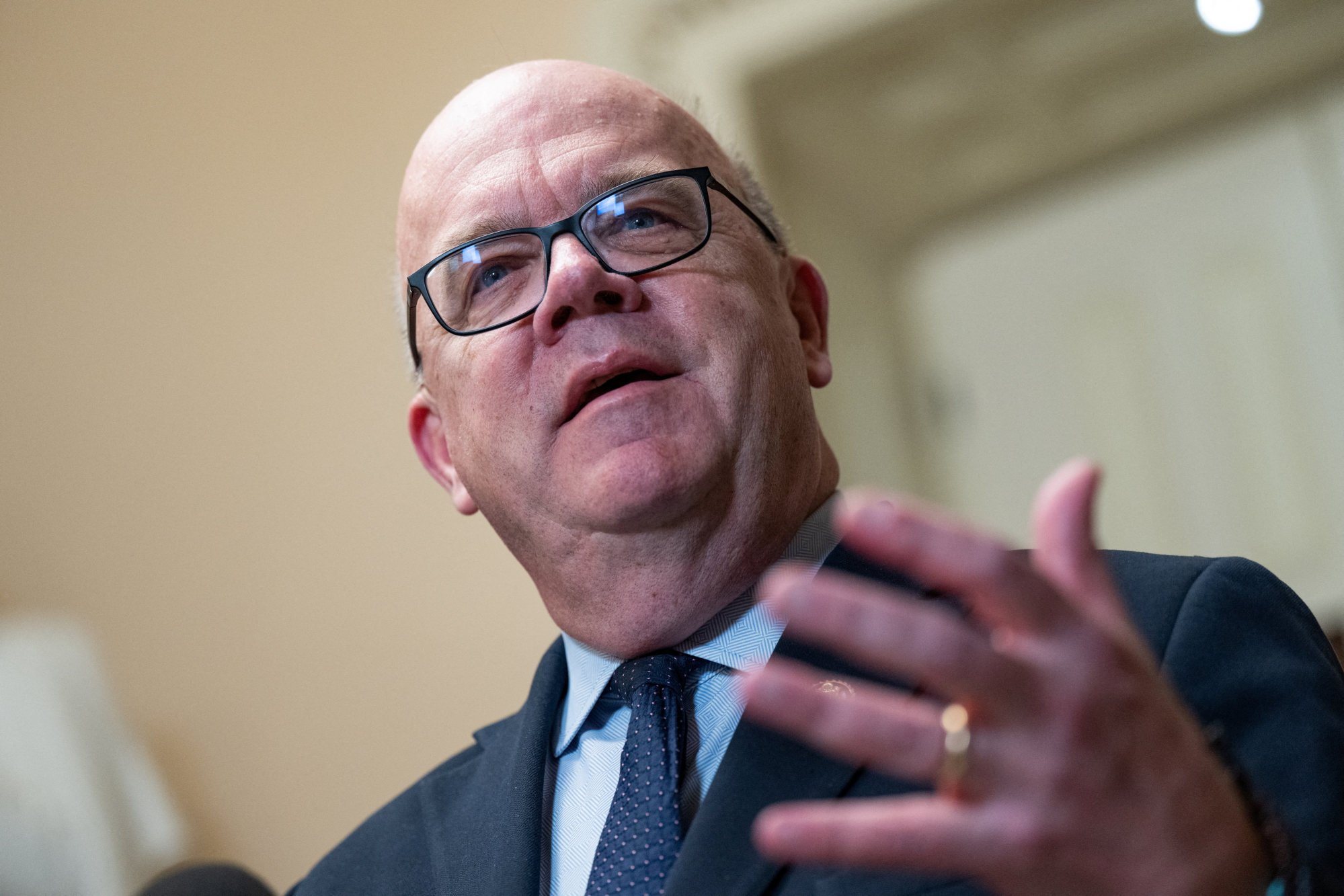
Last year, the Biosecure Act was dropped from consideration after Jim McGovern, the top Democratic congressman on the influential House Rules Committee, intervened to protect jobs tied to one targeted Chinese company in his district. The version included in this year’s NDAA does not name specific companies, but rather directs the executive branch to come up with a list of “biotechnology companies of concern” that would be blocked from federal contracts, grants or loans.
Similarly, a predecessor to the FIGHT China Act, which codifies much of existing Treasury restrictions on investments in sectors like quantum information technologies and semiconductors, faced opposition from Patrick McHenry, then-chair of the powerful House Financial Services Committee. McHenry, a Republican who has since exited Congress, argued such legislation would limit the influence of Western firms in China.
Supporters of outbound investment restrictions argue that they are essential to cut the flow of American expertise and capital to China’s military.
The FIGHT China Act authorises the Treasury secretary to prohibit or require notification of US investments in sensitive technologies in China, namely the fields of AI, semiconductors, quantum technologies, high-performance computing and hypersonics.
Meanwhile, advocates for biotechnology restrictions say they are needed to encourage US firms to curb their reliance on Chinese manufacturing as well as reduce the risk of American health data going to Beijing. The Biosecure Act targets firms on a Pentagon list of “Chinese military companies”, though it indicates that others could be added.
Opponents to restrictions argue that they could disrupt drug development, raise healthcare costs and undermine US biotechnology leadership.
The 3,086-page legislation from over the weekend also included provisions that would strengthen reviews of foreign real estate purchases, expand restrictions on funding to Chinese military companies, as well as require reports assessing Chinese drug sources to combat fentanyl trafficking and Beijing’s investment in Brazil’s agricultural sector.
The NDAA authorises Pentagon programmes, but does not fund them. Congress must separately pass funding in a spending bill for the financial year that ends in September 2026.
This year’s NDAA authorises about US$900 billion in spending, US$8 billion more than the White House’s request.
Notably, the bill this year does not include the Guaranteeing Access and Innovation for National (GAIN) AI Act, which would have required American semiconductor firms to give priority to US customers on AI chips before selling them to China.
The White House reportedly opposed that provision after protests from US chip company Nvidia, which has publicly campaigned against the legislation, arguing that there are no US customers experiencing a shortage of its products.
This year’s bill also does not include the Securing American Funding and Expertise from Adversarial (SAFE) Research Act, which would impose funding restrictions and require extensive disclosures related to research collaboration with Chinese entities.
Opponents to that provision, which include over 50,000 members of the American Physical Society, argued that it had the potential to end valuable international collaborations, punish honest mistakes with no benefit, and undermine US scientific and technological competitiveness.
Still, some observers argue that the action from Congress reflects enduring bipartisan scepticism of China even as US President Donald Trump’s administration signals a more measured approach with its new national security strategy.
“Congress is legislating like China is still the pacing threat, even as the new national security strategy tries to spread the focus more evenly across a long list of challenges,” said Craig Singleton, a senior fellow at the Foundation for Defence of Democracies.
“The NDAA’s China provisions make clear that, whatever the White House tone, Capitol Hill is locking in a hard-edged, long-term competition with Beijing.”