
US President Donald Trump has announced a long-anticipated US$12 billion farm aid package to assist farmers caught in US-China trade tensions, crediting his tariff strategy for making the bailout possible and asserting that his negotiations with China had led to the resumption of massive soybean sales.
But the announcement has not pleased all farmers, particularly those still struggling with low prices and lost markets. Some said it was too little, too late, and that a bailout wouldn’t be necessary if there were no tariffs.
John Bartman, a soybean farmer from Illinois, said the aid was a “drop in the bucket” and “roughly the same amount of money that China would have purchased in a normal year anyway”.
“It’s just the stupidity of the whole situation that we’re in this mess. And why is China not upholding their end of the bargain? Why do we have to have this payment in the first place?” he added.
US Agriculture Secretary Brooke Rollins said the government will issue US$11 billion in direct “bridge payments” to crop farmers by the end of February 2026, while holding back US$1 billion to assess needs among speciality crop producers.
While blaming his predecessor Joe Biden for the “total mess” and “highest inflation”, Trump said that the aid would not be “possible without tariffs” and called $12 billion “a lot of money”.
“This money would not be possible without tariffs. The tariffs are taking in, you know, hundreds of billions of dollars, and we’re giving some up to the farmers because they were mistreated by other countries for maybe right reasons, maybe wrong reasons,” Trump said during a roundtable at the White House.
Citing the lawsuit brought by a group of small businesses against a large chunk of his tariffs, Trump added that “bad people” and “some real sleazebags” were trying to take the levies away. “The decision of the Supreme Court is a very important thing,” he said.
In November, the higher court heard oral arguments in the case, which asserts that the executive lacks the power to impose sweeping tariffs by declaring a national emergency. A verdict is widely expected in the first half of 2026. Trump imposed hefty tariffs on all trading partners earlier this year using the International Emergency Economic Powers Act.
On Monday, Trump did not specify if tariff revenues would fund the entire bailout. In September, he had proposed using tariffs to support farmers. However, if the US Supreme Court finds his tariffs unconstitutional, he may be barred from using that money to finance aid packages.
The aid comes after months of anger and frustration among farmers over losing access to the Chinese market due to Trump’s tariff policies. China is the world’s largest soybean buyer and has been a major client for US soybean growers since the early 2000s, purchasing between half and two-thirds of US soybean exports.
During his first term, after Trump began a unilateral trade war against China in 2018, Beijing retaliated with its own tariffs on US agricultural products, primarily soybeans, while also moving some orders to Brazil. At the time, Trump doled out $28 billion in farm aid for affected farmers in 2018 and 2019 combined.
After Trump slapped new tariffs on Chinese imports early this year, Beijing did not place a single order until October and bought instead from Brazil.
In October, Trump met with President Xi Jinping to have Beijing resume its soybean purchases from the US.
While the White House was quick to announce that China had agreed to buy 12 million metric tonnes of soybeans this year and 25 million metric tonnes annually for the next three years, Beijing has not confirmed these numbers. Between October and now, only about two million metric tonnes have been ordered by China.
However, Trump on Monday said that China was buying “a tremendous amount of soybeans”, and his administration was “very happy with that”.
He claimed that the world’s second-largest economy is “going to do more” than what it “promised” on soybean purchases.
Soybean is all that matters, says Bessent
US Treasury Secretary Scott Bessent, who has been the key trade negotiator with Beijing, added that every time Trump talks to Xi – either in person or on the phone – he always starts by asking “for more soybean purchases”.
“We don’t talk about geopolitics. We don’t talk about trade. It’s about soybean,” he said, noting that the US was also looking at alternative markets with Japan agreeing to buy US$8 billion worth of corn, soybeans, rice and more.
Cordt Holub, a corn and soybean farmer from Iowa, who joined Trump during the announcement, hailed the package.
“It’s Christmas early for farmers. And what you’re doing here in DC, this money would not be possible without you,” he said.
However, not all soybean growers were happy. Some hit hardest by tariff disputes voiced frustration that the funding falls short of what they need.
Randal Shelby, a soybean farmer in Arkansas, described the newly announced package as “a slap in the face” for farmers.
“Our bills are past due and due now, all due to their actions,” he said. “[The aid] will be divided up among all other crop farmers that don’t have anything to do with soybeans.”
Shelby, who voted for Trump, noted that while every agricultural crop had been hit hard, “but nowhere near as hard as the soybean farmers and the rice farmers”.
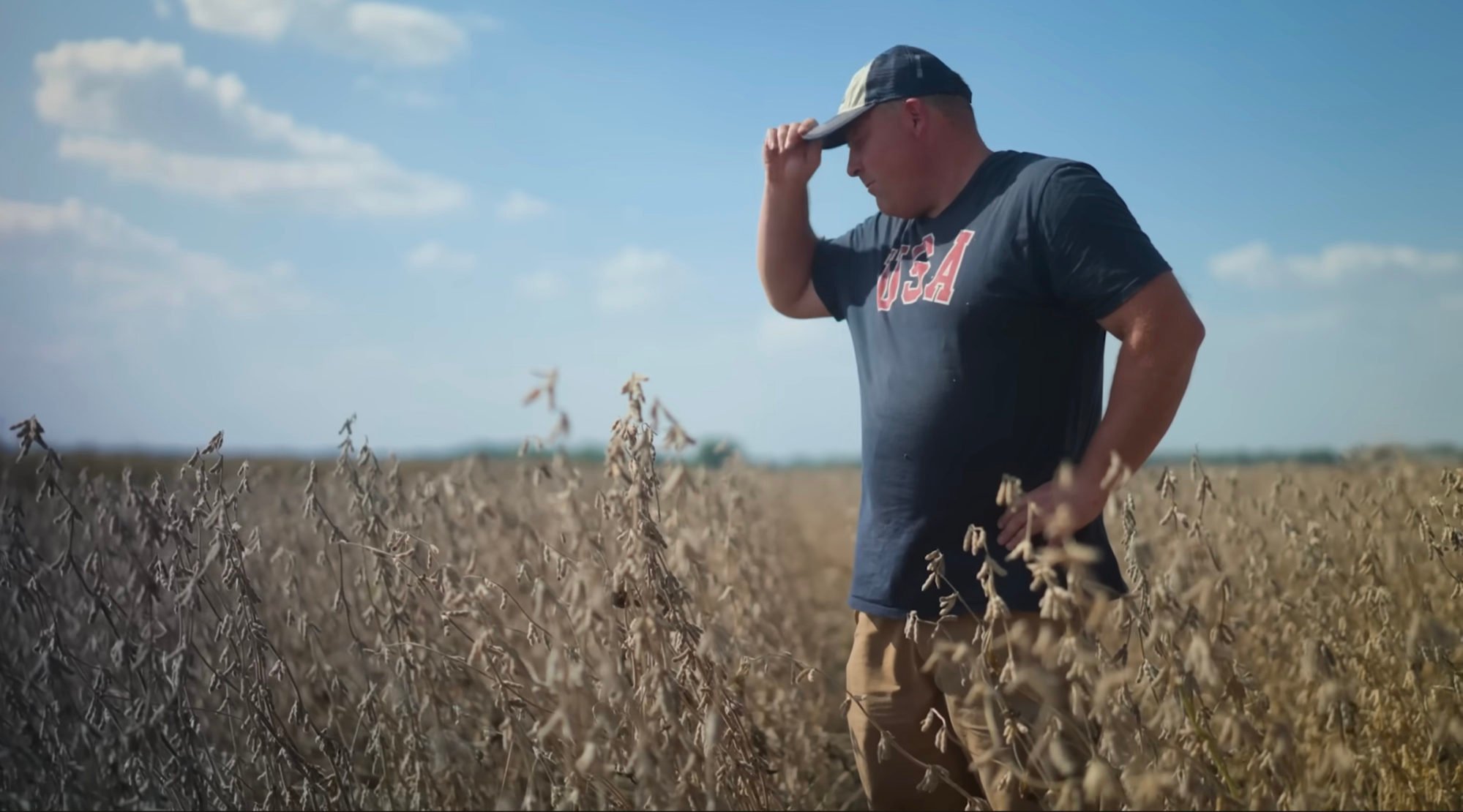
Shelby, a former nurse, has been teetering on the brink of bankruptcy for months. He cited high fuel costs, rising interest rates, falling crop prices and depressed Chinese demand amid geopolitical tensions as culprits.
“It’ll be bankrupting all. And I mean, there are so many of us that are on the fence on that right now,” he added, noting that banks were still negotiating on giving new loans, and it was unclear if he would farm at all next season.
He highlighted that, despite Trump’s regular claims that gas prices were way down, the price has hovered above US$3 a gallon since 2021.
Joe Maxwell, a fourth-generation farmer and co-founder of Farm Action, a non-partisan advocacy organisation, in a statement said that “Farmers across America are hurting”.
“[Trump’s] relief package acknowledges that reality, US$12 billion is only a fraction of the losses farmers have suffered from trade wars, tariffs and skyrocketing input costs all farmers are facing due to heavily concentrated agriculture markets,” Maxwell added.
“We need long-term reforms that invest in growing healthy food here at home using regenerative, lower-input cost practices, not just temporary patches when the cracks show.”
Rise in bankruptcies increases mental stress for US farmers
Recently, there has been an uptick in farm bankruptcies and reports of increasing mental stress in farming communities who remain uncertain about the future and US-China trade relations.
According to the Federal Reserve Bank of Minneapolis, farm bankruptcy filings rose to 93 in the second quarter, up from 88 in the first and nearly double the 47 at the end of 2024. There were 216 bankruptcies in 2024.
A July report from the University of Arkansas Division of Agriculture noted that in 2019, 599 Chapter 12 bankruptcies were filed across the US, the highest in at least a decade, which allows farmers to restructure debt and continue operations. By 2021, that number had fallen to 276.
The mental toll of the financial stress has been devastating, with local and anecdotal reports of suicide among farmers.
Trump on Monday hailed his “One Big Beautiful Bill” for removing the estate tax, a federal tax on inherited property, saying that farmers had committed suicides because they couldn’t save their farms.
“They love their farm, and they love their business, and they love their way of life; they’d end up committing suicide, a lot of suicides,” he said.
Data shows that American crop farmers are unlikely to experience any significant relief.
New analysis by the American Farm Bureau Federation projects heavy 2025–26 losses across major crops, including US$15.1 billion for corn, US$6.7 billion for soybeans, nearly US$5.9 billion for wheat and US$3.4 billion for cotton. Sorghum and rice producers each face losses exceeding US$1 billion.
According to the US Department of Agriculture, farm production expenses are expected to reach US$467.4 billion for 2025, a US$12 billion increase over 2024.
A new American Soybean Association report estimates that US soybean growers will face losses of about US$89 per planted acre in 2025, their third consecutive year of market losses.
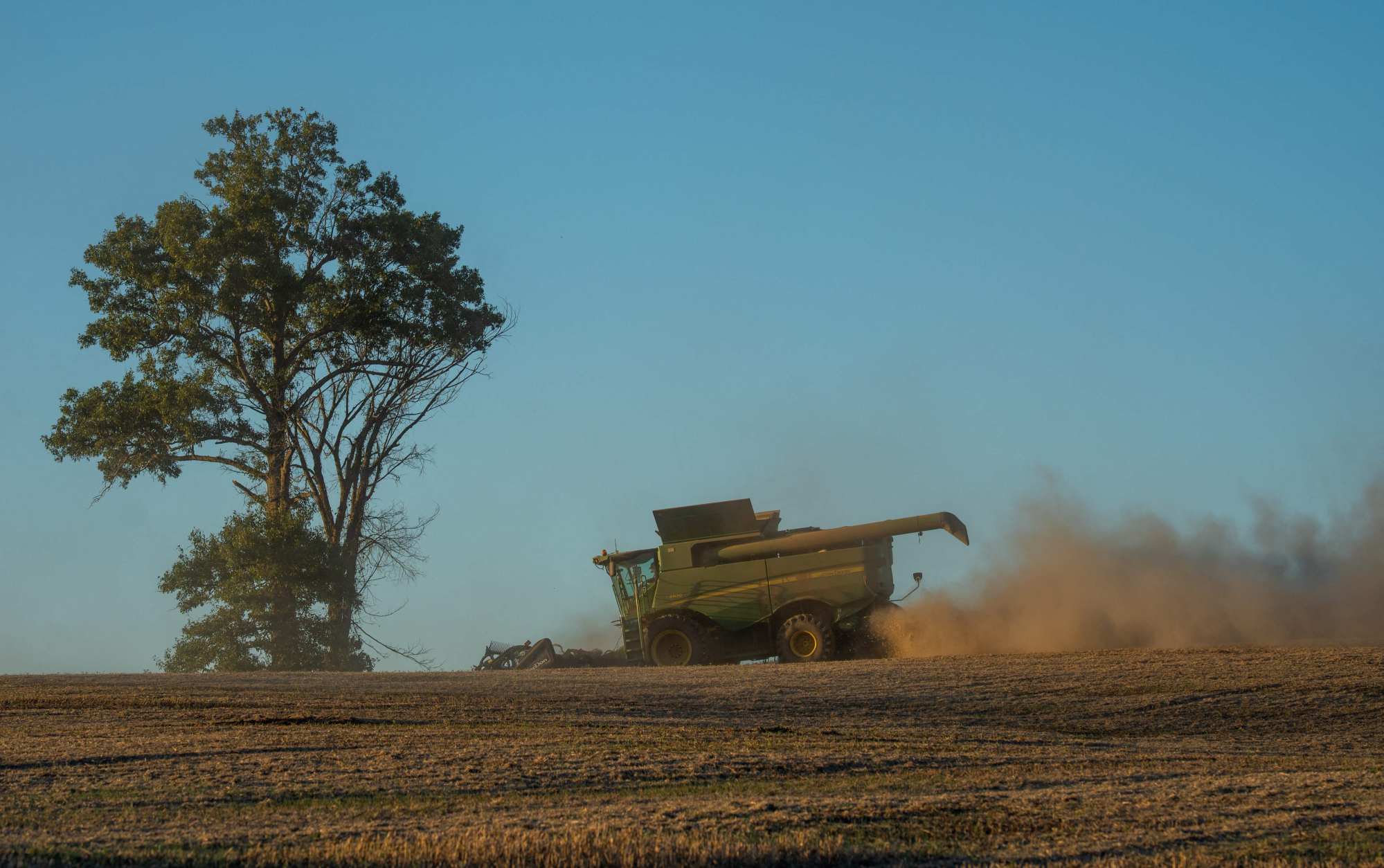
Shebly said that even if China buys the promised amount by February, it won’t help soybean farmers, since the harvest window is over by November and they have to sell their produce, even at a loss, within that window to pay their bills.
He expressed further frustration with the US bailout of US$20 billion to Argentina, a competitor to American farmers in grabbing Chinese demand.
“Why does it have to take so long to attempt to help your taxpaying Americans when it only takes two seconds for them to throw 40 billion in Argentina without a vote or a congressional hearing?” he said.
Jeff Winton, a New York farmer and founder of Rural Minds, a non-profit organisation centred around farmers’ mental health, said he’s not convinced that package is “enough and I’m not convinced it’s in time”, calling it “too little and too late”.
He added that farmers want a stable market to sell their commodity, but they “absolutely will take the money because it’s a matter of survival right now, because they have no place to sell their crops”.
Winton pointed out that farmers are “very divided” in their support for Trump, arguing that the current crisis stems from policies Trump implemented in his first term, before Biden took office.
He said that when farms began to struggle, the arrival of large federal aid packages created, in his view, a kind of “Stockholm syndrome” among some producers.
“So, all of a sudden, the person who hurt you is now your hero, because you forget what caused your issue, but you’re so grateful for the relief and the love that you’ve been shown that you forget what caused this issue,” Winton said. -- SOUTH CHINA MORNING POST