




The 2025 film Nuremberg ends with a sober line from British historian R.G. Collingwood: “The only clue to what man can do is what man has done” – a stark reminder that history repeats when justice does not.
While the crimes of Nazi Germany were brought before an international tribunal 80 years ago, the atrocities committed by Japan’s secret Unit 731 in northeast China’s Heilongjiang province during the second world war – have never faced a comparable legal reckoning.
The covert unit conducted lethal human experiments that killed at least 3,000 people and biological warfare attacks that led to hundreds of thousands of civilian deaths, with harms that persist to this day.
Saturday marks the 88th anniversary of the Nanking Massacre by Japanese troops in World War II. China estimates more than 300,000 civilians and soldiers died during the six-week slaughter from December 13, 1937 in the city known today as Nanjing.
In a new paper, archaeologists Wang Xiaohua and Xue Kaifan from the Heilongjiang Provincial Institute of Cultural Relics and Archaeology argue that Unit 731’s conduct meets the modern definition of crimes against humanity.
It was vital to pursue the case under international law to prevent a future recurrence, they said in the paper, published on December 1 by the peer-reviewed journal Northern Cultural Relics.
The authors noted that the US granted immunity to Unit 731 leaders after the war in exchange for their biological warfare data.
The Japanese government has never formally acknowledged the unit’s crimes and continues to restrict access to related records and refuse compensation for victims.
The authors also observed that global multidisciplinary research since the 1950s uncovered “overwhelming evidence” of the unit’s live dissections, deliberate infection with plague, poison gas exposure and other experiments on prisoners of war and civilians from China, the Soviet Union and beyond.
However, most of this work remained in the realm of historical exposure and ethical condemnation. It was time to move the evidence into an international legal framework and to consider pursuing accountability in international courts, Wang and Xue said.
Crimes against humanity were codified in the charter of the International Military Tribunal at Nuremberg in 1945 and are defined as widespread or systematic attacks against civilians. They include murder, extermination, enslavement, torture and other inhumane acts. Unlike war crimes, they do not require a wartime context.
“In 1967 and 1968, the United Nations General Assembly adopted resolutions stating that statutes of limitations do not apply to war criminals. This means that crimes against humanity can be prosecuted regardless of how much time has passed,” the authors wrote.
“The liability of the perpetrators does not expire over time and can be pursued retroactively.”
Wang and Xue said the heinous crimes perpetrated by Unit 731 were covered up by the US and never subjected to the “thorough and just reckoning” that Nazi atrocities in Germany ultimately faced.
Shockingly, after the war many members of Unit 731 were not only spared accountability but went on to occupy prominent positions in Japan’s medical establishment and leading academic institutions, they added.
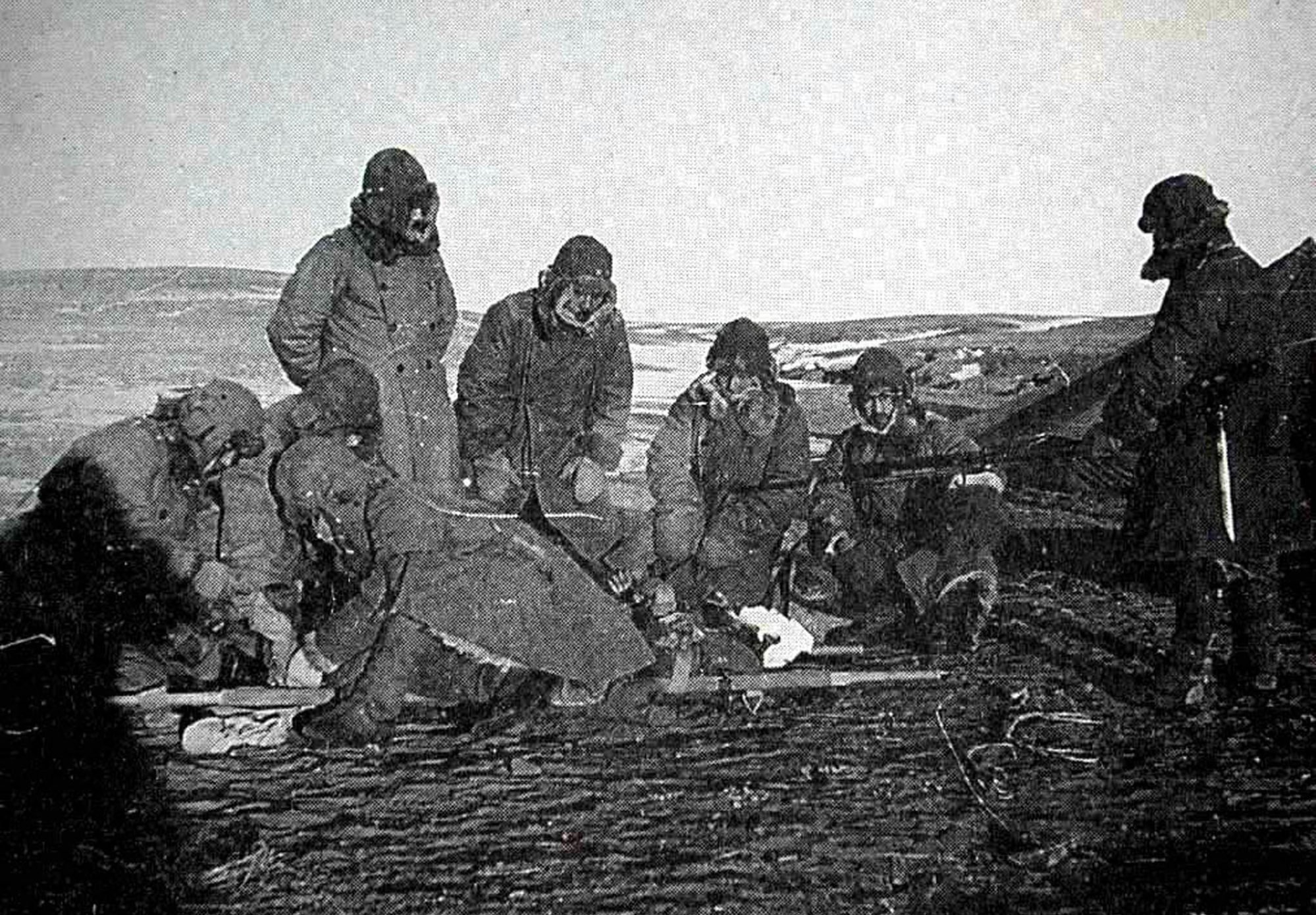
The Nuremberg trials marked the first major effort to hold a state’s leaders legally accountable for atrocities, establishing the precedent that individuals could be tried under international law for systematic violence against civilian populations. The concept has since become a cornerstone of modern international justice.
“The importance of the Nuremberg verdict lies not in how faithfully it interpreted the past, but in how seriously it warned of the future. Bringing the case of Unit 731 before an international court is not only legally grounded but necessary,” Wang and Xue wrote.
Jenny Chan, co-founder of the California-based non-profit organisation Pacific Atrocities Education, said that uncovering the horrors of Unit 731 was not just about confronting the past but also ensuring that such crimes against humanity were never repeated.
She also praised Wang Xuan, a prominent researcher into the unit who worked to bring a lawsuit on behalf of the victims in the 1990s while she was living in Japan.
The case concluded in 2002, securing a landmark ruling by a Tokyo court acknowledging the unit’s existence and its use of bacteriological weapons.
The victims did not receive compensation and many continue to suffer from the effects of biological agents like glanders and anthrax that remain in the soil to this day.
“It was challenging, but at least it was meaningful for the victims to hear the court acknowledge that Unit 731 existed,” Chan said. -- SOUTH CHINA MORNING POST



