BANGKOK: Deadly military clashes at the border between Thailand and Cambodia this week have driven half a million people to evacuate their homes in a sharp escalation of a long-running territorial dispute.
The bitter conflict between the two nations -- stemming from a disputed colonial-era demarcation of their 800-kilometre (500-mile) frontier -- has drawn the attention of US President Donald Trump, who has repeatedly pledged to broker peace.
Here's what we know about the conflict:
- How did the latest clashes start? -
The border row has dragged on for decades, but the most recent fighting between the two countries began with a brief skirmish on Sunday that left two Thai soldiers wounded.
Both sides claimed the other initiated an attack, with Cambodia maintaining on Sunday and Monday that it had not retaliated.
Fighting escalated on Monday when Thailand launched air strikes against Cambodian military targets, and Phnom Penh later said it retaliated that evening.
At least 14 people, including Thai soldiers and Cambodian civilians, have been killed as of Wednesday, while more than 500,000 have fled border regions near where jets, tanks and drones were waging battle.
- When was the last round of fighting? -
In May, a flare-up between the two countries began with military clashes on the border that left one Cambodian soldier dead.
The two sides then hit each other with retaliatory measures, with Thailand restricting border crossings and Cambodia halting certain imports.
A diplomatic phone call between Cambodia's ex-leader and Thailand's then-prime minister was leaked in June and led to a political crisis in Thailand and a change in government.
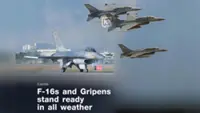
All-out armed conflict broke out for five days in July, with Cambodia firing rockets and artillery into Thailand, and Thai F-16s carrying out strikes on Cambodian military targets.
Dozens were killed and around 300,000 displaced before the two nations agreed to a ceasefire in late July.
- How did this year's ceasefire fall apart? -
The shaky truce held until November when Thailand paused its implementation after Thai soldiers were wounded by landmines at the border that Bangkok said were freshly planted.
Cambodia has repeatedly said mines that have wounded Thai troops were relics of decades-old conflicts.
This week, the deadliest clashes since July broke out, expanding to five provinces of both countries.
Cambodia pulled its team out of the 2025 Southeast Asian Games taking place in Thailand, citing safety concerns for its athletes.
- What is the state of diplomacy? -
The United States, China and Malaysia, as chair of the regional bloc ASEAN, brokered the cessation of fighting in July.
In October, US President Donald Trump backed a follow-on joint declaration, touting new trade deals with Thailand and Cambodia after they agreed to prolong their ceasefire.
Both sides agreed under the pact to withdraw heavy weapons from border regions. Thailand also pledged to return 18 captured Cambodian troops who are still being held by Bangkok.
But Thailand suspended the agreement the following month.
The US president said he was planning to "make a phone call" on Wednesday about the renewed clashes.
The conflict is one of several that Trump claims to have ended.
China -- which maintains strong ties with both countries -- called this week for the neighbours to "exercise restraint".
- What is the history of the dispute? -
Thailand and Cambodia's border was largely drawn up during the French occupation of Indochina between 1863 and the mid-1950s.
During World War II, Thailand, then called Siam, gained certain Cambodian territories but was forced to hand them back to French rule in 1946.
The 1979 overthrow of Cambodia's communist Khmer Rouge blurred the boundaries further as its last members fled to the borderlands.
Dozens of kilometres remain contested and in 2008 military clashes erupted over a patch of land next to the 900-year-old, Unesco world heritage site, Preah Vihear temple, located on the border.
Sporadic violence from 2008 to 2011 led to the deaths of two dozen people and displacement of tens of thousands. - AFP