
SINGAPORE (The Straits Times/ANN): When Melvyn Xu was winding down for the night in his hotel room in Hakodate city, Hokkaido, at about 11pm, his phone suddenly blared a loud alarm.
The 48-year-old property agent was shocked to see an alert warning that a major earthquake was imminent and that he should take shelter immediately.
Before he could react, his hotel room began shaking violently.
Speaking to The Straits Times on Dec 9, Mr Xu, who was on holiday with his wife and 12-year-old son, said: “We panicked and didn’t know what to do. We did not dare not run out of the room so all three of us hid under a very narrow table.
“We waited for about a minute or so until the earthquake stopped... I wondered if the building would collapse. It was like taking a roller coaster ride.”
Just minutes after fearing for their lives, another loud alarm rang from his phone — this time warning of a tsunami.
When the tremors subsided, he tried calling the hotel front desk, but no one answered.
“My wife was holding tightly to my son and making sure his head is under the table as he is very tall. After the first tremor, the aftershocks followed, and there was one that was so strong we jumped out of bed,” he said.
Mr Xu was among the Singaporeans affected by a powerful 7.5-magnitude earthquake that shook north-eastern Japan late on Dec 8.
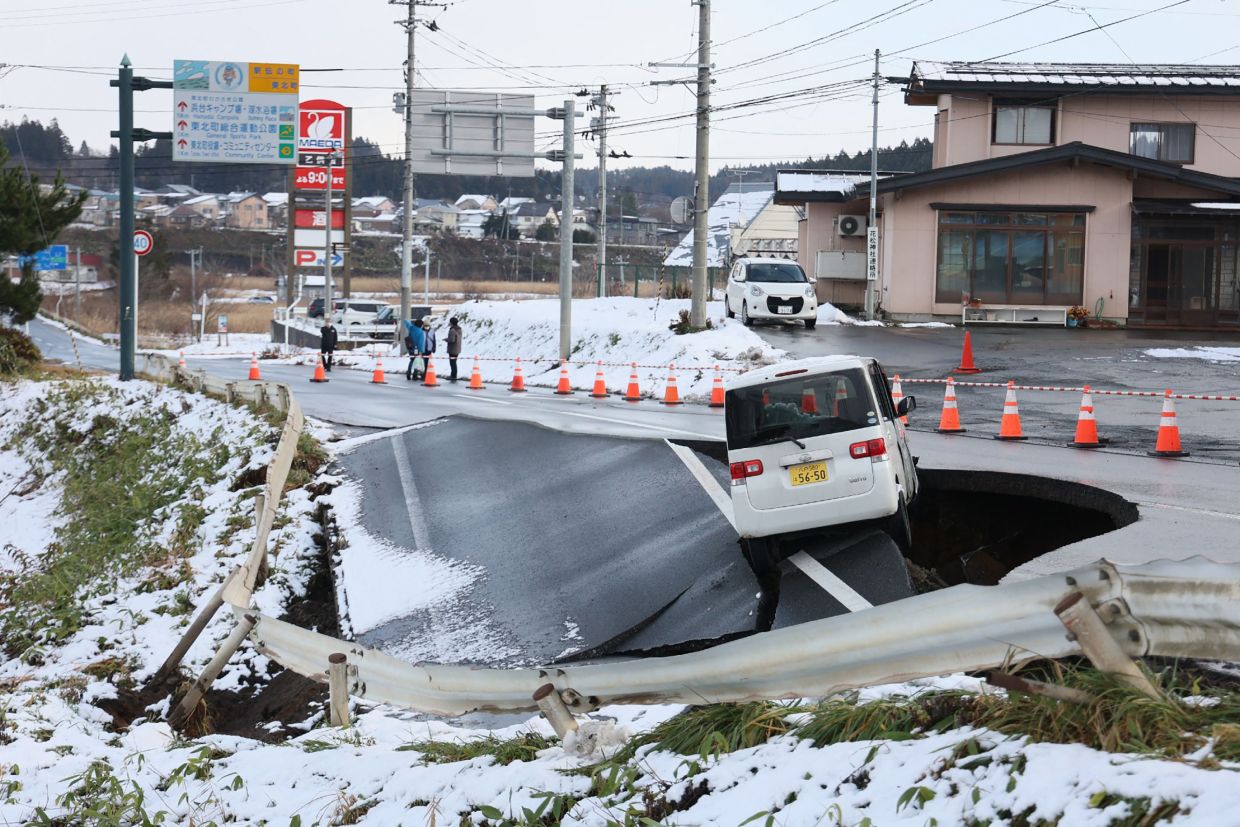
The Japan Meteorological Agency issued a tsunami warning, with one wave hitting a port in the northern region of Aomori.
Hakodate, one of Hokkaido’s main cities, lies about 121km from Aomori and sits by the sea.
The earthquake and tsunami warnings prompted orders for about 90,000 residents to evacuate their homes, although the warnings were later downgraded to advisories.
Japan is the top destination for Singaporean travellers, according to Visa’s Global Travel Intentions Study released in early 2024. A record-breaking 691,100 Singaporeans visited Japan in 2024, said the Japan National Tourism Organisation’s Singapore Office in January.
Hokkaido is a popular destination in the year-end, with many flocking to its ski resorts.
Ms Angie Thanong was in the toilet of a Sapporo convenience store when a siren went off at about 11pm.
She checked her phone, realised it was an earthquake and ran out of the store with her 12-year-old son back to their hotel.
Many guests had started gathering at the lobby, she said, adding that the hotel’s hanging lights had started swaying.
“There were a lot of people running down from the stairs. Some were barefooted, some came with no pants on and some in pyjamas. There were kids crying, but most people were waiting patiently,” she said.
After about two hours, Ms Thanong was able to return to her hotel room. She quickly packed her luggages, charged her power bank and phones, before managing to get some rest.
“We took a quick shower and then slept with proper clothes so that we can run out in it if needed,” she added. “We were expecting aftershocks, but thankfully we slept through.”
Another Singaporean, housewife Lora Lim, had returned to her hotel in Sapporo after taking her daughters to leisure centre Alpen Snowland Bibai on Dec 8 when she felt the earthquake.
The 43-year-old said she and her husband felt the hotel building shake, with beds rocking and lamps swaying from side to side for two to five minutes.
Despite their fears, they tried to remain calm.
“My daughters, aged six and eight, slept through the earthquake and we are glad that we are okay. We didn’t react much because we did not want to startle them and cause any panic,” she said.
For Ms Norhaidah Johan, experiencing the powerful tremors had left her “deeply shaken”.
“It’s a scary experience and I cried so many times,” she said.
“The hotel building was swaying,” added the 59-year-old, who was holidaying in Hakodate with her sister.
She recalled rushing down from their fourth-floor hotel room at about 10.30pm as the building shook, adding that she “could hardly walk”.
Netizens also took to a Facebook group for Singaporeans in Hokkaido to recount their experiences. Several said they had to evacuate their hotel rooms and gather in the lobby.
However, all the Singaporeans who spoke to ST said they will continue with their travel plans in Japan.
“We see everything is back to normal and that there were no aftershocks so far in the afternoon. There is no damage to the buildings here and the transportation is running smoothly now,” said Mr Xu, who will be heading to Tokyo next on his 16-day trip.
Ms Norhaidah said she has since travelled to Sapporo by train as planned, though she noticed large crowds gathered at the Hakodate train station. She is scheduled to return to Singapore on Dec 12.
In a Facebook post on Dec 9, the Singapore Embassy in Tokyo urged Singaporeans to stay away from bodies of water, monitor the local conditions closely and contact the embassy for consular assistance.
Additional reporting by Vihanya Rakshika. - The Straits Times/ANN