
Hong Kong mother Moon Li was just HK$65,000 (US$8,350) away from paying off the mortgage on the flat she and her husband bought 17 years ago, but a deadly blaze at their Tai Po estate may have shattered her dream of owning a home.
“I used to have a cosy home,” the 40-year-old clinic assistant said. “I decorated the place very well and lived there comfortably for more than a decade.”
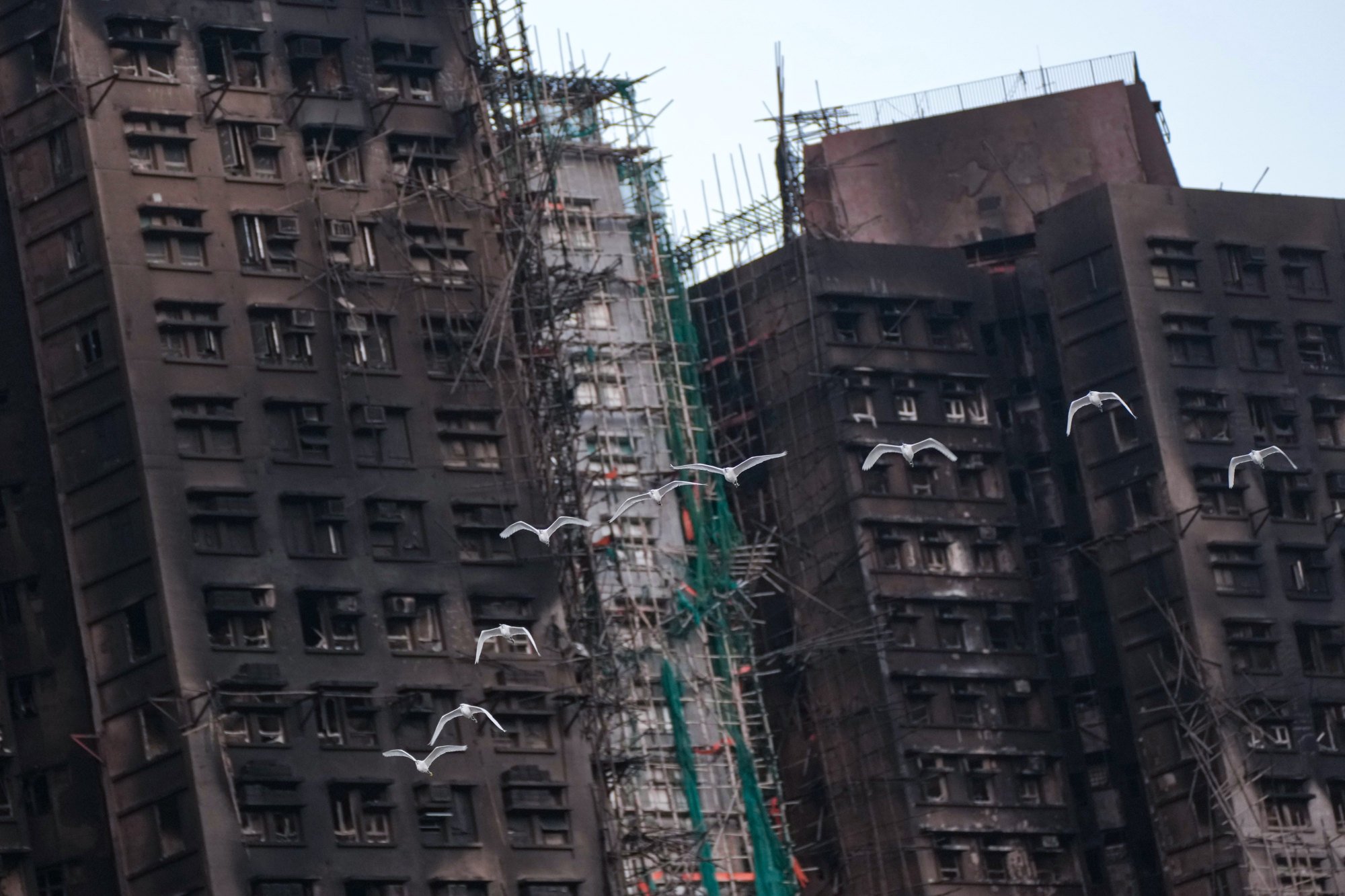
Li, her husband and their eight-year-old son were one of the 2,000 households at Wang Fuk Court, where seven of its eight blocks were severely damaged in the inferno on November 26.
The couple bought the subsidised flat at the estate’s Wang Sun House under the Home Ownership Scheme for about HK$2 million shortly before they got married. It has been their home through their marriage and the birth of their son.
They were close to paying off the mortgage and fully owning the house – a goal shared by many families in the city.
The 43-hour blaze killed at least 159 people and injured another 79. Li and her family escaped the disaster because they were not home at the time.
The estate, which was covered in bamboo scaffolding and green mesh netting, had been under renovation since July last year. Authorities later found that flammable foam panels had been used to seal windows and some samples of the netting failed fire-retardant tests.
“I’m so angry. I paid HK$170,000 for the renovation, expecting the building to be repaired and given a fresh look. In the end, my home was burned down instead,” said Li, who is among the 300 Wang Fuk Court flat owners with outstanding mortgage loans to lenders.
On Thursday, the Hong Kong Monetary Authority announced that banks would offer affected residents a six-month, pre-approved mortgage repayment grace period.
It said that those 300 residential mortgages carried outstanding payments of HK$540 million.
Li said that although the rest of her mortgage was not a burden for the family, they would still face financial difficulties as they had to repurchase many things for their son.
The mother said her son was generally “optimistic”, but felt sad about losing his favourite toys and leaving his valuable belongings behind.
“He is upset that all his Taekwondo belts are gone,” she said.
The couple tried to comfort him by taking him to his grandmother’s home for dinner every night so he would not have to stay in a tiny flat in Lok Sin Village, transitional housing arranged by the government for affected residents.
A three-person household was typically offered a flat of about 303 sq ft. The village’s operating organisation earlier said that about 130 affected residents had moved into 59 flats at the site.
Li’s son, who once had his own bedroom, now sleeps with his parents on the same mattress on the floor.
To slowly gather daily essentials, Li applied for various forms of financial aid and received donated supplies, clothes and shoes for her child.
“I always put him first when taking things from volunteers and donations. I don’t mind wearing the same clothes every day,” she said.
The government earlier announced more support measures for each affected household, including doubling a living allowance from HK$50,000 to HK$100,000.
The banking industry also offered loans to the affected residents at an emergency interest-free or low rate, with a deferred payment period of the first six months and a waiver of service charges.
But Li said she would not consider taking a loan, as she could not plan too far ahead and foresaw that they might have to move to another temporary flat.
Li’s family had signed a one-month contract to stay in the village for free. But she was uncertain about what her next move would be.
She most wanted to rebuild a home, but that was such a distant dream.
If she could not settle into a permanent home any time soon, she hoped the government would soon relocate them to one of the unoccupied flats at a nearby public housing estate, offering proper rooms and reasonable living space. -- SOUTH CHINA MORNING POST