
With domestic profits narrowing and production capacity expanding, China’s firms are continuing to widen their overseas footprints in search of new, more lucrative markets. In this series, we examine China Inc.’s next phase of “going global” and the complex, challenging international environment its companies have chosen to enter.
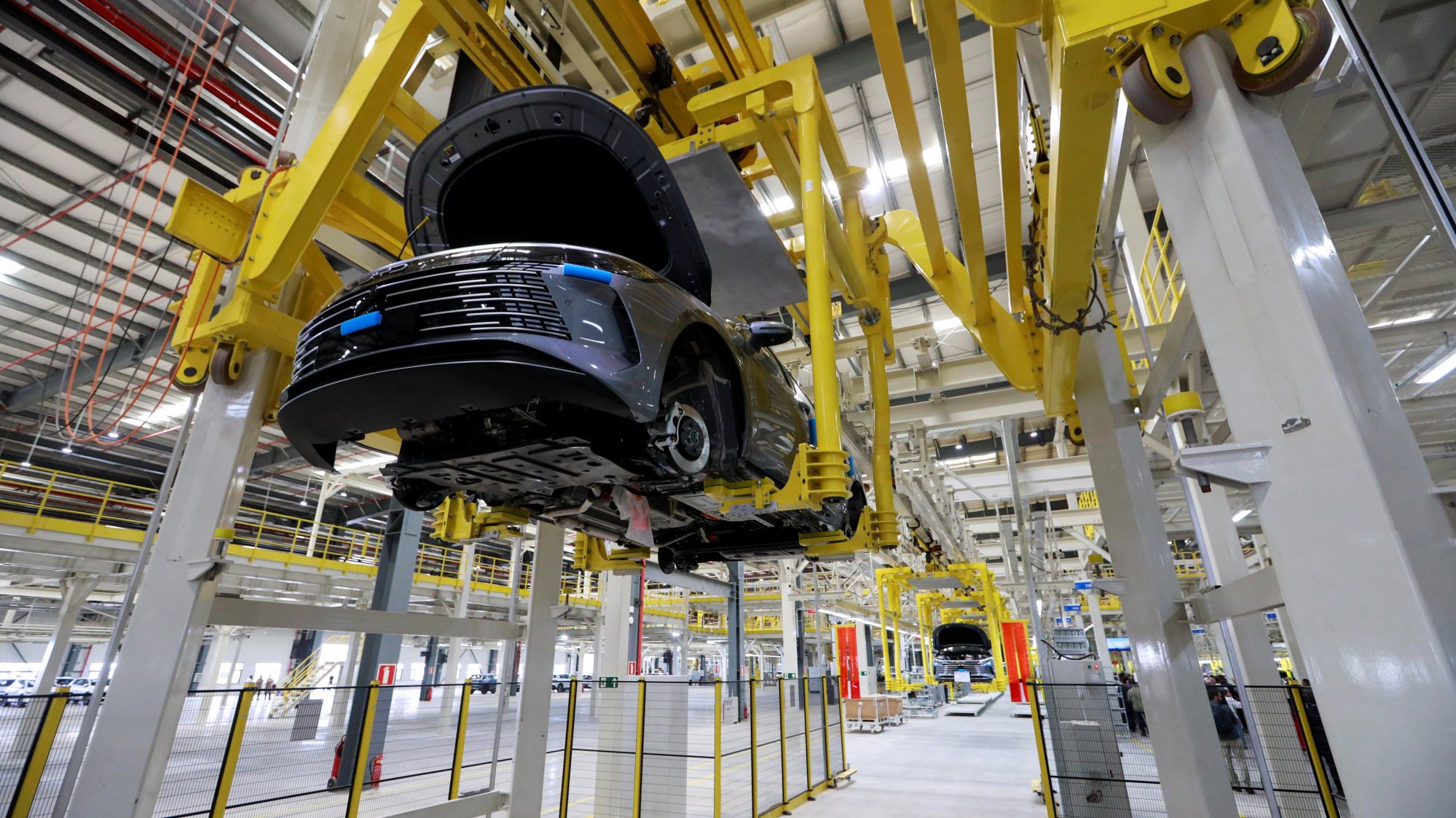
China, known as the “world’s factory” after decades spent manufacturing and shipping much of the world’s consumer goods, is now going a step further: as a number of internal and external concerns create more incentives for the country’s companies to diversify their revenue streams, they have begun exporting their factories, too.
Vince Li, an entrepreneur based in Guangdong province whose firm produces chemicals used for surface coatings in the automotive and furniture sectors, is one of many business owners to join the latest proliferation wave.
Having opened his first overseas factory near Ho Chi Minh City in southern Vietnam this year, he admitted he was making the move after many of his peers.
His factory in Guangdong used to receive ample orders from the domestic market, providing little motivation to expand overseas. But a slump in domestic demand and moves abroad by his customers have changed that calculus.
“If we do not expand overseas now, we may miss our last chance,” he said. “Many of our domestic clients have set up production overseas, and if I don’t follow suit, they’ll choose other suppliers.”
The first phase is already in production, and the factory, Thuan Thai Hardware – which covers over 3,000 square metres (32,292 sq ft) – is expected to be fully completed next year, Li said. Even before the official opening of the factory, he added, he had already received orders from existing clients who had previously moved to Vietnam.
Gao Zhendong, secretary-in-general of the China-Vietnam Industrial Service Alliance – a consultancy which helps Chinese firms move their operations overseas – said deflationary pressures at home were a major driver of domestic companies’ efforts to seek new revenue sources.
“Most of the entrepreneurs we talk to don’t believe companies can register solid performances without incremental revenue streams from overseas business.”
To cushion waning demand in the Chinese market, he said more enterprises were hoping to stabilise their cash flows with overseas revenue that could account for half their total sales.
The country’s consumer prices have been at a near-standstill for about three years. The producer price index, which tracks factory gate prices, has languished in contractionary territory even longer.
That has made overseas markets increasingly attractive, and for many manufacturers – especially those whose customers have moved abroad in recent years – they now appear the only viable solution.
The uncertainties introduced by US President Donald Trump’s flip-flopping tariff war are another reason companies are moving production overseas, but not the single biggest driver, entrepreneurs and experts said.
Gao said Chinese companies were responding to that demand – from domestic enterprises who had made moves abroad as well as foreign firms in need of local suppliers to support industrial upgrades.
Li said that although his factory in Vietnam had only limited orders, its long-term potential was strong and he planned to open other plants in Cambodia and Thailand.
Gao said the trend was irreversible: “Going global is no longer optional, it’s the lifeline of the business.”
He said more and larger Chinese companies had been venturing abroad since 2023, with Southeast Asia often serving as their first stop.
In 2024, China’s outward foreign direct investment reached US$192.2 billion, up 8.4 per cent year on year and accounting for 11.9 per cent of the global total, according to a report released by the Ministry of Commerce in September.
Nearly 20 per cent of China’s outward investment flowed into manufacturing, surging 37.3 per cent year on year, with the majority directed towards the production of electronics and equipment, the ministry said.
By region, US$34.36 billion or about 18 per cent of China’s outward investment last year went to members of the Association of Southeast Asian Nations (Asean) – mainly Thailand, Indonesia, Vietnam and Singapore – representing a 36.8 per cent year-on-year increase. According to the ministry, more than 44 per cent of China’s investment in Asean countries last year flowed into the manufacturing sector.
“We chose Vietnam for two main reasons,” Li said. “First, it’s stable and safe. Second, its supply chain is more mature than those in Cambodia or Thailand.”
Local regulations are catching up with the surge in investment, particularly in licensing and environmental compliance.
Li said the Vietnamese authorities were committed to phasing out factories without proper licences by 2029, but that would create an opportunity for his new factory, which was already compliant.
Besides neighbouring countries, Chinese manufacturers are eyeing other emerging markets, such as South America, where demand is thriving.
Amy Geng, overseas operations and sales head at Changzhou Xili, a manufacturer of electric three-wheeled mini vehicles, said her company was targeting South America and Africa because the domestic market for its products had become saturated.
Populous countries on those continents were shifting from petrol-powered vehicles to electric ones, she said, with the transition offering opportunities to Chinese carmakers.
“For small enterprises like us, joint ventures are the preferred option,” she said. “Going it alone would be costly and fraught with uncertainty. The safest approach is to partner with local dealers, while we contribute technology as a shareholder.”
But Chinese companies expanding overseas face regulatory uncertainty, with protectionist sentiment – often linked to national security concerns – being one of many challenges.
Most recently, Beijing and The Hague came into conflict over the fate of Nexperia, a Dutch semiconductor company owned by China’s Wingtech Technology.
The dispute first erupted in late September, when the Dutch government seized control of the chip company from its Chinese owners, citing national security concerns and invoking a law dating to 1952. In response, Beijing placed export restrictions on the firm’s chips – some 70 per cent of which are processed and tested in China – throwing Europe’s automotive industry into uncertainty.
A recent statement from China’s Ministry of Commerce after high-level talks suggests both sides believe the issue should be resolved at the corporate level, though countries affected by the impasse are still seeking a solution to the resultant supply chain disruptions.
Changes in regional policy frameworks may also pose risks to those making investment decisions.
In 2023, the European Union approved a ban on the sale of new petrol and diesel cars from 2035 onwards that included localisation requirements in a revised battery regulation.
However, European carmakers, already under pressure from tariffs that helped spur mass lay-offs this year, have voiced concerns that the market share of battery-electric vehicles is still far from where it needs to be and are calling on the EU to revise its carbon reduction targets.
Without mandatory battery localisation requirements – which now risk being delayed – batteries produced in Europe would struggle to compete with much cheaper batteries made in China, said Yang Hongxin, chairman and CEO of Chinese battery start-up Svolt Energy Technology, at an industry conference in early November, according to a report by Caixin on November 13.
“The cost of building a factory in Germany is simply too high – labour alone is five times more expensive than in China, and total costs would be roughly 50 per cent higher than domestic levels,” Yang said, adding that Svolt ultimately declined a large battery order from BMW that was contingent on the building of a factory in Germany.
Even after building factories overseas, operational challenges remain, said a senior executive at a footwear company with factories in China, India and Vietnam, who asked that her firm not be identified.
“Real-world variables – such as costs, policy shifts, labour availability and geopolitical tensions – are unpredictable,” she said. “In such a volatile environment, what matters most is ensuring the profitability of each factory through rational order allocation.”
Li Yixin, executive director of the Shanghai-based Mandarin Communication, said many Chinese companies assumed they could simply “copy and paste their domestic practices into other countries – but that is not how it works.”
He said Chinese companies were transitioning from “Made in China” to “operating globally”, with expertise in risk management, cultural adaptation and the intricacies of local markets now in high demand.
“Today, going global isn’t only about trade – it’s about exporting our industrial processes and cultural capabilities,” he said.
Li, who provides consulting services on global operational risk management to several Chinese enterprises, said the strength of Chinese manufacturing lay in its engineering prowess, but it still fell short of a true “industrial civilisation”.
“The core of industrial civilisation lies in understanding systematisation, standardisation and globalisation – not merely production efficiency,” he said. “Many companies operating overseas still apply domestic logic, assuming everywhere is the same – and inevitably suffer losses as a result.”
Chinese carmaker BYD launched its largest factory outside Asia in Brazil in October, with the opening ceremony attended by Brazilian President Luiz Inacio Lula da Silva.
This came nearly a year after allegations of labour abuse surfaced in December 2024 during the factory’s construction, with local prosecutors rescuing workers from what officials described as exploitative conditions and temporarily halting the project.
BYD and its subcontractor denied most of the allegations, but analysts said the incident highlighted the legal and cultural challenges faced by Chinese companies as they expand overseas. -- SOUTH CHINA MORNING POST