SEOUL: If you’ve walked through any major South Korean city recently, chances are you’ve seen a banner warning that Chinese students are all potential spies, or that Korea is being “colonised” by Chinese tourists.
These aren’t random flyers or fringe graffiti. They’re political banners, hung in public with party logos and legal protection — until now.
In November, the South Korean government issued new national guidelines to curb hate speech and disinformation in political banners.
For the first time, local governments have clear authority to take down signs that target entire groups based on race, nationality, religion or gender.
The Interior Ministry’s rulebook is an attempt to clean up what has become an aggressive and anxiety-inducing part of Korea’s streetscape.
The government also plans to seek legal revisions to strengthen the basis for the new guideline.
But there’s a twist. The ruling liberal Democratic Party of Korea, the political party now trying to rein in these messages, is the one that helped unleash them.
The loophole that let hate go mainstream
In 2022, the then-opposition Democratic Party spearheaded revisions to the Outdoor Advertising Act, exempting political banners from many typical restrictions.
Framed as a move to improve "freedom of political expression," the change allowed parties — and anyone registering to be one — to hang banners in virtually any public space, no strict permit required.
The result was immediate. Streets across the country filled with bold, confrontational messaging: attacks on rival parties, conspiracy theories, and increasingly, banners targeting foreigners.
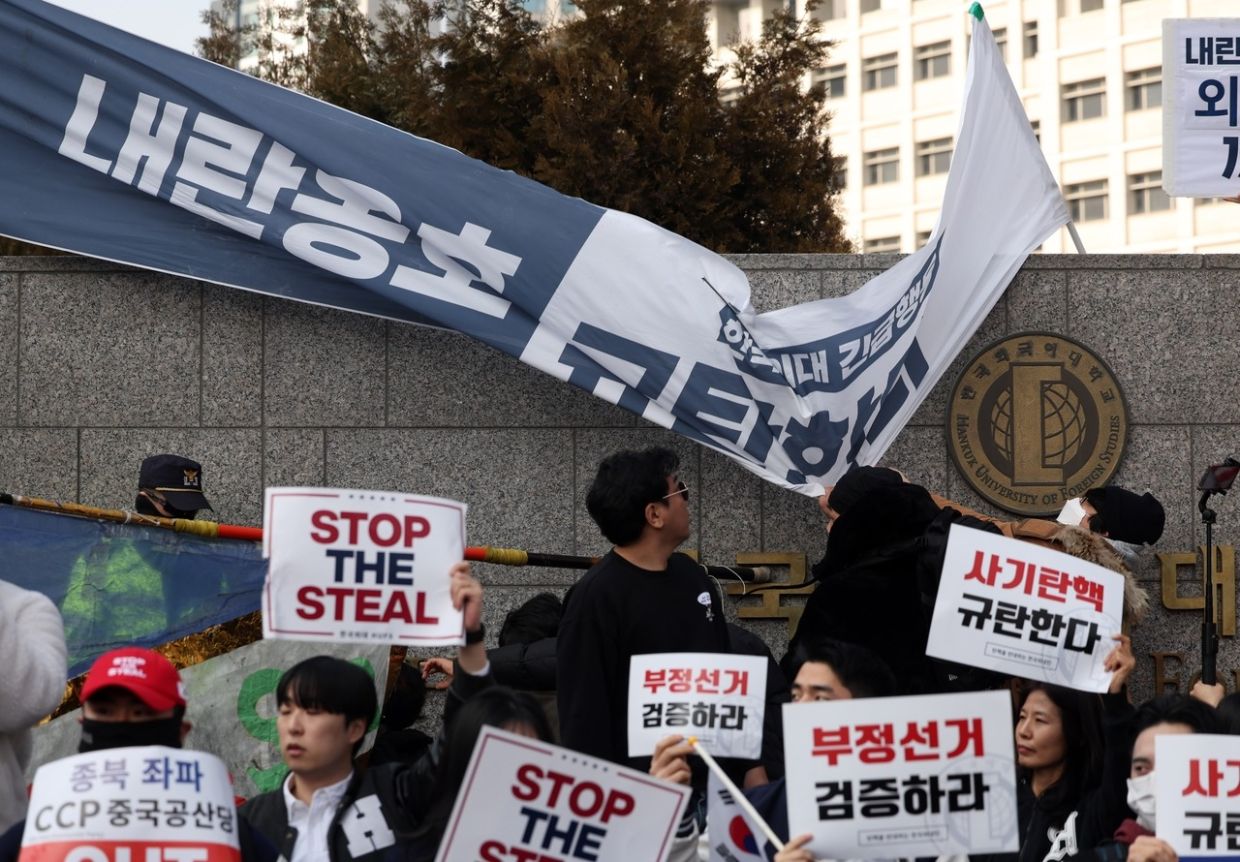
A far-right micro-party, Tomorrow and Future, launched a “patriotic banner” campaign that crowdsourced inflammatory slogans like “Kidnapping, organ harvesting, mothers are scared. Stop visa-free entry for Chinese.”
According to a nationwide poll commissioned by Democratic Party Rep. Lee Hae-sik in September, 68 per cent of Koreans said they had seen such banners. Of those, nearly 80 per cent reported feeling discomfort.
Even among self-identified conservatives, 65 per cent said the same. More than 70 per cent overall supported banning banners that spread misinformation, promote hate speech, or publicly defame others.
But despite the growing public frustration, local governments were stuck. In 2024, the Supreme Court struck down an Ulsan ordinance that tried to limit banner placement, ruling that only national law — not local bylaws — could restrict political expression.
Even though the Outdoor Advertising Act already bans certain types of harmful or discriminatory content, city officials hesitated to act without specific guidelines and feared being accused of censorship or partisanship.
A new rulebook tries to control the absurdity
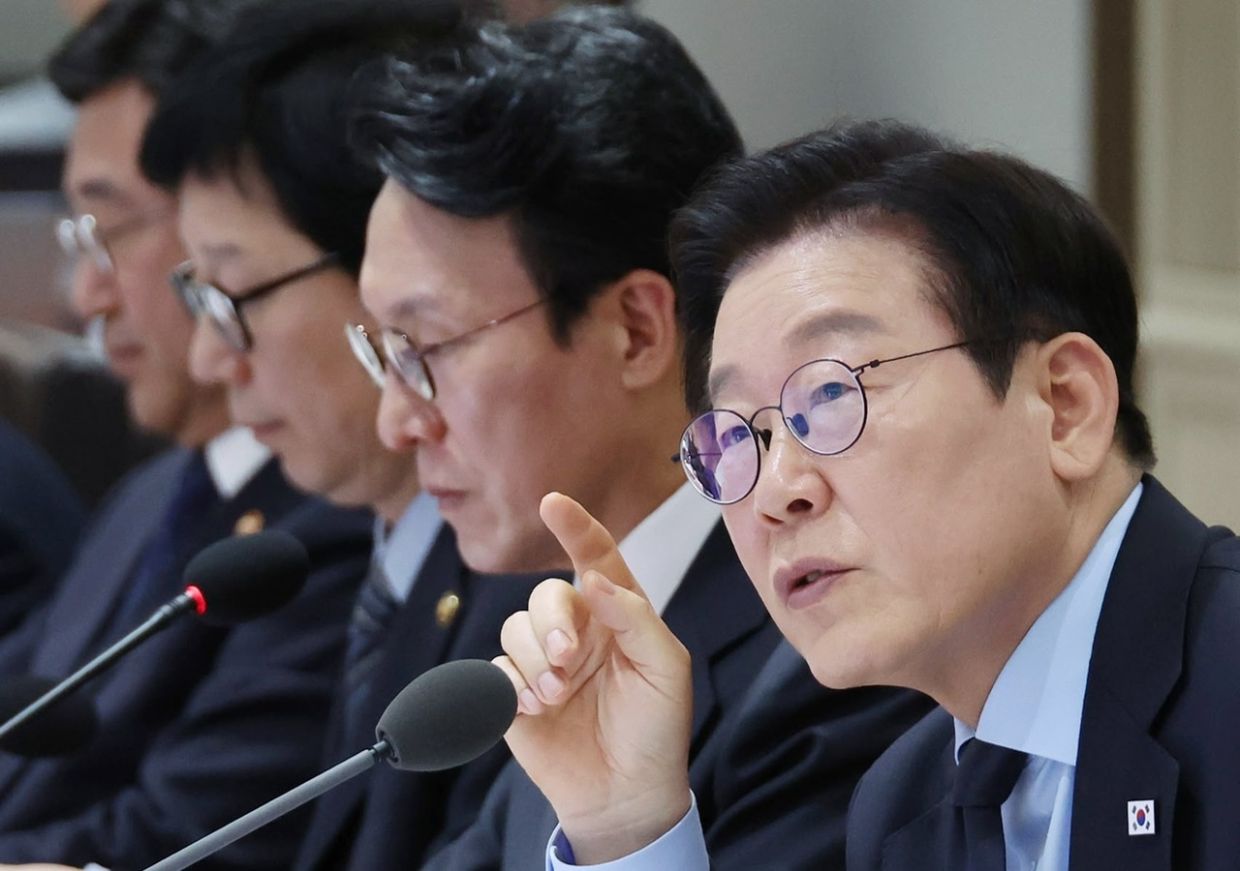
That deadlock broke on Nov 11, when President Lee Jae Myung told his Cabinet that “vulgar and shameful” banners were fueling division and hatred.
The Interior Ministry followed a week later, on Nov 18, with a 20-page “application guideline,” outlining when and how political banners can be classified as prohibited advertising.
It draws authority from six categories already banned under the Outdoor Advertising Act: glorification of crime, obscenity, content harmful to youth, gambling inducement, racist or sexist material with human rights risks, and anything banned under other laws.
But this is the first time those categories have been applied systematically to political banners. The most detailed, and arguably most contentious, section focuses on hate speech, citing real-world examples that are now considered grounds for removal:
“Chinese students are 100 percent potential spies.”
“The Chinese get sixth-tier grades but get medical scholarships.”
Slurs comparing women or men to insects.
Banners advertising “discount brides” from specific foreign countries.
Municipalities now have the authority to order the removal of such banners. If the parties refuse, city workers can take them down and charge the cost. If a banner violates the law outright or presents an urgent public concern, local officials can skip prior notice entirely.
Still, implementation is tricky.
“To call something false, we usually need a court ruling,” one anonymous district official told local broadcaster MBC on Nov 20. “Now we’re being asked to make those calls on the ground, in real time. That’s a heavy burden.”
Another civil servant said, "Interpretations differ. Without clear rules, we worry about being accused of bias, or even property damage.”
Can the government fix the problem it created?
For many foreigners in Korea, the emotional cost is already obvious. A Chinese graduate student in Seoul, who asked not to be named, said her friends have started avoiding certain parts of the city.
“My parents saw photos of the banners and told me not to go out at night,” she said. “Even if I don’t understand every word, I can tell we’re being blamed for something.”
A Chinese tourist visiting Myeong-dong said, “It’s fine to criticize governments. But why treat tourists like criminals?”
In political circles, however, the move to regulate political banners has sparked intense criticism of political censorship.
The conservative opposition People Power Party says the ruling party, which has made extensive use of political banners to attack the previous conservative administration, has now conveniently shifted its stance on freedom of expression as it faces criticism itself.
People Power Party spokesperson Choi Bo-yoon said in a statement that the Democratic Party had defended provocative banners aimed at the previous Yoon Suk Yeol administration as exercises of free expression and "satire."
“Now that banners critical of themselves are increasing, they suddenly call them ‘vulgar’ and seek regulation. This is a clear contradiction and a textbook case of double standards,” Choi argued.
Legal experts agree that regulation is necessary, but warn that the government may be overreaching.
“These aren’t private opinions buried online. These are giant banners in your face on the way to work or school,” said Hong Sung-soo, a constitutional law professor at Sookmyung Women’s University who has written extensively on hate speech. “There’s a public right not to be bombarded with degrading messages.”
Human rights lawyer Sohn Ji-won, who is an advocate for freedom of speech, shares that concern. While she supports banning openly racist or discriminatory banners, she warns that parts of the new guideline go too far.
“The law already prohibits hate speech and glorifying crime,” she said. “But the guideline adds vague terms like ‘defamation’ and ‘false information,’ which aren’t clearly defined and usually require a court to decide.”
That, she argues, creates a loophole that could be used to silence not just hate groups, but any critical or unpopular voices.
Still, she concedes, the action is overdue. “This isn’t a censorship regime. It’s a belated attempt to rein in a loophole that spiraled out of control.” - The Korea Herald/ANN