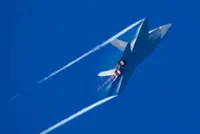
Across the strategic waterway of the South China Sea, claimant countries are increasingly relying on long-endurance aerial drones to carry out continuous patrols – overcoming the geographic and logistical limitations of traditional aircraft and ships.
The US Marine Corps last month deployed MQ-9A Reaper drones to the Philippines, at Manila’s request, to “support Philippine regional maritime security through shared maritime domain awareness”, according the US Marine Corps Forces, Pacific.
The MQ-9As were unarmed and would be used only for intelligence, surveillance and reconnaissance, a corps spokesman said, without elaborating on the number of drones involved, according to USNI News, a media outlet under the US Naval Institute.
“The temporary stationing of unarmed MQ-9As to the Philippines demonstrates mutual commitment to improving the collective maritime security and supports our common goal for a free and open Indo-Pacific.”
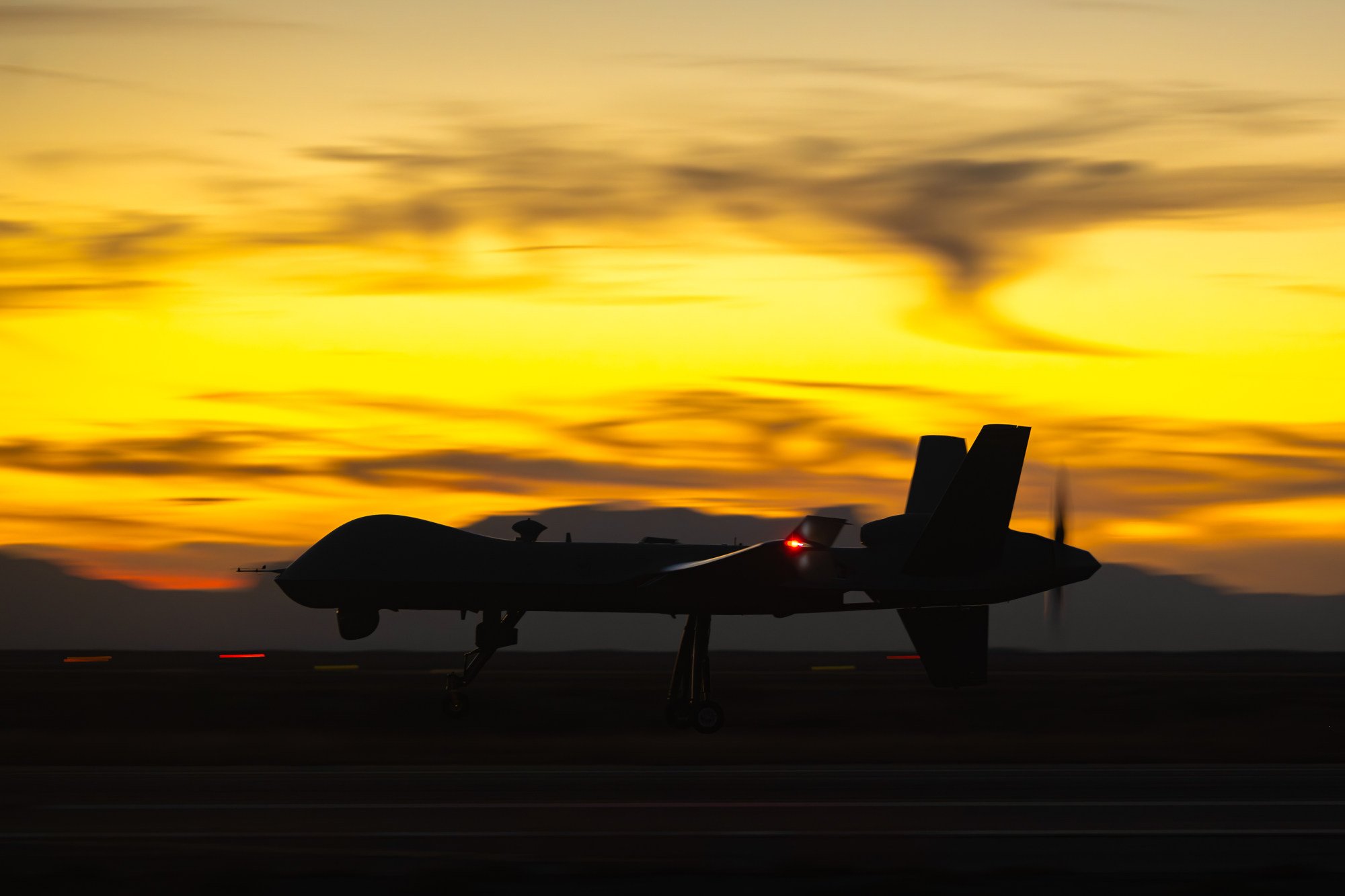
The MQ-9 Reaper, with its array of advanced sensors, made its debut in 2001 and can operate for more than 27 hours over land or sea, reaching heights of up to 15,240 metres (50,000 feet).
With a 1,746kg (3,850lbs) payload capacity that includes 1,361kg of external stores, the MQ-9 is suitable for a range of operations, including search and rescue as well as close air support and precision strikes.
The deployment followed Pentagon chief Pete Hegseth’s visit at the end of October to Kuala Lumpur, where he called on his counterparts from the Association of Southeast Asian Nations (Asean) to strengthen cooperation on maritime security.
Hegseth’s pitch to the Asean defence ministers included a proposal to develop a joint initiative on unmanned aerial and undersea systems that would improve surveillance while reducing costs and risks.
The strategic pivot to a data-driven maritime strategy in the South China Sea has not been confined to one nation, nor to countries with direct territorial claims in the contested waterway.
Collin Koh, a senior fellow at the Institute of Defence and Strategic Studies at the S. Rajaratnam School of International Studies in Singapore, said players throughout the region were using drones.
“All parties in the South China Sea – whether we’re talking about claimants or non-claimants, including extra-regional parties – deploy unmanned systems to varying degrees, across air, surface and subsurface domains,” he said.
As a global leader in military and civilian manufacturing, China has long sought to improve the endurance of its drones.
But it was the demand for round-the-clock patrols in the South China Sea that prompted the People’s Liberation Army Navy to invest in the technology, according to a report by the Chinese defence magazine Ordnance Industry Science and Technology.
A key limitation of crewed fighter jets is their short flight endurance of only four to six hours. In contrast, China’s Wing Loong-2 can operate for 20 hours with standard payload configurations and up to 32 hours with reduced weapon loads.
Chang Yen-chiang, dean of the Yellow Sea and Bohai Sea Research Institute at Dalian Maritime University, said China’s unmanned sea and aircraft were focused on routine patrol missions – near the hotly contested Scarborough Shoal, for example.
Sitting about 120 nautical miles (220km) west of the Philippine island of Luzon, the triangle-shaped formation of reefs and rocks has been controlled by Beijing since 2012 and is a focal point of maritime confrontations between China and the Philippines.
But maintaining long-term patrols at Scarborough – known as Huangyan Island in China and Panatag Shoal in the Philippines – has become increasingly costly to Beijing, whose closest military base is about 600km (373 miles) away.
“In China’s practice ... by coordinating with coastguard ships and aircraft to form multidimensional coverage, drones and unmanned boats could achieve more efficient dynamic monitoring of key maritime areas like Huangyan Island,” Chang said.
Such an approach could also “strengthen effective maritime control, filling the temporal and spatial gaps left by traditional patrol methods”, he added.
The advantages of unmanned systems, such as the abilities to collect data and respond quickly, appeared to have been on display amid the recent heightened tensions surrounding Scarborough Shoal.
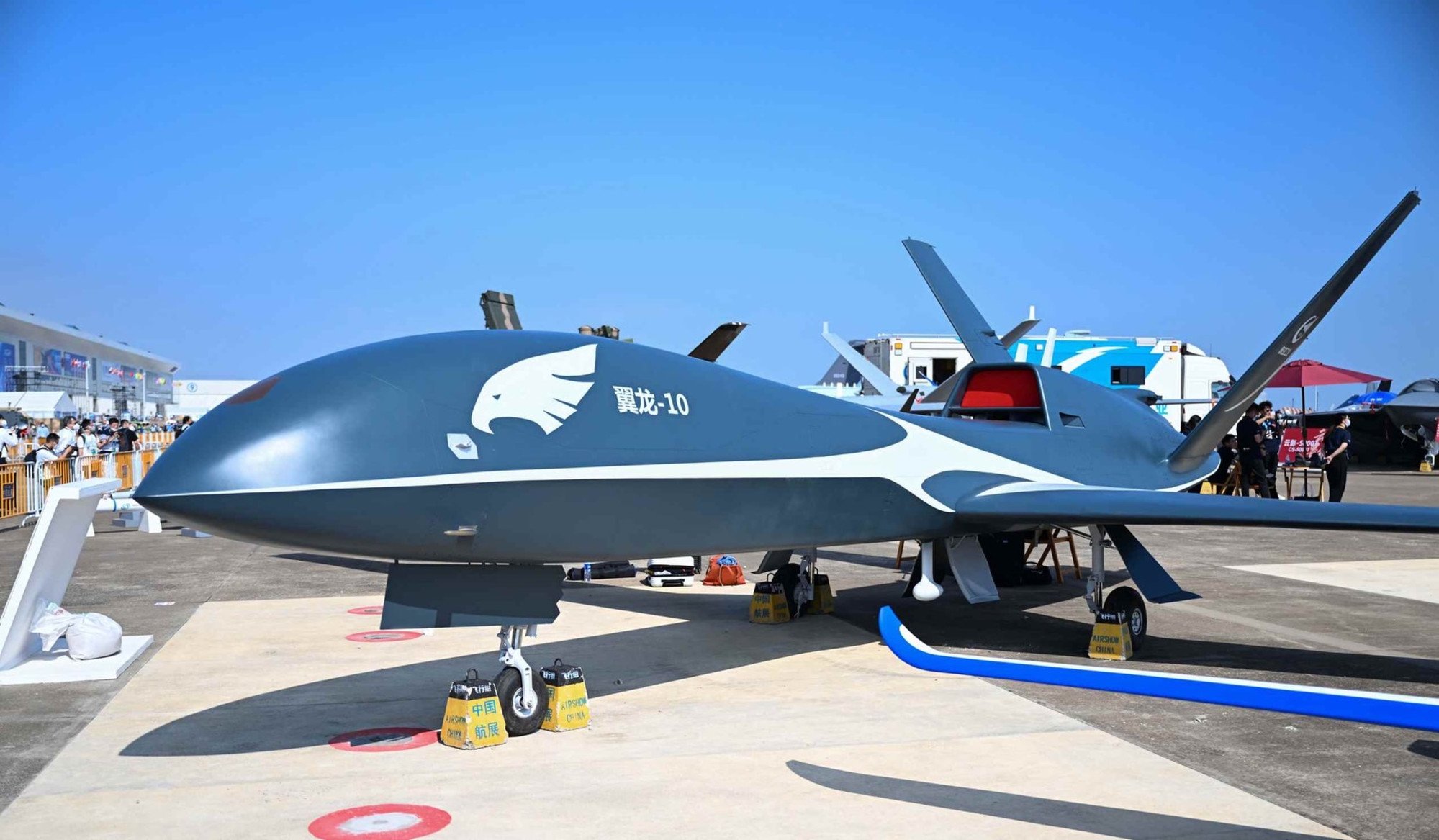
The USS George Washington carrier strike group arrived near the shoal on November 20, the same day that a Chinese drone – identified as a Wing Loong-10, a jet-powered aerial vehicle with some stealth characteristics – was spotted east of the shoal.
According to satellite data from FlightRadar 24, the Wing Loong-10 was also spotted in the area the next day.
While the Philippines has enlisted the help of the US with a temporary deployment of MQ-9A Reapers, fellow Asean member Vietnam has been developing its own drones since the mid-2010s.
These include the HS-6L, a high-altitude, long-endurance drone with an endurance of up to 35 hours, believed to have been created with technological help from Belarus.
Last year, Vietnamese defence conglomerate Viettel Group unveiled the VU-MALE, a multi-role, long-range drone capable of operating in all weather and equipped with high-precision weapons.
Meanwhile, Indonesia received its first batch of Turkish-made Anka-S drones in September as part of a US$300 million deal in 2023 to acquire 12 units along with support, training and technology transfer from Turkey.
Malaysia is expected to receive three Anka-S drones in February, to be stationed at Labuan Air Base in northern Borneo for maritime surveillance. According to Jane’s Defence Weekly, they will have a specific focus on Malaysia’s exclusive economic zone.
According to Koh in Singapore, the operational capacity of each of the actors in the South China Sea varies, depending on the strength and technical abilities of their respective forces.
“The better-endowed parties tend to deploy a broad panoply of unmanned systems, such as the case of China and the US. The other South China Sea parties tend to be confined to a narrower, more limited array of unmanned systems,” he said.
With drones offering not just lower operating costs than crewed platforms but also a continuous presence, the tactical and operational advantages of unmanned systems could translate into real strategic outcomes, Koh observed.
“In times of peace in the South China Sea, such strategic outcomes would mean strengthening one’s claim through projection and maintenance of persistent presence using unmanned systems,” he said.
“In times of conflict, strategic outcomes would mean being able to destroy or neutralise a threat with minimal losses for the one using unmanned systems.”
However, uncrewed systems should not be regarded as a panacea. One challenge is that aerial drones cannot control territory, according to Zak Kallenborn, a drone analyst and adjunct fellow with the Centre for Strategic and International Studies.
Drones were useful for monitoring how different players were behaving and responding to one another, Kallenborn said. But while greater awareness could enable the political and strategic decisions to respond, the drones themselves were not much of a response.
“It depends on how the various drone users link observations to response. If, for example, one state uses drones to queue a larger assertion of control, that could be very aggressive. However, if the drone simply passively watches, then the impact could be pretty minimal.”
Koh said there would be missions requiring human intervention as an exercise of effective administration – for example, when a coastguard crew boarded a foreign vessel to conduct inspection and extremely close-in verification work.
At the same time, operating uncrewed systems in certain areas would require specialised expertise and comprehensive infrastructure, including secure digital links impervious to hostile electronic jamming, he added.
“For more complex unmanned systems, one could imagine the commensurate manpower and technical infrastructure requirements would increase accordingly, and they could therefore potentially strain budgets which, for many of the South China Sea littoral states – especially those in Southeast Asia – are already considered constrained given other pressing priorities,” Koh said.
“These would be the key technical and operational challenges faced by the rival parties in the South China Sea, especially those that view these systems as critical in advancing their claims.” -- SOUTH CHINA MORNING POST