Chinese President Xi Jinping told his French counterpart Emmanuel Macron that the two countries should “understand and support each other” and advance cooperation during a meeting on Thursday that touched on a range of issues, including the Ukraine war.
Speaking to reporters after the talks, Xi described the discussions as “friendly, candid and fruitful”.
He said the pair had agreed that the two countries “should uphold multilateralism, stand on the right side of history, adhere to equal dialogue and open cooperation, and fully demonstrate the strategic value and global influence of the China-France comprehensive strategic partnership”.
He added that the two countries should demonstrate the independence and strategic vision of major powers “regardless of changes in the external environment”.
“We should understand and support each other on issues involving each other’s core interests and major concerns,” he said.
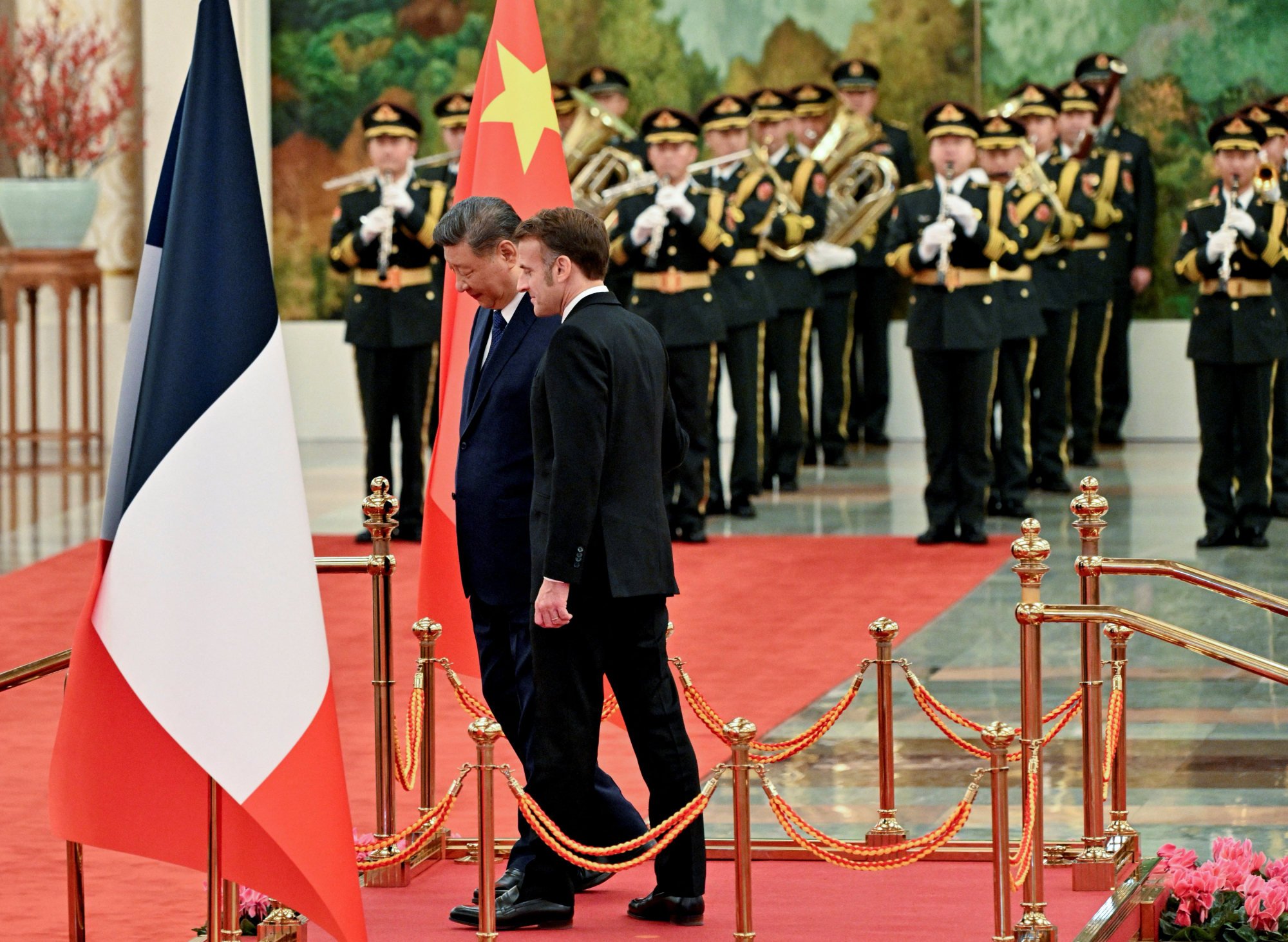
The French leader is on a three-day trip to China – his fourth visit to the country – that will take him from Beijing, where he visited the Forbidden City on Wednesday, to Chengdu in the southwestern province of Sichuan.
He is expected to hold a second meeting there with the Chinese president on Friday.
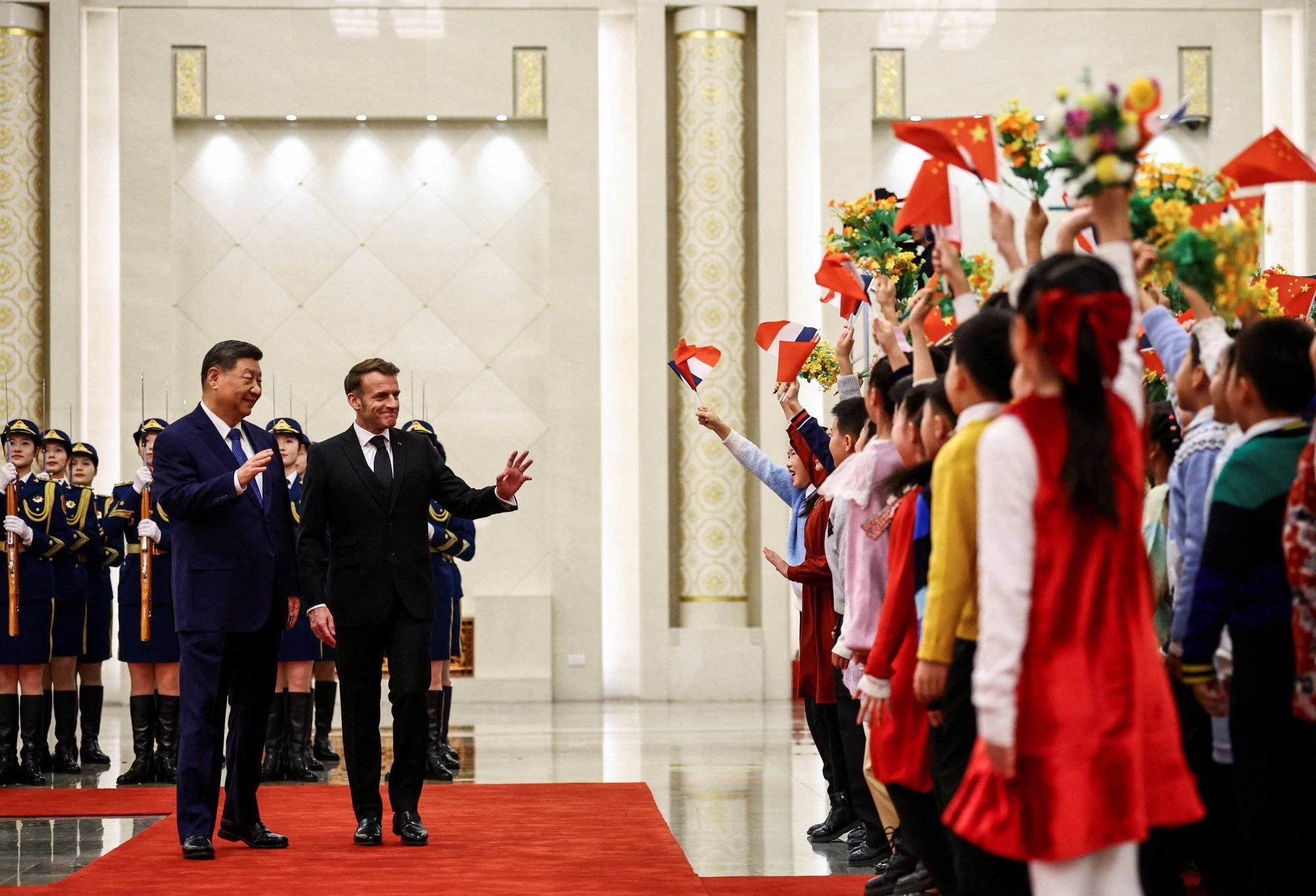
Xi welcomed Macron to the Great Hall of the People on Thursday with a ceremony that saw the French leader inspecting a guard of honour as children waved the flags of the two countries.
Xi said China was willing to work with France to ensure a steady relationship.
“China, together with France, has always acted in the fundamental interests of the two peoples and long-term interests of the international community, eliminating various interferences, adhering to equal dialogue and open cooperation,” he said.
He also described the two countries as “farsighted and responsible independent major powers, and constructive forces promoting a multipolar world”.
Macron said the two countries had identified “a path to convergence” on certain issues. He admitted that there would be disagreements “but we have a responsibility to overcome them”.
He also said he hoped to work with China “in a positive spirit” and based on a “balanced relationship founded on equality and mutual respect”.
Macron said they had discussed Russia’s war in Ukraine “at length” and described the conflict as a “vital threat to European security”.
“I hope that China will join ... our efforts to achieve, as soon as possible, at the very least a ceasefire in the form of a moratorium on strikes targeting critical infrastructure,” he said in the joint press conference.
“It is crucial that we work together for a just and lasting peace, one that respects international law.”
Xi said Beijing supported peace efforts and repeated his previous calls for talks to achieve a lasting settlement.
“China will continue to play a constructive role in the political settlement of the crisis while resolutely opposing any irresponsible attempts to shift blame and smear China,” he said.
France and other European countries have repeatedly expressed concern over Beijing’s stance, arguing that its deepening ties with Moscow have undermined efforts to isolate Russia.
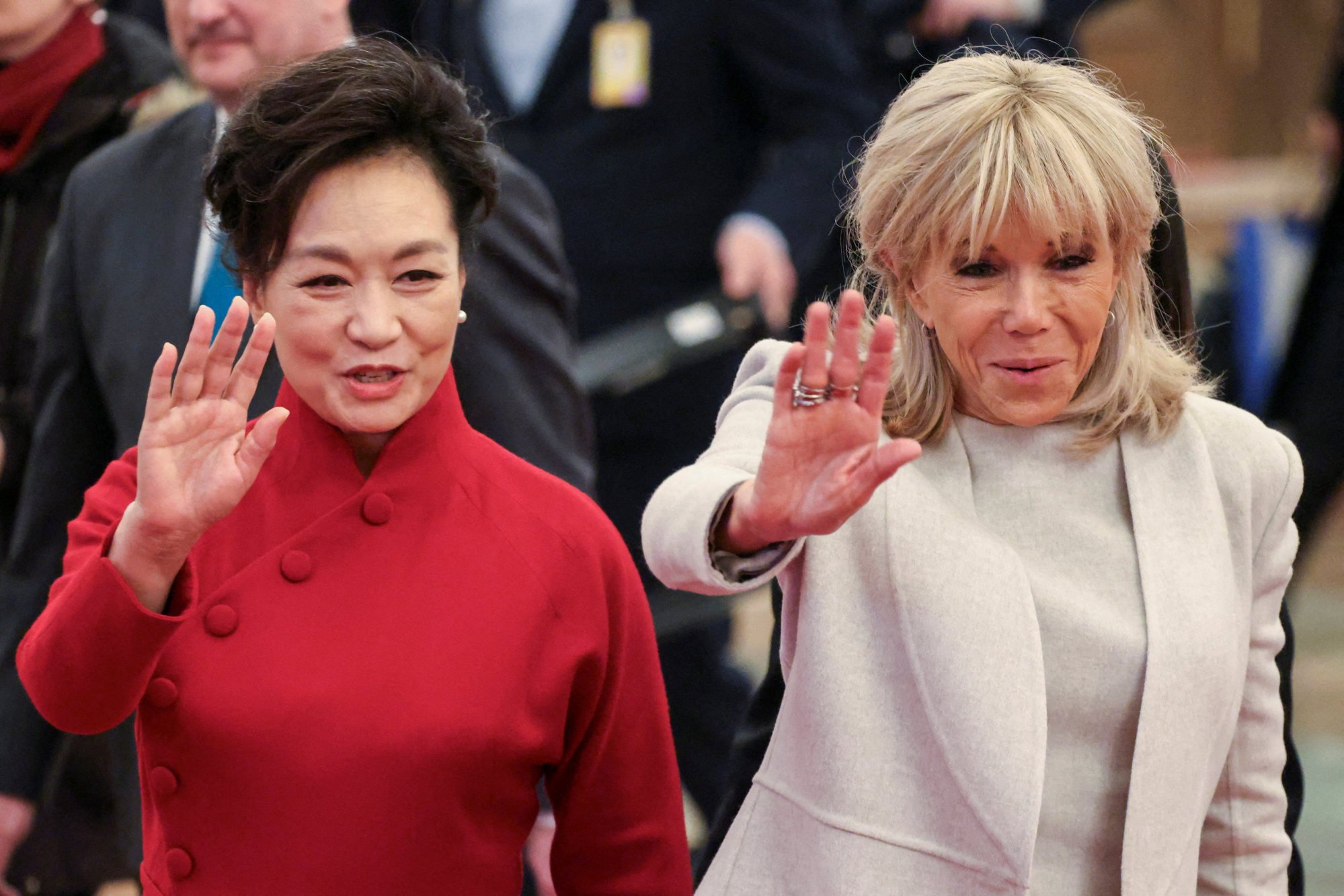
After the talks, the two leaders held a ceremony to sign 12 agreements covering areas that ranged from higher education and nuclear energy to panda conservation.
The latter agreement follows the return to China last week of two giant pandas that had spent 13 years in France.
The two leaders also agreed to expand cooperation in areas such as aviation and the green economy.
Xi said China was willing to import more high-quality French products and would welcome more French companies, according to a statement from Beijing.
“As founding members of the United Nations and permanent members of the Security Council, China and France should uphold genuine multilateralism, safeguard the international system with the UN at its core and the international order based on international law, strengthen communication and cooperation on the political settlement of disputes and the promotion of world peace and stability, and push for reform and improvement of global governance,” Xi added.
He also discussed China’s ties with the European Union, saying open cooperation between the two economies had brought development opportunities and warned that “protectionism cannot solve the problem of global industrial restructuring”.
“China and Europe should adhere to the partnership framework, maintain an open attitude to promote cooperation, and ensure that China-EU relations develop along the correct path of independence, self-reliance, and win-win cooperation,” he said.
Tensions between the EU and China have heightened in recent years and, Ukraine aside, issues such as Beijing’s control of critical mineral supplies and manufacturing overcapacity are major concerns for Brussels.
The French leader told journalists that both sides needed to find ways to increase Chinese investments in France and Europe, describing the agreements signed on Thursday as “very important”.
He added: “We are both convinced, first and foremost, of the importance of international cooperation, the UN framework and effective multilateralism. And that is why these visits are essential, to bring all the issues back to the table and, through shared commitment, to build paths towards cooperation.”
In a separate event with Chinese and French businesses following the talks, Xi said China regarded France as an “indispensable economic and trade partner”, urging the two countries to seize opportunities.
He also called for mutually beneficial cooperation between China and the EU, adding that “interdependence is not a risk and intertwined interests are not a threat”.
Separately, Premier Li Qiang told Macron on Thursday that he hoped France would urge the EU to uphold its partnership with China, “focus on cooperation, properly handle differences and safeguard the correct direction of China-EU relations”.
According to a report by Chinese state broadcaster CCTV, Macron said Paris was willing to strengthen exchanges with Beijing and deepen cooperation in areas such as trade.
The talks followed a meeting between Chinese Foreign Minister Wang Yi and his French counterpart Jean-Noel Barrot on Wednesday, where Wang said the two countries needed to strengthen communication and cooperation amid what he described as “complex global challenges”.
The Chinese foreign ministry said the two sides also discussed the Ukraine war. Wang said: “Although differences remain among the parties, we should encourage them to start and continue discussions, rather than hindering progress or creating further problems.”
France has championed more protectionist trade policies at the EU level, pushing for tariffs on Chinese imports to counter concerns that state-subsidised Chinese firms are undercutting European businesses.
European Commission President Ursula von der Leyen visited China in July, and said relations between the bloc and China were at an “inflection point”.
Trade tensions rose sharply last year after the bloc approved tariffs on Chinese-made electric vehicles, citing unfair competition. This resulted in Beijing retaliating with its own set of anti-dumping tariffs on European brandy, including French cognac.
France eventually managed to negotiate a minimum price scheme, which exempted 90 per cent of its cognac exports in volume terms from the tariff, a move welcomed by both Paris and Beijing.
Europe has also been trying to formulate a response to the Ukraine peace plan proposed by US President Donald Trump.
Macron met Ukrainian President Volodymyr Zelensky in Paris this week, stressing that no peace agreement would proceed without European participation. However, he also said the ongoing talks could be a “turning point” for peace.
On Monday, Chinese foreign ministry spokesman Lin Jian said the two sides could “promote the sound and steady development of China-EU relations”.
Ahead of Macron’s visit, the Elysee Palace said last week that the French leader would express to Xi “a very clear desire to establish a framework for Sino-European relations that serves mutual interests” and “for Europe to be respected as a major partner of China”. -- SOUTH CHINA MORNING POST