
Hazy air laced with a pungent odour, dark rooms filled with debris, bodies that had to be carefully extracted by hand. The discovery of a dead child.
The head of the police team responsible for the search of the Hong Kong residential complex destroyed in an inferno gave an account on Wednesday of the harrowing conditions they faced inside the seven towers as work came to an end.
The task of checking the more than 1,000 flats at Wang Fuk Court in Tai Po was both physically and emotionally challenging, said Superintendent Cheng Ka-chun, the officer in charge of the Disaster Victim Identification Unit.
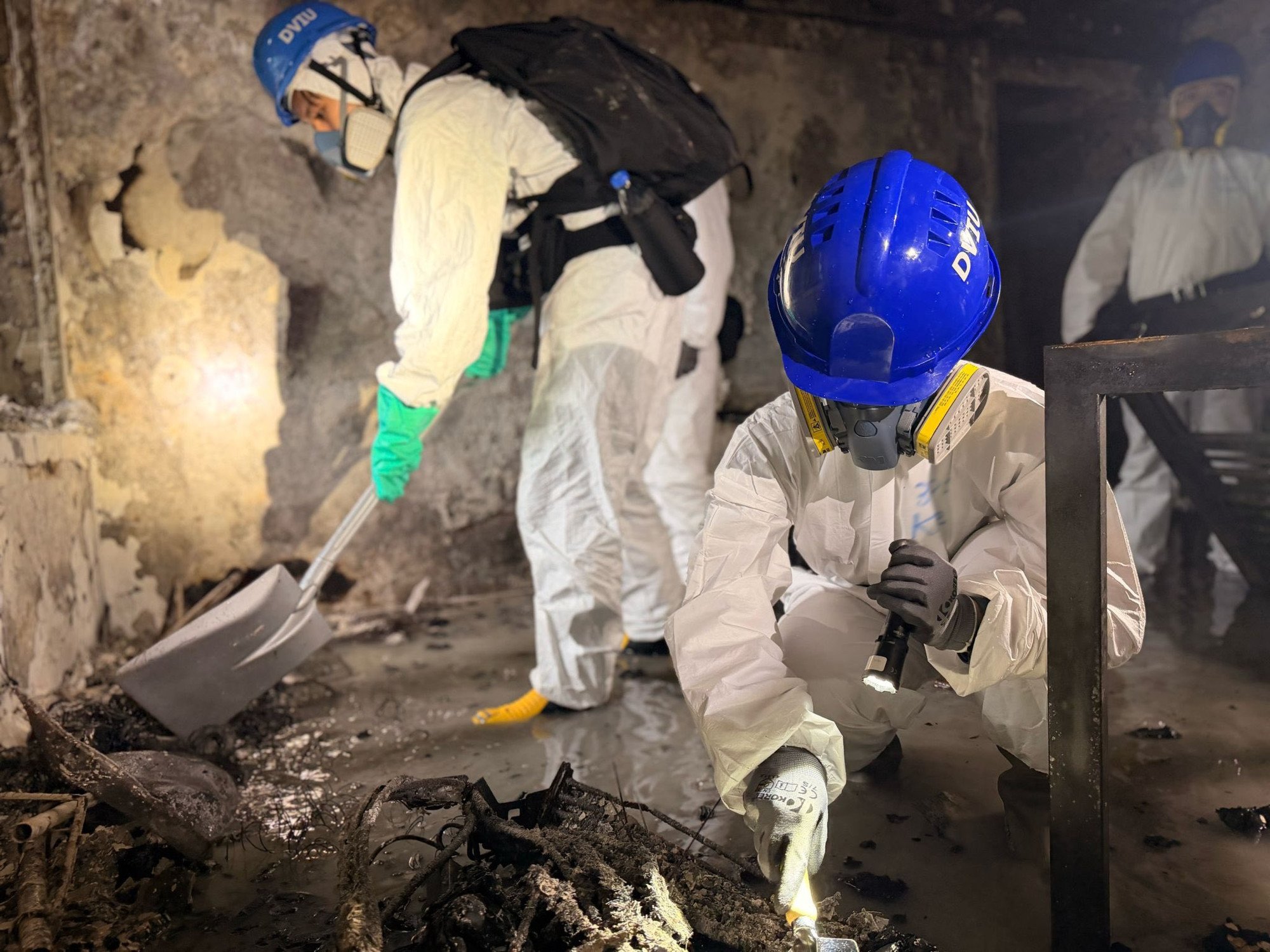
“Our colleagues, in a bid to keep the bodies more intact for their return to their families, chose to dig for the bodies using their hands, touching sand, mud and polluted water,” he said, explaining why his team had decided to recover the corpses by hand instead of using equipment.
“Their only goal was to preserve the integrity of the bodies.”
As of Wednesday, a week after the inferno began at Wang Cheong House, police have tallied 159 deaths, with the victims ranging in age from one to 97. Commissioner of Police Joe Chow Yat-ming has said the toll may rise further.
Seventy bodies were found in Wang Cheong House. Another 82 were discovered in Wang Tai House, three in Wang Sun House, two in Wang Tao House and one in Wang Shing House.
The remaining deceased victim was believed to have escaped from one of the buildings, but no one had identified the body yet, according to police.
Firefighters had provided information about the location of many bodies found during their search for survivors, which ended on Friday.
But Cheng’s 600 officers discovered 31 more bodies as they carefully checked the flats in all seven buildings.
They were only recently able to enter flats that were previously inaccessible due to structural damage.
The air inside the buildings was filled with particulates and reeked. There was little natural light during the daytime, and searchers had to rely on headlamps and handheld torches to guide their movements.
Mainland Chinese authorities also supplied mobile lighting equipment, but the team decided the most efficient way to complete the search was maximising efforts during the daytime.
“On one of the floors we searched, we found multiple bodies, including both young and old,” Cheng said. “They could have been a family.”
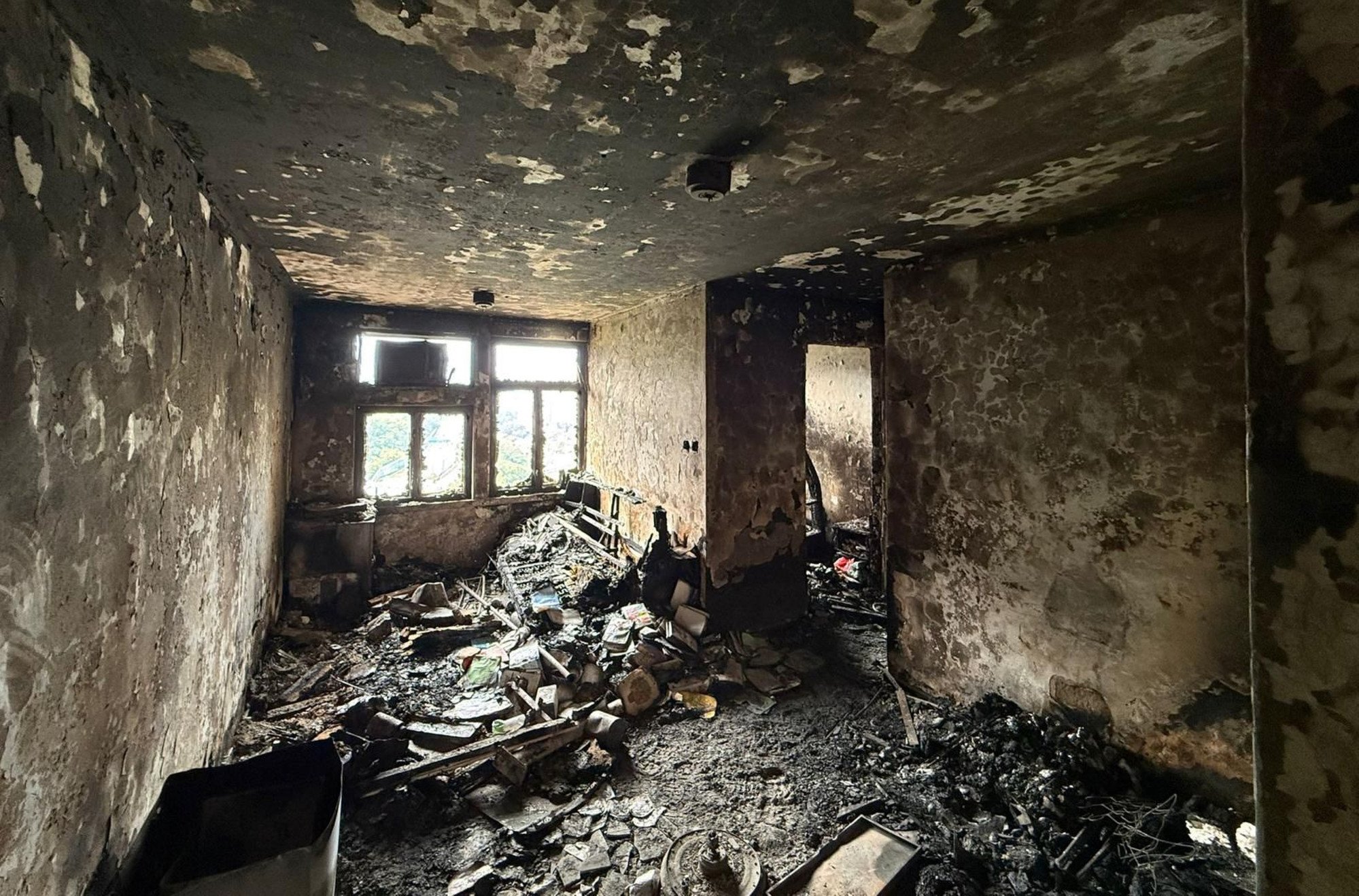
Wang Fuk Court’s eight 31-storey towers are among the tallest in the district, and searchers had to constantly walk up flights of stairs dressed in their full-body protective garb while carrying equipment.
At the same time, as they steadily advanced through the buildings, methodically combing through each floor, they were confronted with grim scenes that were emotionally draining.
“Some of my team members wanted to cry at the site, but they tried their best to suppress their feelings to avoid hampering work progress,” Cheng said.
One of his team members lost a relative while the search operation was being carried out, but the officer decided to return to work despite his grief.
“His passion has touched me a lot, and I have been a commander for six years,” Cheng said. “I take my hat off to the professionalism and attitude of my teammates.”
Police chief Chow said searchers had also encountered remains that would need DNA testing to determine whether they were human or animal.
Time would also be needed to check whether any bodies were buried beneath collapsed scaffolding, and officers would work with housing authorities to remove the bamboo for investigation, Chow said.
Choking back tears, Chief Superintendent Karen Tsang Shuk-yin, who is the officer in charge of the Casualty Inquiry Unit handling calls reporting missing loved ones, earlier said on Monday that the bodies of some victims might never be found.
“Since some of the bodies have already turned to ash, we cannot exclude the possibility that we cannot bring all missing people out,” she said. - SOUTH CHINA MORNING POST