
Countries should find ways forward together, even if US is not involved: Singapore PM at end of G-20 trip


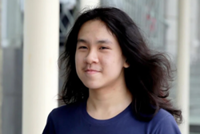
ADDIS ABABA: Countries should come together and find ways forward on their own, even if the United States is not involved in discussions or chooses not to be, said Prime Minister Lawrence Wong (pic) at the end of his trip to Africa, where he attended the Group of 20 Summit marked by the absence of US President Donald Trump.

But Singapore’s preference is still for America to be actively engaged in these conversations to shape the direction of global affairs, he said, adding that the US can join in “at any time” when it is ready.

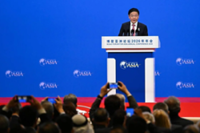
Although the world is increasingly multi-polar, not all poles are the same, said PM Wong, who is also Finance Minister.

“America is for now, still the biggest, and obviously American leadership is vital in providing that global framework for the world,” he added.

He was speaking to Singaporean journalists in Addis Ababa, Ethiopia at the end of an official visit that had followed his trip to Johannesburg, South Africa for the G-20 Summit.

Trump had boycotted the summit over widely-discredited claims that South Africa is persecuting its Afrikaner white minority, and the historic summit held in Africa for the first time was at times overshadowed by his absence. The US is slated to chair the G-20 in 2026.

Despite these tensions in the backdrop, the G-20 summit has been a “tremendous success”, said PM Wong, adding that such platforms play a key role in getting countries to come together and engage.

He said he was glad that despite differences, all the countries that were present came together to put out a declaration in Johannesburg. There was some consensus on the way forward, and that makes for a “very fruitful outcome”, he said.

The leaders of the grouping had adopted the summit declaration at the start of the meetings on Nov 22, with South African President Cyril Ramaphosa saying then that there was “overwhelming consensus and agreement” to do so.

At this year’s G-20 and the Asia-Pacific Economic Cooperation meets, PM Wong had appealed to world leaders to reform the World Trade Organization (WTO).

Asked about this, he said that one way would be to go through the institutions such as the WTO, International Monetary Fund or World Bank.

But where trade is concerned, the other parallel effort is to work through plurilateral and minilateral initiatives, said PM Wong.

Plurilateral and minilateral refer to smaller groupings of countries, as opposed to traditional multilateral initiatives that are large-scale.

These efforts come amid general recognition among world leaders at the G-20 that the global economic and financial architecture needed to be refreshed – in particular the WTO which was optimised around trade efficiency and not the strategic realities of the current times, said PM Wong.

He acknowledged that refreshing the WTO, in itself a complex task, will be even more difficult without the US involved.

But the other countries should not give up and should still persist through other channels, he said.

He cited examples such as the Future of Investment and Trade Partnership, or FIT-P, which Singapore started with other like-minded countries to bring small and medium-sized economies together to support fair and open trade, as well as regional groupings like the Comprehensive and Progressive Agreement for Trans-Pacific Partnership and the European Union.

These parallel efforts are not just about encouraging trade flows, but are ways in which like-minded countries can work out how new rules and frameworks can be developed among themselves, said PM Wong.

“Eventually, if they are successful, they can provide a basis for other countries to join and be part of these platforms and for us to extend the rules across the board as part of WTO precepts,” he added.

At recent summits, PM Wong has pushed for “flexible multilateralism”, calling for like-minded countries to come together in partnership at all levels.

This is reflected in his first official visit to Ethiopia, where he announced plans to open an embassy in its capital Addis Ababa and pledged to strengthen links between Singapore and Africa.

No matter how big or small the countries, or how much geopolitical influence they have, these efforts add up, said PM Wong, when asked whether Singapore, with its limited size, and Africa, with its limited influence for now, can make a difference.

In this regard, Singapore’s cooperation with Ethiopia is not just a bilateral effort, he said.

“We also see a lot of potential in bringing our two regions closer together, whether it is East Africa, or, for that matter, the entire African continent together with South-east Asia,” he said, adding that many regions are interested in engaging with Asean.

His visit to Ethiopia, at the invitation of Ethiopian Prime Minister Abiy Ahmed Ali, was also his first bilateral visit to Africa as prime minister.

PM Wong said strengthening links with Ethiopia and Africa can expand the space for Singapore companies that are operating now in a more challenging global environment.

These firms already know how to do business in familiar markets, but if they want to grow and expand, they have to look at new areas like Africa where there is “tremendous potential”, he said.

He pointed to the population growth in the region, with more than 1.5 billion people on the African continent currently, while many other regions are not growing.

It is a sizeable market that will provide more longer-term opportunities for Singapore businesses and Singaporeans looking to venture abroad, he added.

Aside from the announcement of a new embassy – which PM Wong said Dr Abiy welcomed – the two countries also signed two agreements on cooperation in skills development and carbon credits during the visit.

In his remarks welcoming PM Wong, Dr Abiy had thanked him for keeping his promise to visit. Dr Abiy visited Singapore in 2024 when both countries marked 55 years of diplomatic ties.

“It shows what type of leader you are, and this is the type of attitude, rectitude we expect from many leaders. And it also gives me energy to keep on (strengthening) our friendship, because for the person who respect this, his promise means a lot as a friend,” said Dr Abiy.

During his five-day trip, PM Wong met more than 10 of his counterparts from Europe, Asia and Africa. Asked about his personal approach to establishing ties, PM Wong said “personal rapport can be helpful”.

“But at the end of the day, we must also be clear that foreign policy is built not on friendship. It is built on interest.”

“On top of the substance, having that personal relationship, as I said, can be very helpful. Then we can resolve differences faster. We can come to agreement quicker. But the substance of what we do together has to be underpinned by shared interest, and that’s what matters most of all,” he said. - The Straits Times/ANN


Follow us on our official WhatsApp channel for breaking news alerts and key updates!

Next In Aseanplus News

Surin soldiers should not be forced to fight Khmer against Khmer: Comment
Weather dept warns of 14�C cold in northern Thailand, heavy rain in south, with flood risks
Bus bound for Hokkaido’s New Chitose Airport catches fire
Clean, limitless energy exists. China is going big in the race to harness it.
Curiosity Cove is the latest attraction in Singapore’s Mandai
Cops probe alleged sexual assault by religious teacher against 11-year-old
Singapore arrests former captain of alleged scam kingpin Chen Zhi’s yacht
China says defence trade with Cambodia, Thailand unrelated to border conflict
Four states record over 15,000 flood evacuees as of this morning
50% toll discount on Dec 23-24 in conjunction with Christmas, says Works Minister

Others Also Read