
China turned a brief but intense India-Pakistan conflict in May into a live testing ground for its advanced weaponry and intelligence systems, and then aggressively marketed those results to undercut Western arms sales, a US congressional panel said in its annual report on Tuesday.
“Beijing opportunistically leveraged the conflict to test and advertise the sophistication of its weapons,” a new report from the bipartisan US-China Economic and Security Review Commission stated bluntly.
It highlighted the combat debut of systems such as the HQ-9 air defence network, PL-15 beyond-visual-range air-to-air missiles, and J-10C fighter jets, describing the skirmish as “the first time China’s modern weapons systems ... were used in active combat, serving as a real-world field experiment”.
While cautioning that labelling the episode a full “proxy war” might overstate China’s role, the commission said that Pakistan’s military success over India during the four-day clash was useful in the context of its “ongoing border tensions with India and its expanding defence industry goals”.
China’s embassy in Washington did not immediately respond to a request for comment.
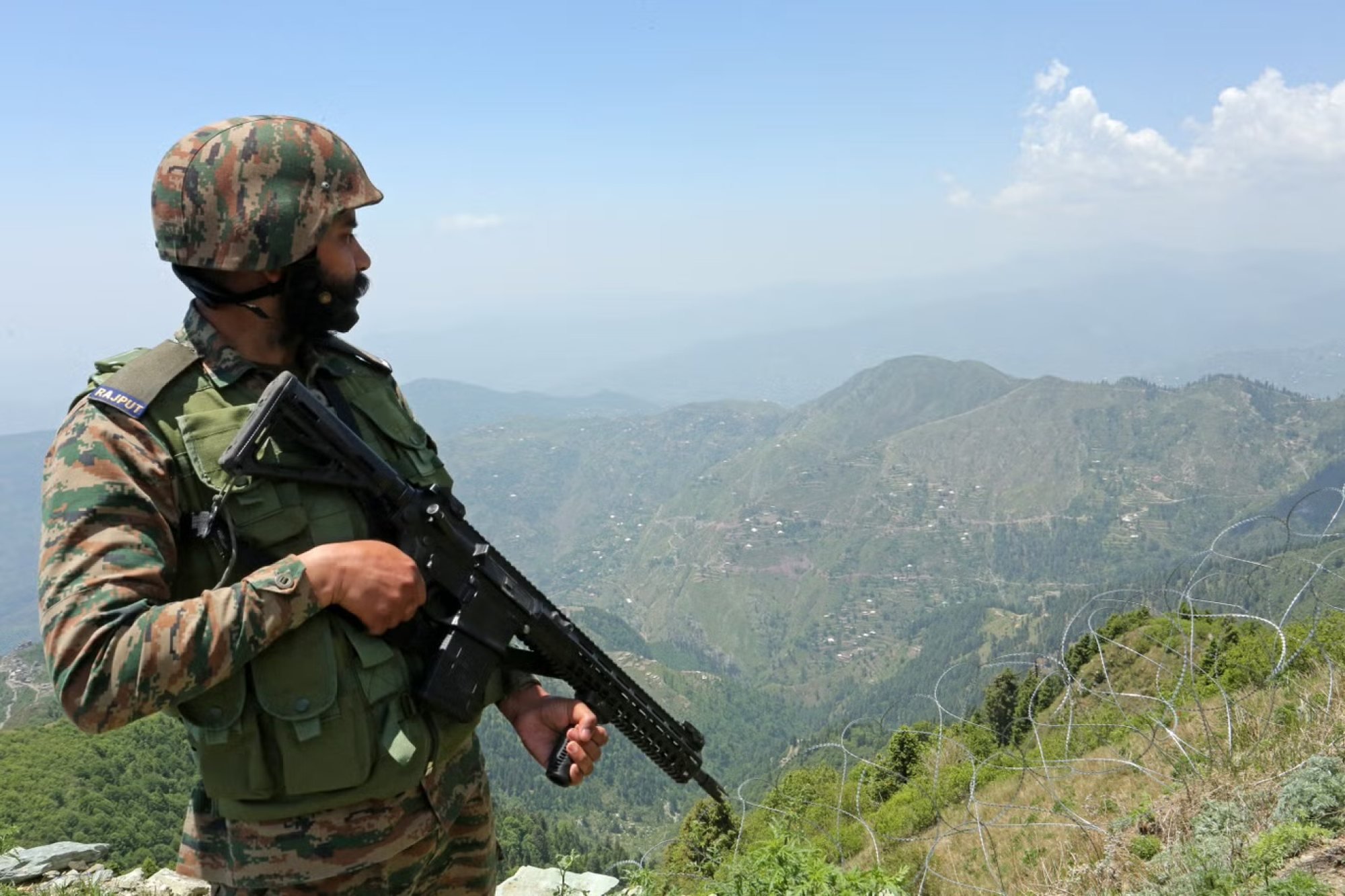
The May 7–10 conflict was sparked by an April 22 attack in Indian-controlled Kashmir, where gunmen killed 26 civilians. New Delhi blamed Pakistan for orchestrating the assault, a charge Islamabad denied. The escalation led to the deepest cross-border incursions in more than 50 years. The claims in the report portray the India-Pakistan clash as more than a regional skirmish.
During the clash, Pakistan claimed to have shot down at least five Indian aircraft, including French-made Rafales, using Chinese-made J-10C jets.
“Our jet fighters ... shot down Indian Rafales, three Rafales [that] are French,” Ishaq Dar, Pakistan’s deputy prime minister and foreign minister, told his country’s parliament in May. “Ours were J-10C. All of these are jet fighters in collaboration with China,” he added.
The USCC report accused Chinese embassies of highlighting the performance of their weapons in the India-Pakistan conflict to “bolster weapons sales”.
“Pakistan’s use of Chinese weapons to down French Rafale fighter jets used by India also became a particular selling point for Chinese Embassy defence sales efforts despite the fact that only three jets flown by India’s military were reportedly downed and all may not have been Rafales,” it added.
Citing French intelligence, the report alleged that China launched a disinformation campaign to hinder sales of French Rafales in favour of its own J-35s, using fake social media accounts to circulate AI-generated and video-game images of supposed “debris” from Indian planes destroyed by Chinese weaponry.
The report claimed that Chinese embassy officials convinced “Indonesia to halt a purchase of Rafale jets already in process, furthering China’s inroads into other regional actors’ military procurements”.
India has not confirmed any specific number of jets that they lost during the conflict, but senior Indian officials have acknowledged that the Air Force suffered aircraft losses. In May, India had claimed that its Air Force had successfully “bypassed and jammed Pakistan’s Chinese-supplied air defence systems”. In October, Air Chief Marshal Amar Preet Singh claimed that the Indian Air Force destroyed both Chinese-made jets and US-built F-16s during clashes with Pakistan during the conflict.
The USCC report on Tuesday said that Pakistan remained “heavily reliant” on Chinese arms, pointing to reports that Beijing offered to sell 40 J-35 fifth-generation fighter jets, KJ-500 aircraft and ballistic missile defence systems to Pakistan in June.
Pakistan is one of the largest buyers of Chinese military hardware, including air defence systems, fighter jets and drones. Chinese arms accounted for 81 per cent of Pakistan’s total weapons imports over the past five years, according to data from the Stockholm International Peace Research Institute, a Swedish think tank. -- SOUTH CHINA MORNING POST