Kim Yong-ho thought he would die within seconds after a 200kg industrial press at a Hyundai Steel plant sprang to life during maintenance and crushed his legs and back.
It was 2019, and Kim said he thought the heavy machinery around him had been switched off as he made repairs.
“I was flattened like a squashed frog in a roadkill,” he said. “I couldn’t breathe for a few seconds.”
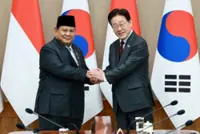
Haunted by his own injuries as a child labourer, South Korea’s new President Lee Jae-Myung (pic) – who crushed his finger and arm making rubber and later baseball gloves – has vowed to lower the country’s above-average rate of industrial accidents in what he calls “workplaces of death”.
So far, his administration has raided companies, increased spending to prevent industrial accidents and expanded workplace protections to subcontracted labourers, among other initiatives.
His critics, however, say he is punishing companies – not proactively protecting workers – and they believe his pro-labour rhetoric is nothing more than repackaged populism.
In its 37 trillion won (RM112bil) budget for 2026, the Labour Ministry increased spending to prevent industrial accidents and said it would fine companies up to 5% of their operating profit if they recorded three deaths or more in a year.
According to International Labour Organisation (ILO) data from 2023, South Korea had 3.9 deaths per 100,000 workers, well above the OECD average of 2.6.
For fatal construction accidents, South Korea has the second-highest rate among OECD member countries with 15.9 deaths per 100,000 workers, according to ILO and official Korean data.
Earlier this month, a hulking, decommissioned heating structure at a power station in Ulsan collapsed on nine workers as they prepared to demolish it. A couple were quickly rescued but seven others were trapped; rescuers worked for more than a week to recover their lifeless bodies.
“I used to be a factory worker and I was a victim of an industrial accident too,” Lee said in July during a visit to a bread factory run by SPC Group where a worker was crushed to death in May.
After Lee’s visit, SPC changed work shifts to an eight-hour schedule from 12-hour shifts.
Critics say Lee is sounding populist notes and scapegoating companies rather than preventing accidents.
“If (Lee) keeps pushing companies to meet standards that they can never meet, they may focus on just pretending to do it,” said Jung Jin-woo, a professor in the Department of Safety Engineering at Seoul National University of Science and Technology. — Reuters