WELLINGTON: When 34-year-old Tze Wee enrolled in primary school many years ago, he went to a Maori-emphasis class because of an administrative mistake. In the class, he learnt Maori words, songs and kapa haka (Maori performing arts) at school.
Born in Singapore, Wee – who is ethnically Chinese and also speaks Mandarin – initially did not find learning Maori useful. But his early exposure to the Maori world planted a seed in him that blossomed into a passion for it.
At 23, he enrolled in a night class to study Maori, later completing a full-year full-time immersion course to build his fluency and knowledge, followed by language papers as part of his major in Maori media at the Auckland University of Technology.
Wee is now fluent in the language and also goes by his Maori name Nga-Tai – meaning “two tides” – given to him by the mother of a close friend who is Maori, to symbolise two cultures coming together.
“Learning te reo Maori (the Maori language) has made me feel more connected to Aotearoa,” he told The Straits Times, using the Maori name for New Zealand, which means “land of the long white cloud”. The name is increasingly used alongside or instead of “New Zealand” in the country in everyday speech, media and official documents such as passports.
Working as the front-of-house of a cookie shop, Wee said he often surprises customers by replying in Maori.
“It has been really cool and encouraging to see people around me giving it a go. So many people are open to learning, and embracing not only the language but also the culture.”
Wee is among a growing number of Maori speakers in New Zealand, including among the Maori people themselves.
According to the 2023 Census, which is the latest one available, Maori is the second most spoken language in New Zealand after English, with 213,849 speakers able to hold an everyday conversation – 4.3 per cent of the 4.99 million population, or 18.6 per cent of Maori.
That represents an increase of 27,894 people, or 15 per cent, from 2018. A decade earlier, in 2013, just 148,395 people reported being able to converse in Maori. Other widely spoken languages in New Zealand are Samoan and Mandarin.
Once at risk of extinction, the language is now celebrated internationally as a model for indigenous language revival, most recently highlighted at the Waves indigenous languages summit in Canada in August 2025.
Interest in learning Maori is surging. In classrooms across the country, demand is outstripping supply, said Professor Enoka Murphy of Te Whare Wananga o Awanuiarangi, one of three Maori tertiary institutions in New Zealand.
“Te reo Maori came from the depths of almost disappearing to now being thriving,” Prof Murphy, who has been teaching the language for nearly 40 years, told ST.
He noted that learners today include not just Maori seeking to reconnect with their roots, but also European New Zealanders, Asians and Pacific Islanders wanting to connect to the place and its culture.
From the 1860s, as European settlers outnumbered Maori, English became the medium of instruction in schools. Maori children were punished for speaking their language, and by the 1980s less than 20 per cent of Maori could speak their mother tongue.
The revival of Maori began in the 1980s, said Prof Murphy, after “30-plus years of us pushing and pushing and pushing to normalise our language”.
Ministry of Education data from Education Counts shows that 41,160 people studied at least one Maori language course with a tertiary provider – up 70 per cent from 24,225 a decade earlier. The numbers include students enrolled in non-formal programmes such as adult community education.
In secondary schools, where second-language learning is not compulsory, interest in most foreign languages such as French or Spanish has declined. But Maori is bucking the trend. The number of students taking Maori as a subject has risen 79.3 per cent to 39,413 students in 2024 – 12.3 per cent of the 320,284 secondary school students in total. In 2015, there were 21,977 students, which was 7.8 per cent of the student population.
Overall, enrolment in Maori medium schools continues to grow, reaching 28,382 students in 2025, compared with 22,391 five years ago. Increasingly, English-medium schools also offer Maori language classes.
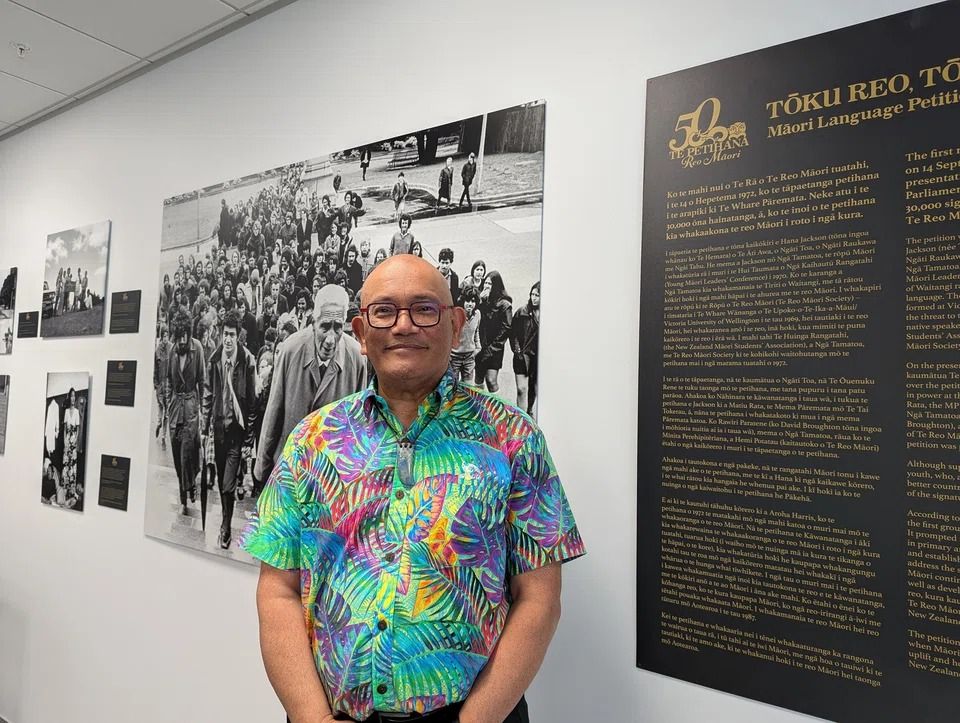
Despite the surge in interest, there are not enough teachers to teach the classes, said Maori Language Commission chief executive Ngahiwi Apanui.
“Tertiary education providers are saying there are twice as many people on waiting lists as there are in classes,” he told ST. “The biggest issue ahead of us is we do not have enough classes, and we do not have enough teachers.”
An estimated 3,000 more teachers are needed in Maori-medium schools, and another 30,000 in English-medium schools to meet the demand, he said.
New Zealand recently celebrated 50 years of Maori Language Week, an annual event that grew out of a language petition to Parliament in 1972 calling for the promotion of the language. The government aims to have one million Maori speakers by 2040.
Maori words are now woven into everyday New Zealand English. International visitors are greeted by Air New Zealand’s signature Kia Ora. Common Maori terms such as whanau (family), kai (food) and tamariki (children) are listed in the Oxford English Dictionary and bilingual signs are common in airports, government buildings, roads and public spaces.
Traditional customs and values are also increasingly observed and celebrated in schools and workplaces.
“Schools have to give effect to Te Tiriti (Treaty of Waitangi) – so integration into daily school life is essential. Rituals – daily karakia (prayers), kai karakia (blessings before meals), mihi whakatau (welcomes), poroaki (farewells) – can be found to differing degrees in schools,” said Jude Pentecost, principal of Worser Bay School in Wellington. The school has also been integrating te reo Maori into its curriculum.
The haka – a powerful ceremonial performance popularised by the national All Blacks rugby team – is globally recognised as a symbol of New Zealand identity. Maori protocols are used to welcome foreign dignitaries, bringing Maori culture into the international spotlight.
During his recent state visit to New Zealand, Singapore Prime Minister Lawrence Wong was received with a traditional powhiri ceremony that included a wero (challenge), karanga (call) and haka.
Professor of Maori Studies Margaret Mutu from the University of Auckland told ST that a powhiri is a formal welcome through a series of intricate rituals designed to leave a strong impression on guests.
Each part of the ceremony has a purpose, said Prof Mutu, who is also an iwi elder from the Ngati Kahu tribe in the Far North district. The challenge at the beginning ensures visitors come in peace followed by the call, which brings the visitors and their ancestors through different spiritual realms and seeks protection for them.
A haka performed during the call demonstrates the hosts’ prowess and their physical ability to protect their guests. The hongi, or the pressing of noses, signifies the physical welcome into the hosts’ home.
“The more honoured the guest, the more complex the rituals,” she said.
Prof Murphy said Matariki, the Maori New Year, celebrated since 2022 as a public holiday in the country, has helped bring Maori culture to the national stage and sparked interest among all New Zealanders.
Apanui said the Maori Language Commission’s goal is to make Maori language “part of the mainstream fabric”, so that all people, not just Maori children, will want to learn it.
He recalled how in 2003 his son stopped speaking Maori after six months at an English-medium school because all the cool songs were in English and people mispronounced the language on TV and radio. Now, he said, contemporary Maori music regularly tops the charts.
“There was a time when if you mispronounced the Maori language word on TV, we’d put out a press release and accuse you of being racist,” Apanui said with a laugh
“Now we encourage people to keep learning. You need to be kind and that means not giving them a hard time when they make mistakes.”
Light projections on Auckland Sky Tower marked the opening of the Maori Language Week in September 2025. The theme “Ake ake ake – a forever language” reflects the determination to keep the language alive.
Despite progress, the movement still faces setbacks. The Education Ministry in 2024 removed Maori words from new Ready to Read phonics books for five-year-olds because they were deemed too confusing.
Funding for the only Maori-language TV news bulletin has been cut by 64 per cent, while a current affairs show has been dropped, the government’s Maori media funding agency announced on Oct 24.
On Nov 4, in a move that took many by surprise, the government announced that it will amend the law and scrap the legal requirement that school boards must ensure their policies, plans and local curriculum reflect Maori customs and world view.
“The government is too late and in fact all they’re doing is making us more stubborn, more staunch,” said Prof Murphy.
“We’ve always fought against injustice – and a great part of New Zealand stands with us,” added the professor, citing the 42,000-strong march on Parliament in November 2024 protesting against the Treaty Principles Bill.
The contentious Bill was introduced by ACT Party, the libertarian minority partner in the coalition government to redefine how New Zealand’s founding document is interpreted in law. Seen as undermining Maori rights, it was later voted down by Parliament.
Public sentiment remains strongly supportive of Maori language. A 2024 survey commissioned by the Maori Language Commission found three in four New Zealanders consider te reo Maori an important part of their culture.
From near extinction to revival within a generation, Maori language and culture have come a long way – but advocates say the work is far from over.
“If te reo Maori dies, we don’t have another place to go and get it back,” reminded Apanui quietly. - The Straits Times/ANN