




Increased collaboration between Hong Kong and mainland China could potentially lead to more advances in the cryptocurrency sector, according to industry experts who took part in the 11th Global Blockchain Summit in Shanghai on Thursday.
That assessment comes amid the central government’s years-long ban on a range of crypto-related activities on the mainland, including initial coin offerings, cryptocurrency trading and bitcoin mining.
Calls for Hong Kong and the mainland to collaborate in cryptocurrency initiatives reflected how both markets are expected to benefit. The city already serves as a major international financial hub, while many mainland developers are involved in digital payments and artificial intelligence.
“Hong Kong is focused on areas like virtual asset trading and financing,” said Rachel Lee, director of blockchain and digital assets at Cyberport, a Hong Kong government-backed technology hub and start-up incubator. Cyberport looked forward to working more closely with the mainland to foster the development of cryptocurrencies and the Web3 industry, she said.
Regarding developer initiatives on the mainland, the president of the Solana Foundation, Lily Liu, said the organisation was investing heavily to support China’s developer ecosystem over the past two years. She hoped to deepen collaboration in areas such as decentralised payments and AI.
Based in Switzerland, the non-profit organisation is focused on the growth and security of the Solana blockchain ecosystem.
Liu said Solana valued Chinese-speaking regions because of their massive payments industry. “China, in particular, is a leader in this area with a population of over a billion,” she added.
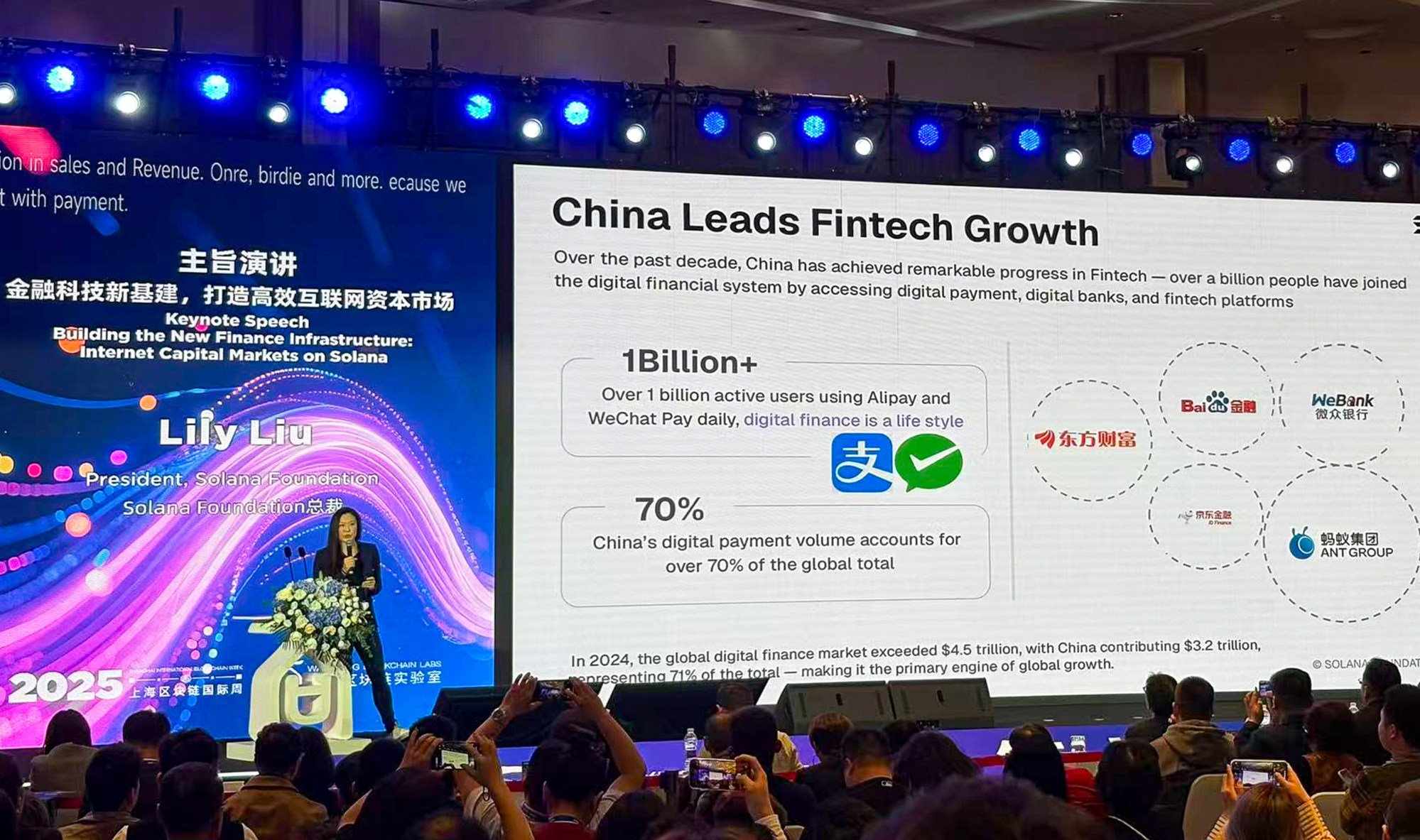
While the Hong Kong government received Beijing’s approval and encouragement to develop the city into a digital-asset hub, Chinese state media called on mainland authorities to be more proactive in considering legislation to regulate stablecoins, while studying their potential role in making the yuan a more global currency.
Hong Kong rolled out the Stablecoins Ordinance on August 1, which set a global standard in the cryptocurrency sector, as it kick-started the application process for potential issuers. The law aims to ensure a prudent approach for the issuance of stablecoins, a type of cryptocurrency backed by fiat currencies or other reserve assets.
That development put Hong Kong at the forefront of global cryptocurrency regulation, according to Rita Liu, CEO of stablecoin start-up RD Technologies.
“The time between passage of the law and the law becoming effective was short. It was unprecedented,” Liu said. Her company is one of several participants in Hong Kong’s stablecoin sandbox trials for such assets.
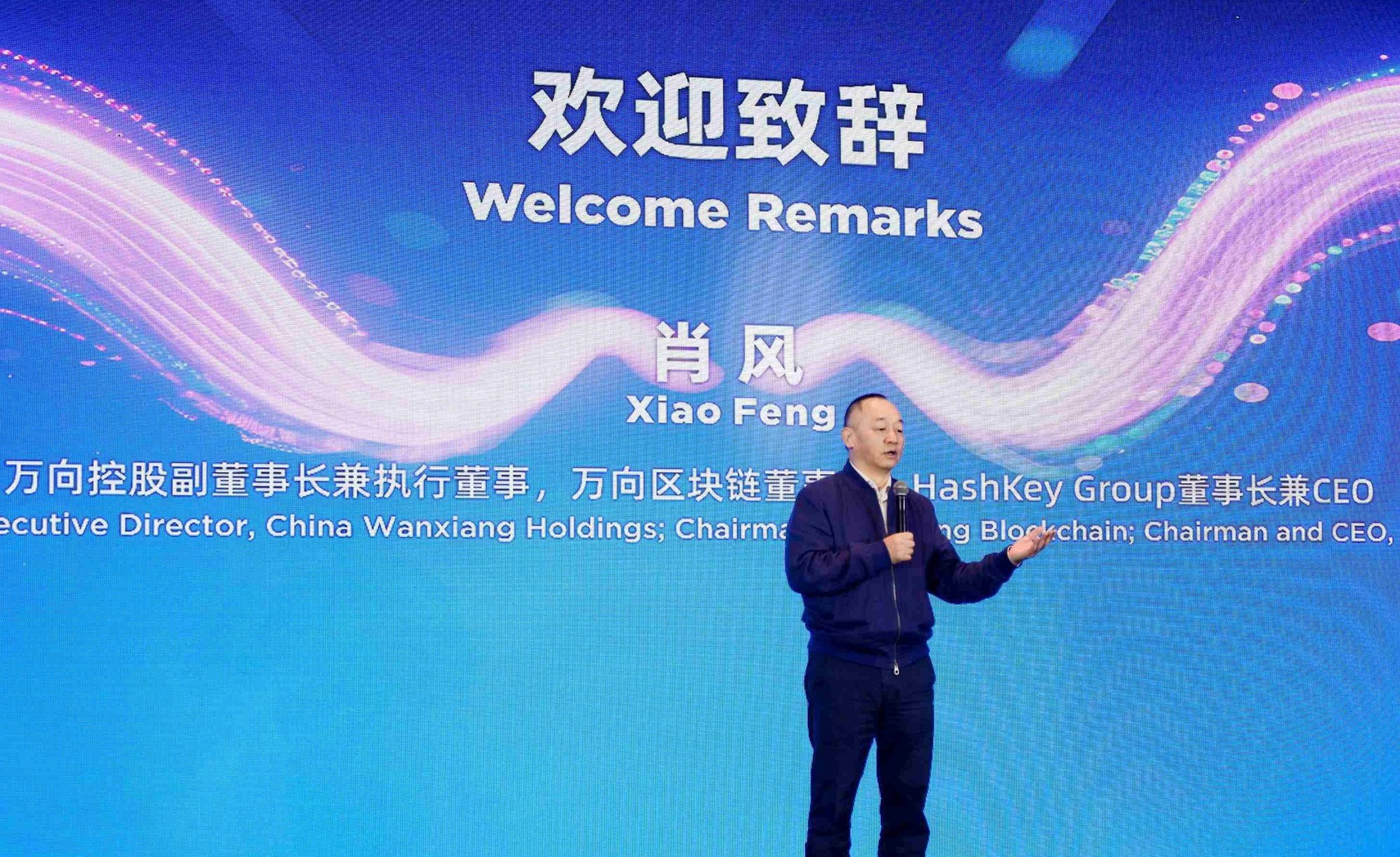
Xiao Feng, chairman of Shanghai-based Wanxiang Blockchain, the host of this year’s summit, called for greater efforts on jointly making “more standards and rules” in the crypto industry amid its continued expansion.
“Blockchain technology has moved from the initial stages of technological development to the stage of large-scale applications,” said Xiao, who is also the chairman and CEO of Hong Kong cryptocurrency exchange operator Hashkey Group.
On the success of this year’s summit, Xiao pointed out that tickets to the event were sold out a few days before the event kicked off, which “has not happened in years”. - SOUTH CHINA MORNING POST



