




Antibody-drug conjugates (ADC), a fast-growing next-generation cancer treatment, have become an investment hotspot due to its potential to become mainstream globally, according to biopharmaceutical industry insiders.
To achieve sustainable growth and maximise revenue potential, companies should pursue differentiated product development and a global clinical strategy, according to Duality Biotherapeutics, which organised a biotech forum in Shanghai last week.
The Shanghai-based company – which raised HK$1.64 billion (US$211 million) from its Hong Kong initial public offering (IPO) in April – has avoided focusing only on the most popular market segments to avoid overcrowding, according to Mu Hua, the global chief medical officer.
“We have a differentiated strategy focused on carefully selected disease categories that maximise the commercial potential,” he said. “Many Chinese ADC developers focus on lung cancers, whereas we have chosen to spend significant resources on a certain type of prostate cancer based on our research, as well as market potential and competition.”
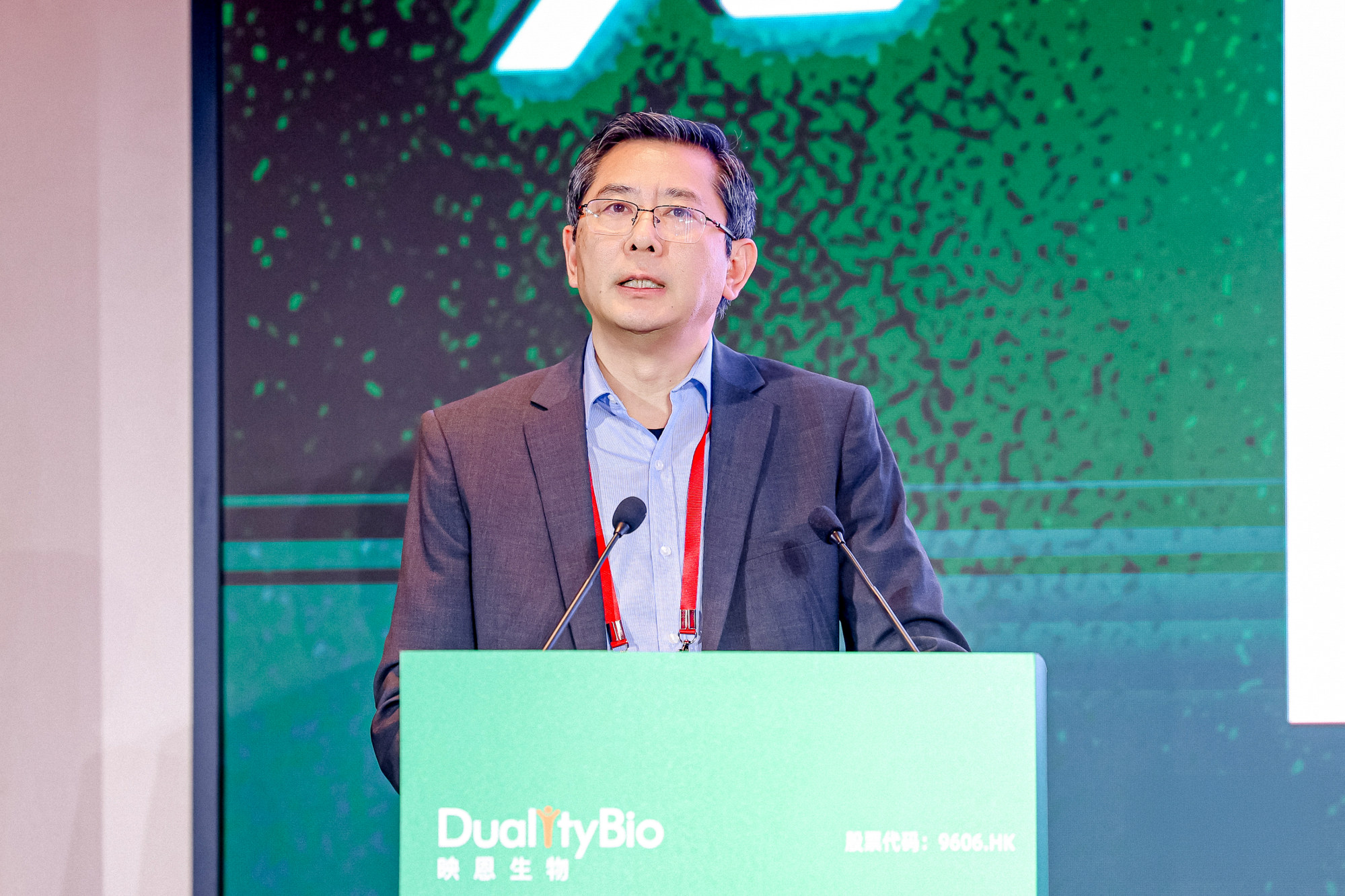
He said that a company could be more financially successful by being the first to launch a novel ADC drug for a difficult-to-treat cancer like castration-resistant prostate cancer than a rival that was first to market with a less differentiated drug for another cancer.
Duality Biotherapeutics was among a rising number of firms focusing on ADCs, whose sales were forecast to grow by around 30 per cent a year to US$115 billion in 2032 from US$10.4 billion in 2023, according to Frost & Sullivan, which was hired by the company to conduct market analysis for its IPO.
ADC, a novel method on how oncology drugs are constituted and delivered, was gaining traction as next-generation therapies, said Lu Shun, a professor at Shanghai Chest Hospital, affiliated to Shanghai’s Jiao Tong University.
“This year, bi-specific ADC has become a hotspot for lung cancer therapy development globally, following over two decades of targeted therapy and immunotherapy development,” Lu told the forum.
Unmet needs remained big despite significant improvement in treatments in recent years, he added.
The average five-year post-diagnosis survival rate for lung cancer patients was 29 per cent in China, compared with 81 per cent for breast cancer, 71 per cent for prostate cancer and 56 per cent for colon cancer, according to data from the National Cancer Centre published last year.
“But that will change, as we have new ways to treat [various cancers], with the emergence of bi-specific antibodies and ADCs,” Lu said.
An ADC is a kind of “guided missile-like” chemotherapy for achieving precise action that lasts longer and with fewer side effects. It uses an antibody to find and bind to a specific protein, or biomarker, on the surface of cancer cells.
After getting absorbed into the cells, a “link” bridging the antibody and a chemotherapy drug carried by the ADC releases the drug inside the cancer cells to kill them. Bi-specific antibodies can bind to two different proteins on cancer cells.
Since most cancer patients over time develop resistance to immunotherapies, novel treatments like ADCs were needed, Guo Ye, a professor at Affiliated Oriental Hospital of Shanghai’s Tongji University, told the forum.
ADCs have broad potential for a variety of cancers, he noted, adding that their efficacy could be improved further by combining with targeted therapies like tyrosine kinase inhibitors – drugs that block enzymes responsible for cancer cells’ growth.
A late-stage study showed that this combination could overcome drug-resistant lung cancers.
“I am optimistic that ADC-bi-specific immunotherapy drugs can one day replace most existing oncology first-line treatments,” Guo said.
While the world’s first ADC was approved in 2000, 11 of the 16 ADCs on the market were approved after 2019, with five achieving over US$1 billion in sales annually, according to Duality Biotherapeutics.
Some 190 ADCs were under active clinical evaluation worldwide, according to a paper by researchers at Guangzhou’s Sun Yat‐sen University published in the Cancer Communications journal in December 2023.
In China, 63 per cent of the newly developed ADCs were concentrated on the top 10 targets, compared with 48 per cent globally, according to the study. -- SOUTH CHINA MORNING POST


