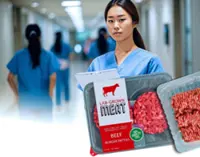
BERLIN (dpa): Plant-based alternatives to meat haven't lived up to their expectations, and after years of hype, real meat is still being eaten much more often. An alternative could come from the laboratory.
Lab-grown meat is ever closer to giving vegetarians a chance to bite into hamburgers that more closely resemble the real thing.
After all, many still yearn for the flavour and texture of bacon, chicken or hamburgers.
"I didn’t stop eating meat because I no longer liked the taste," says US social psychologist Melanie Joy. "I simply wanted to stop harming animals."
Her sentiment is shared by millions of other people around the world who are driven by compassion to avoid steak, sausages or chops.
Lab-grown meat may be the way they can resolve those residual cravings.
Vegetarians who feel they are missing out on meat are increasingly finding satisfaction in lab-grown alternatives.
While per capita consumption of real meat reached 53.2 kilograms per person in Germany last year, according to the Federal Office for Agriculture and Food (BLE), stores still sell a comparatively small quantity of veggie burgers, tofu sausages or seitan mortadella.
Figures will vary by country but Germany produced some 1.5 kilograms per capita of such products in 2024, says the Federal Statistical Office.
That disparity is unsurprising to Mark Post, researcher at Maastricht University in the Netherlands.
It can be explained by "signs in the market that these products are not regarded as genuine alternatives to meat," he says.
While plant-based substitutes are easier to make, laboratories have "the only technology capable of delivering real meat."
Post, who introduced the first in-vitro burger made from cattle stem cells with his team in 2013 and co-founded a related company, is keen to underline that this is also the real thing.
"This is not imitation, it’s not fake. It’s simply meat produced in a different way," says Joy, who taught for many years as a professor at the University of Massachusetts Boston.

She is not a fan of phrases like "artificial meat" or "fake meat" to describe products grown by scientists in laboratories.
The fact that meat alternatives aim to resemble the original as closely as possible has its reasons in our deep-seated proclivities, says psychologist Joy.
"Meat holds great significance for people. It is strongly associated with family, traditions and childhood memories," she says, in conclusions based on decades of exploration of the psychology of meat consumption.
Many people are accustomed to eating meat and, with it, a specific taste. If alternatives meet these expectations, people find the transition significantly easier, she says.
Lab-grown meat is also a product based on cells taken from living animals, described by Post as donor animals. "Only a fraction of the animals currently used is needed," he says.
Some companies have managed to develop cell lines that can multiply almost indefinitely, he adds.
Researchers at Tufts University in the United States are among those showing how rapidly this area is progressing.
They grew bovine muscle cells on a basic structure made of inexpensive, textured soy protein - with the carrier material itself edible.
That innovation gives the final product a meat-like, fibrous texture, they say in a study published in Nature last year.
Their approach could reduce production costs and potentially enable large-scale manufacturing.
That came after two US companies received approval from the US Department of Agriculture to sell chicken meat grown from animal cells in 2023.
But not all greet these developments with the same enthusiasm.
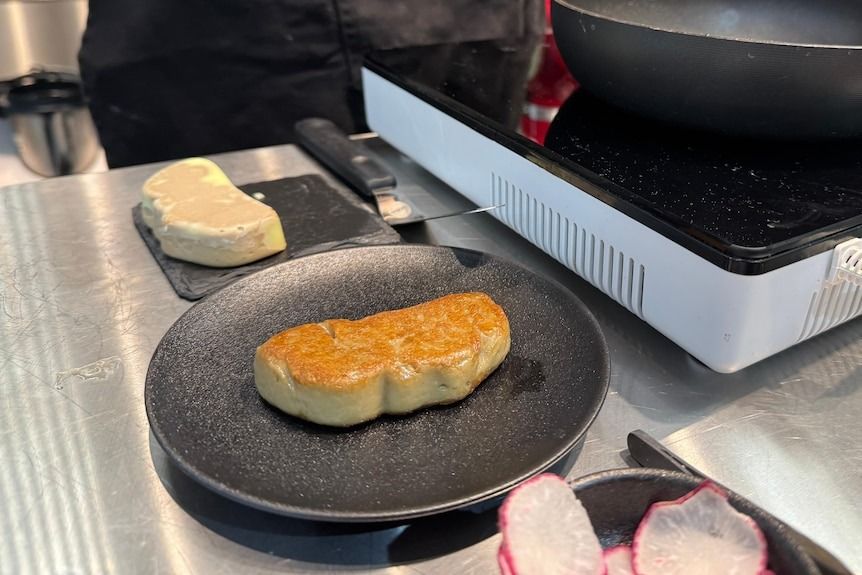
That same year, across the world, Italy’s right-wing government banned the production and sale of lab-grown meat. It had never been available there.
Lab-grown meat is still not approved in the European Union given the complexity of the necessary procedures.
So vegetarians or vegans in Europe for now rely on substitutes made from plant proteins such as soy, peas or wheat. But politicians in the European Parliament still cannot agree on whether these products may be described as "steaks" or "burgers."
Lawmakers rejected a draft law to abolish these names and others suggesting animals in 2020. A compromise proposal suggesting clearer labelling of the substitutes by adding the note "meat-free" also failed at the time.
Lawmakers are now gearing up to consider the issue again.
After Europe's Agriculture Committee voted in September to ban the use of terms like "burger," "sausage" and "steak" for plant-based foods, the issue is heading to the plenary.
Just as they did five years ago, members of the European Parliament are set to vote on the matter in a large session before the end of the year.
One important aspect of these substitutes is that they are not real meat. Post says, "We believe consumers want meat to be replaced with meat."
Strong arguments in favour of lab-grown meat for vegetarians include environmental considerations, such as the land area required, water consumption and greenhouse gas emissions, plus potentially lower costs and health benefits.
Lab-grown meat could be healthier, says Post, who seeks to influence its fatty acid content and enrich it with omega-3 fatty acids.
In health terms, lab-grown meat has another decisive advantage over conventional meat. "Conventionally produced animal products often contain high levels of antibiotics, hormones and pesticide residues," says Joy, adding, "This problem does not exist when meat is grown in a lab." - Special report from dpa