China’s rocky trade relationship with the United States was on full display this month as US President Donald Trump threatened to impose additional tariffs on Chinese imports.
Separately, US Treasury Secretary Scott Bessent denounced China’s move to expand curbs on rare earth exports, calling it “a sign of how weak their economy is”. He also described Li Chenggang, one of China’s trade negotiators, as “pretty unhinged and very aggressive”.
Trade ties between the rival powers remain fraught, even as Bessent held “frank” talks over video with Chinese Vice-Premier He Lifeng on Saturday, with the pair set to hold fresh in-person negotiations this week.
Yet, amid the tensions, Trump appears to have shown some restraint by not antagonising his counterpart, Xi Jinping, or challenging Beijing’s red lines such as Taiwan, with analysts saying the American leader could prove to be a unique guard rail for Sino-US relations.
They suggested that Trump’s control over his second administration, including his team of China hawks who have long advocated a tougher policy on Beijing, meant that leader-to-leader diplomacy had grown increasingly important in shaping ties.
Zhiqun Zhu, an international relations professor at Bucknell University in the United States, said tensions would persist owing to the structural competition between a rising and dominant power, adding it was clear that “Trump calls the shots in the US government”.
“[Trump’s] transactional approach to world politics actually offers a rare opportunity for improving US-China relations,” Zhu said, adding that the American president preferred to work with strong leaders and believed he could strike a deal with Xi.
“That’s why he has attempted to maintain a good working relationship with Xi and plans to meet with Xi later this month despite twists and turns in the bilateral negotiations,” he added. “As long as he pursues a stable and profitable trade relationship with China, Trump will serve as a sort of guard rail in US-China relations.”
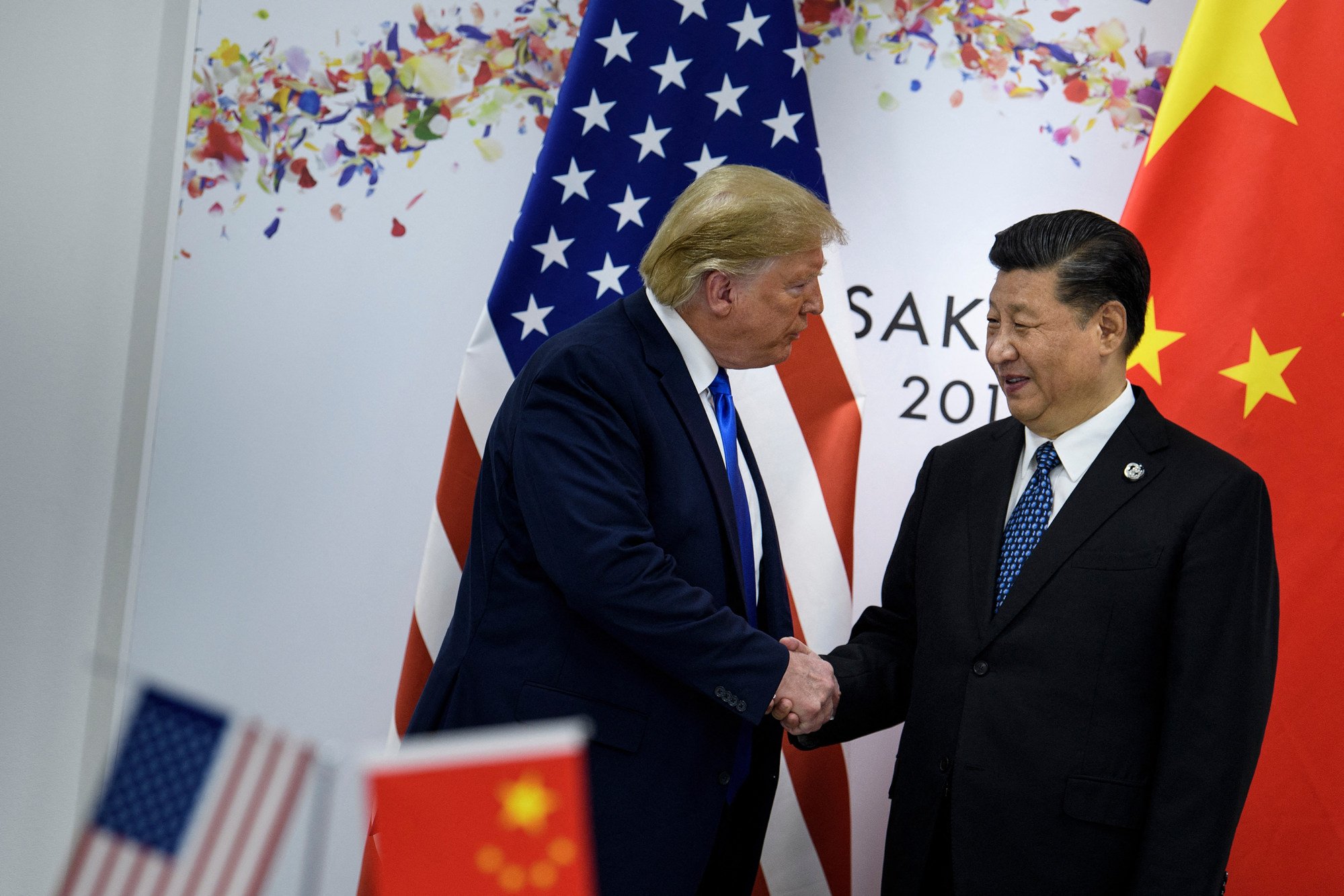
Indeed, Trump still planned to hold a summit with Xi on the sidelines of the Asia-Pacific Economic Cooperation (Apec) forum in South Korea next week after he announced tariffs targeting China earlier this month.
“I’m meeting with him in two weeks,” Trump said in a Fox News interview broadcast over the weekend.
According to Ali Wyne, a senior research and advocacy adviser at the International Crisis Group, the current chapter of the US-China trade stand-off underscored Trump’s personalistic approach to diplomacy.
To that end, Trump has continued to express respect for Xi and sought to insulate their relationship from the intensifying structural tensions between Washington and Beijing, Wyne said.
“So long as [Trump] wants to engage with Xi directly and believes that they can have productive conversations, he is unlikely to give free rein to advisers who urge the US to de-risk more aggressively or even decouple from China,” he added.
Analysts have observed that Trump’s diplomacy is defined by the power and control he wields over his administration, which meant he could tame his team of China hawks, some of whom harbour harsh views of Beijing.
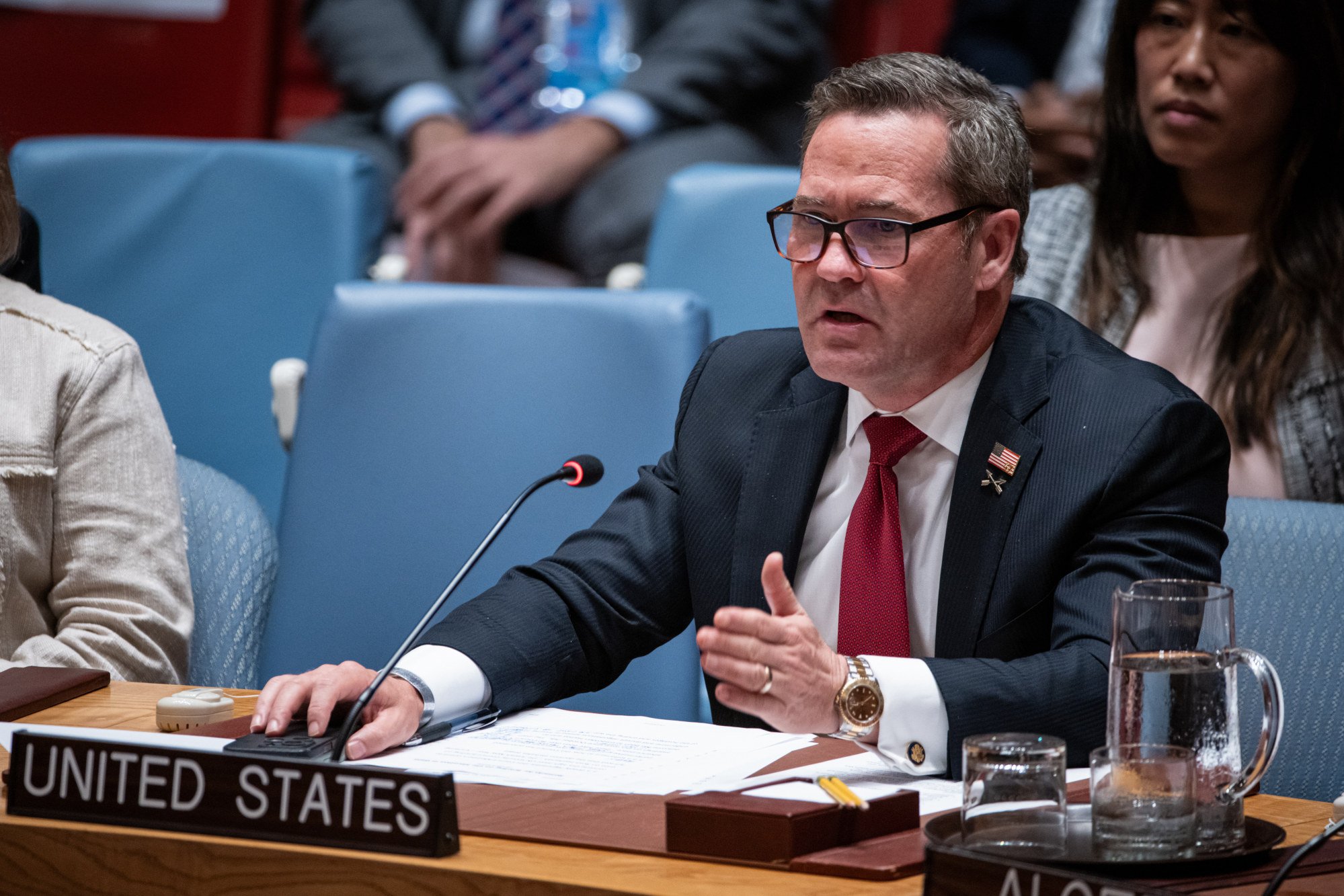
They include Secretary of State Marco Rubio, long vocal in accusing China of human rights abuses, and Mike Waltz, the former national security adviser who was removed from the position and later appointed US ambassador to the United Nations. Waltz had urged that more be done to deter Beijing’s military ambitions in the Indo-Pacific region.
In addition, the Republican-controlled US Congress has been largely hawkish on Beijing, including pushing for stricter export controls on sensitive technology and supporting Taiwan’s defence.
Beijing sees Taiwan as part of China to be reunited by force if necessary. Most countries, including the US, do not recognise Taiwan as an independent state, but Washington is opposed to any attempt to take the self-ruled island by force and is committed to supplying it with weapons.
Zhu said the US administration was “full of people loyal to [Trump]” compared with his first presidency, suggesting that even if some disagreed privately, few dared to challenge him publicly.
“Trump is a paramount leader in US politics today, and China hawks under him have become more moderate now,” Zhu added.
According to Diao Daming, an international relations professor at Renmin University, Trump’s foreign policy team comprised officials who espoused “fairly hardline and hawkish” views on China.
But Diao said Trump had adopted a more pragmatic approach towards China and that it was evident the American leader was making the final decisions.
In the context of Sino-US relations, the Trump administration “continues to be dominated by the president himself”, he said. “He has managed to control the China policy preferences of hawkish members within his team.”
Diao contended that mutual respect and peaceful coexistence were essential to the relationship and that Trump hoped to maintain stability.
Sun Chenghao, a fellow at Tsinghua University’s Centre for International Security and Strategy, described Trump’s stance on China as flexible and capable of exerting a direct influence on Washington’s policy towards Beijing.
As for why Trump appeared to be exercising restraint, Sun said the American leader was aware that inappropriate criticism from him would have a far more negative impact on relations compared with such rhetoric coming from his top officials, including Bessent.
“As a calculating businessman and politician, Trump has no need to act impulsively on China,” he added. “He is also well aware that China is not a target for arbitrary pressure or intimidation but a major power capable of retaliating.”
Sun suggested that the rhetoric used by some in the US administration could be a form of “policy testing”. By stating dissatisfaction through officials such as Bessent, Washington could test Beijing’s red lines while creating space for Trump’s next phase of negotiations.
“What could truly damage Sino-US relations is not the inappropriate remarks of individual officials, but Trump’s acquiescence to such remarks and his substantive policy shifts,” he said.
Sun said “pragmatists” within Trump’s administration were possibly curbing the impulses of the China hawks and prioritising issues that directly affected the American people and economy.
“Recent news about a possible meeting between the Chinese and US presidents at Apec has also influenced the stance of Trump’s team to some extent,” Sun added.
“Although the hawks lean towards taking hardline measures, their restraint at this moment can be seen as setting aside differences temporarily to support the broader picture and preserve bargaining chips for future negotiations.”
Wyne at the International Crisis Group likewise believes Trump “presently exerts far greater policymaking and political control” than in his first term.
This meant that those advocating a more confrontational American approach – and China policy – faced added limitations in doing so, Wyne said.
“As important, if not more so, Trump likely feels pressure to strike a trade deal with Xi, lest China use more of its leverage against the US economy,” he added.
Wyne said that “because both Trump and Xi are far more dominant within their respective policymaking apparatuses than they were eight years ago, leader-level diplomacy will likely play a more decisive role” in shaping bilateral relations.
Neil Thomas, a fellow on Chinese politics at the Asia Society Policy Institute’s Centre for China Analysis, echoed the idea that leader-to-leader diplomacy mattered even more in Trump’s second term, adding that the American leader was less bound by Washington norms and commanded the Republican Party more than his predecessors.
Thomas cited how Trump’s clout allowed him to pursue a deal to keep the social media platform TikTok operating in the US despite many Republicans calling for an outright ban.
Diao said that given Trump’s tighter control over his team and greater authority over China policy, the role of head-of-state diplomacy would be further amplified and become more apparent in stabilising relations.
Wyne saw an upside to a diplomatic approach in which the two leaders took control, such as how productive conversations between them could more readily generate opportunities for tactical thaws and limited cooperation.
But he said the downside was that there were fewer mechanisms to serve as shock absorbers should a rupture emerge between them.
Bucknell University’s Zhu voiced a similar sentiment, saying that if Trump, whom he described as fickle, failed to get what he wanted from China, he could abruptly shift his attitude and approach, precipitating a sharp deterioration in the relationship.
That would not be all, according to Sun at Tsinghua. Trump’s China hawks could soon return, he suggested, pointing to the two countries’ deep-rooted structural competition and the risks that could surface at any time.
Sun said that if the rival powers were eventually to reach a trade agreement, the hawks could end their rhetorical restraint and switch their focus to other issues, including Taiwan, the South China Sea or human rights.
“In this case, the deal may temporarily satisfy the [US] president’s short-term goals, but it would also relieve the team of the pressure to remain restrained, allowing them to take tougher actions in other areas,” he added.
The other scenario Sun envisioned was if a trade deal did not happen. In that case, he believed the China hawks would break loose.
They would no longer feel restrained and could adopt hardline measures in both trade and non-trade areas, he said.
“This could include further tariff increases or more confrontational actions on issues such as Taiwan or the South China Sea, leading to a downward spiral in bilateral relations.” -- SOUTH CHINA MORNING POST