Across the country and in the refugee camps along its borders, the suffering unleashed by the United States’ gutting of its foreign aid programme has been severe and deadly, particularly for children.
In interviews with 21 Myanmar refugees, five people trapped in internment camps inside Myanmar and 40 aid workers, medics and researchers, the AP uncovered widespread devastation due to President Donald Trump’s dismantling of the US Agency for International Development.
Children are screaming for food, safehouses that sheltered dissidents have shuttered and people must forage for hours in the jungle each day to survive.
Mohammed Taher clutched the lifeless body of his two-year-old son and wept. Ever since his family’s food rations stopped arriving at their internment camp in Myanmar in April, the father had watched helplessly as his once-vibrant baby boy weakened, suffering from diarrhoea and begging for food.
On May 21, exactly two weeks after Taher’s little boy died, US Secretary of State Marco Rubio sat before Congress and declared: “No one has died” because of his government’s decision to gut its foreign aid programme.
Rubio also insisted: “No children are dying on my watch.”
That, Taher says, “is a lie.”
“I lost my son because of the funding cuts,” he says. “And it is not only me – many more children in other camps have also died helplessly from hunger, malnutrition and no medical treatment.”
Taher is one of 145,000 people forced to live inside squalid, prison-like camps in the state of Rakhine by the ruling military.
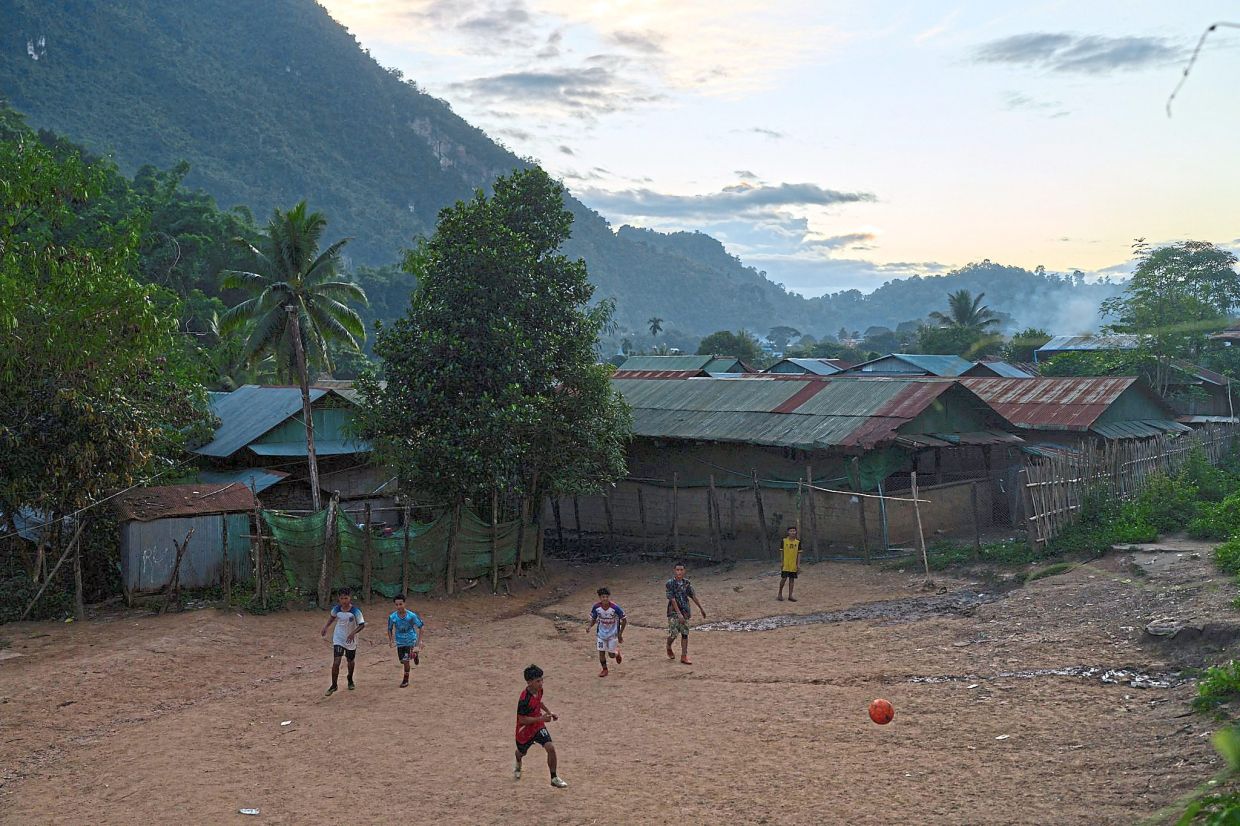
Most, like Taher, are members of Myanmar’s persecuted Rohingya minority, which was attacked by the military in 2017 in what the United States declared a genocide.
Kneecapped by the funding cuts, the UN’s World Food Programme in April severed assistance to one million people across Myanmar, including to Taher’s family.
After their food rations evaporated, Taher’s family meals shrank from three a day to one.
Taher’s son, Mohammed Hashim, faded. The clever, caring toddler, who loved playing football and whose cheerful chirps of “Mama” and “Baba” once filled their shelter, could barely move.
Anguished by his son’s sobs, Taher tried to find help. But with soldiers banning residents from leaving the camp to find food, and with no money for a doctor, there was nothing Taher could do.
On May 7, Taher and his wife watched their baby take his final breath. Their other children began to scream.
Neighbour Mohammed Foyas, who visited the family after Hashim died and was present for his burial, confirmed the details.
Asked who is to blame for the loss of his son, Taher is direct: the United States.
“In the camps, we survive only on rations,” he says.
“Without rations, we have nothing – no food, no medicine, no chance to live.”
Twelve-year-old Mohama squats in the mud, rain battering his rail-thin frame. He plucks worms from the dirt and places them in a ratty plastic cup.
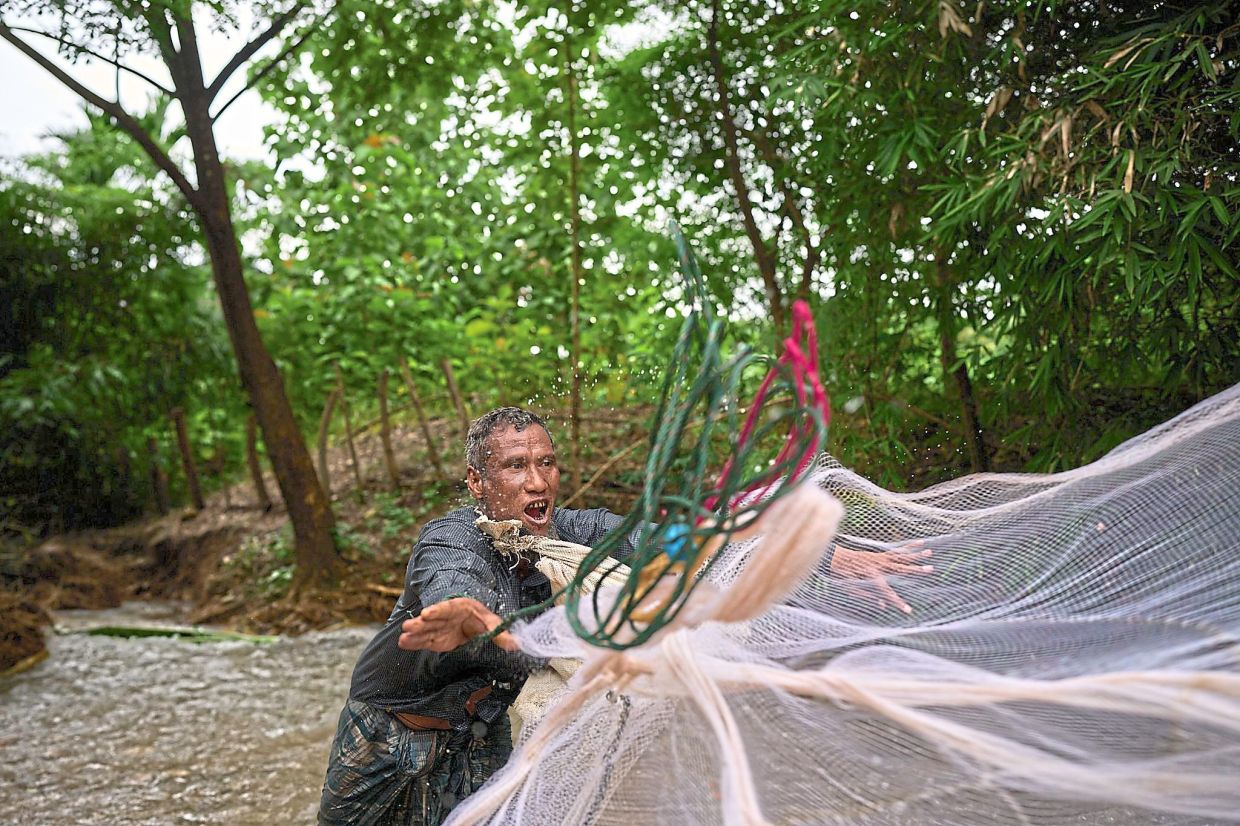
The worms are bait for the fish he hopes to catch for his family. Recently, he says, there hasn’t been enough to eat. So, despite the deluge, he grabs his bamboo fishing pole and wades through rushing water as high as his chest.
Many of Myanmar’s children have survived the horrors of war only to now find themselves hungry and hurting because of a political decision they don’t understand.
Mohama escaped to Thailand with his parents, older brother and two little sisters in 2023 after soldiers attacked their village.
He remembers huddling in a bomb shelter, and running alongside hordes of others fleeing for their lives.
Mohama’s parents returned to Myanmar to find work, and his sisters eventually joined them. He lives now with his grandparents and teenage brother in a one-bedroom shelter.
After two hours, Mohama holds up his haul: around 10 tiny fish, each less than 3cm long. It’s enough for a few mouthfuls.
Still, this is lucky. Some days, he says, he catches half as much.
When the rice runs out at 48-year-old Naung Pate’s shelter, panic sets in among her six children. She walls off her own worry and reassures them that she will find them food, though now there is never enough.
“If the United States doesn’t resume its support, I am worried about my children’s survival,” she says.
The grandfather slides a knife into the sodden jungle floor, pries loose a bamboo shoot and places it into a tattered tote bag slung across his bony back. His stomach is empty, his breath ragged and his energy exhausted. But if he stops now, his family could starve.
Mahmud Karmar has been foraging in the jungle along the Thailand-Myanmar border for two hours and has barely collected enough to feed his wife, six children and six-year-old grandson two meals. He presses his parched lips into the river and guzzles.
“I am hungry,” Mahmud says, panting. “So I drink the water to get myself full.”
For years, a grant by the US State Department provided food and medicine to Mahmud and the other Myanmar refugees living in the Thai border camps.
But the ending of that grant on July 31 forced the region’s main aid group, The Border Consortium, to terminate food assistance for 85% of camp residents. That has left many like Mahmud dependent on the jungle’s quickly-dwindling resources to survive.
Mahmud didn’t just lose his food rations because of the aid cuts – he lost his job with the International Rescue Committee, which the State Department had, until July 31, funded to run health clinics in the camps. He has also lost 16kg, his 54kg frame now so slight that he has become unrecognisable even to close friends.
“We are almost dying,” he says. “There is nothing for us here.”
The 55-year-old sits in the dirt and wipes sweat from his brow. A few days earlier, he says, he fainted while attempting to work in a cornfield in a bid to earn 120 baht (RM15.50) – enough to buy one day’s worth of rice for his family.
The lack of food has driven scores of desperate people to steal, he says. He and several others recently rounded up 27 thieves in one night and sent them to detention.
Among the thieves was one of his friends. Mahmud asked him in despair why he was doing this.
“We have nothing to eat,” his friend replied.
Day after day, Mahmud pushes his battered body up mountains and through rivers in search of anything his family can eat, trade or sell.
All he can do now is hope that the people of the United States show mercy on the people of Myanmar.
“We will all die if it continues like this – I am certain of it,” he says. “We can’t do this forever.” — AP